
Veterinary Medicine is about communication. Our patients don’t speak. They can’t advocate for themselves so pet owners, doctors, and team members must communicate with each other on their behalf and as clearly as possible.
However, there is a relationship within the practice which is even more important. It is that of practice owner (PO), usually a DVM although the same applies to corporate practices with a medical director, and the hospital administrator / practice Manager / office Manager (OM).
If these two people cannot agree, or agree to disagree, all the other great things that can happen within the practice are subject to failure on a monumental level.
Everything flows from this relationship.
Protocols and standards of care can’t exist if the two people responsible for implementing them can’t agree on what they are and how they should be applied. How can equitable and fair human resource decisions be made if one of these two people plays favorites and overrides the other when it suits them? They must be able to have difficult conversations, where they both will have strong feelings about the results, and must be able to come out of that conversation without hard or hurt feelings that get in the way of their continued relationship.
Vision, Mission, and Core Values statements can go a long way to resolving these issues – but only if they are the living breathing guidelines of the practice. More fundamental is that there is mutual respect between PO and OM for both their respective roles and their responsibilities. They also need to present a united front on matters of change.
Unfortunately, this relationship is often unequal. Practice Owners, by definition call the shots and have the last word. Ideally, they empower their OM as their representative to make decisions and implement policy. However, if there is no trust, no respect, there is no way that is going to happen and no way for the OM to do their job. Likewise, if the OM is constantly aligning themselves as an employee rather than as a member of senior management / ownership they are unlikely to receive the trust from a PO that they would want and rightly so.
There is a balance to be reached and that’s why I advocate that the relationship between PO and OM has to work for anything else in the practice to work. This is also the reason why I am always against PO and OM being married or related in other ways – other parts of their relationship creep into the PO and OM dynamic. PO and OM should not be best friends – there are times they are going to disagree and that’s fine – that’s how it is supposed to be. They represent different interests of the business.
So what if that relationship is not there or there has been a breakdown?
Communication.
Communication.
Communication.
Fundamentally if PO and OM can’t communicate then the relationship is dead. Unfortunately, that probably means the OM needs to leave either by resigning or being let go. It does no good to anyone for there to be infighting between the leaders of the practice. It certainly does not help the practice.
What sucks for the OM in this situation is that jobs of that type in the veterinary industry are usually one per practice. That means if there are ten practices in your town then there are only nine possible jobs for the OM and there are no guarantees that any of them are looking. There are, of course, opportunities in other industries; good leaders and managers are always in demand; however, that means learning another industry.
If the relationship between PO and OM is broken something must change because this is the relationship that can’t be broken for the practice to function. Take care of your own mental health and that of your team.
Be honest about this relationship and either fix it or move on.
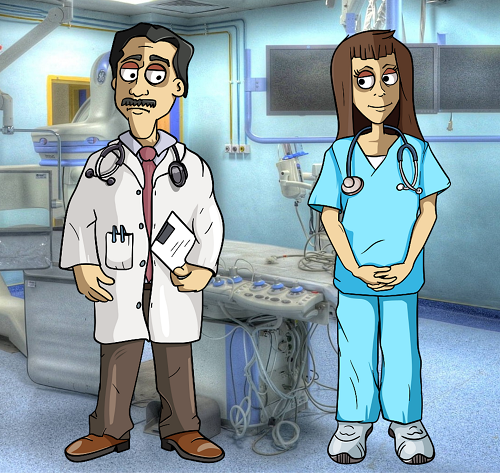
Feature image courtesy of Zahid H Javali & Dmitry Abramov from Pixabay
 Mike Falconer