Archives for category: Phone Systems

I have a problem.

I love my smart phone a little too much, and I hate that.

A cell phone has been my constant companion for over 30 years. I never had one of the giant brick phones of 80s yuppies but my first phone was one of the first that made those phones look ancient even then.

However, the advent of the iPhone and social media changed all that.

I’ve spent a significant portion of my career working, at least tangentially, with social media. I still enjoy social media and find it to have value, but I am more and more aware of the downsides. I think the real turning point was TikTok. The pull of those short form video snippets was often just too much on days where not much was going on. Losing hours to the app, while not all valueless (poetry, politics, history, and religious scholarship can all be mixed in with the stupid cat videos and hilarious footage of people hurting themselves) was disconcerting. Like the borderline alcoholic that realizes that perhaps always having beer in the house is not such a good idea, when the app starts warning you that perhaps you’ve been on it too long, you know there is a problem.

I should make clear that I still like and enjoy social media. I’ve been making content for social media and the internet for well over two decades. Call me shallow, but I have much in my life to thank social media for. I also feel that its current place in society is so firmly cemented that to be without it would be detrimental to how I live.

But something had to change.

I’d turned off notifications years ago, no longer being the frontline person responsible for the hospitals’ I manage social media and reviews, has its advantages. For my own personal pages and sites, a brief check whenever I had a moment would do.

But the checking got way out of hand.

Sitting at my desk and getting sucked into checking the groups I was a part of, my social channels, and even personal email seemed to consume more and more time. Even more insidious, was the “always on” home display on my iPhone 14 Pro.

I’d managed to resist the draw of Apple Watch and other smart watches. Partly due to my affinity for real watches, but also because the constant checking seemed even more intrusive than I was already experiencing and harboring qualms about. It also helped to have coworkers who love their Apple Watches and them checking them while mid conversation was annoying enough to “not be one of those people.”

However, the extremely useful always on of my new, at the time, iPhone 14 Pro with its time and date display along with a cute picture of one of my dogs was gateway and constant reminder of the joys of browsing my phone.

But how to change.

When I travel, which I do a lot of for significant portions of the year, the scene in airports is one of obvious Smart Phone addiction. Rows and rows of people, not talking, not reading a book, but low level browsing of social media. I’m not judging, I still am happy to while away the time lost in this miracle of our modern age – the interconnection of smartphone, the internet, and social media.  However, the sheer scale of how much these little devices of glass, metal, and plastic have come to be extensions of our modern selves can be shocking when one takes the place of an outside observer.

But what to do.

It seemed, I was not alone in wanting to make a change in the cycle of cellphone social media and attention-grabbing content intruding on life. Multiple celebrities were announcing their ditching of social media, and there were even a few who were getting rid of their smartphones altogether. But this removal of this seeming essential device of the 21st century seemed to reek of privilege. For every celebrity who is removing the stress of social media and the constant interruptions of a smart phone, you know there is an assistant and / or a marketing team who filter access and are ever more locked to their smartphones as they juggle their own needs and that of those who employ them.

So what for mere mortals?
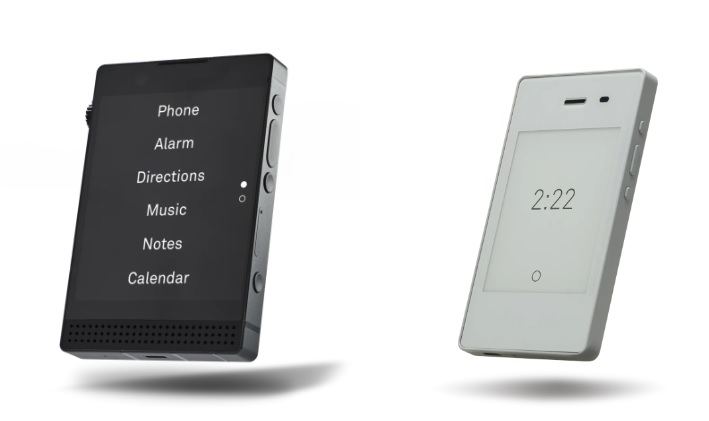
I had become aware of the Light Phone when it first launched, and I laughed like most people at the idea of wanting a Dumify phone and there being value in that. Now on its third generation, the Light Phone contains a lot of the conveniences of modern smartphones but with a monochromatic interface, limited apps, and no social media.

The downside of course being that I want and need social media in my life. I want and need various apps on my smart phone, to control alarm systems, remote access to work computers, control of my smart home, control of my electric car, notifications of the location of my keys, wallet, and dogs, and any number of other things that make up a connected life and work.  I was not ready to give up all that. I’ve read Ted Kaczynski and the Luddites, and I have sympathy with those arguments, I’m just not ready for the inconvenience, the disconnection, or in a place of that level of privilege, to make such a radical change.

An option would be to slave my iPhone to a Light phone as a hotspot. Meaning my iPhone could stay in my car or bag until I wanted it, but I could carry around a Light phone for day-to-day use. This seemed a needlessly complicated solution and I was also unconvinced that the temptation of the iPhone would not be too much and I would be back to square one but $500 poorer.

Then I found Dumify.
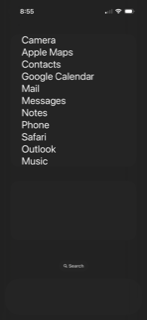
Dumify is an iPhone app, also available for Android users but you are on your own from here on out, that mimics the simpler interface of the Light phone, but does not impact the functionality of or even the regular interface of the iPhone.

By adjusting a few settings, and then just entering the apps you want daily / easy access to, the user can create a non-engaging, and thereby not tempting, interface for the things that matter most to you in a smart phone.

After a few weeks of use here is what I have found.

My smart phone screen time at work has plummeted making me far more productive when I am at my desk.

I still use and enjoy social media but it is as a choice rather than a need. I am therefore finding it limited to specific times of the day.

My simplified lock screen – see below – still can be a temptation but far less so.
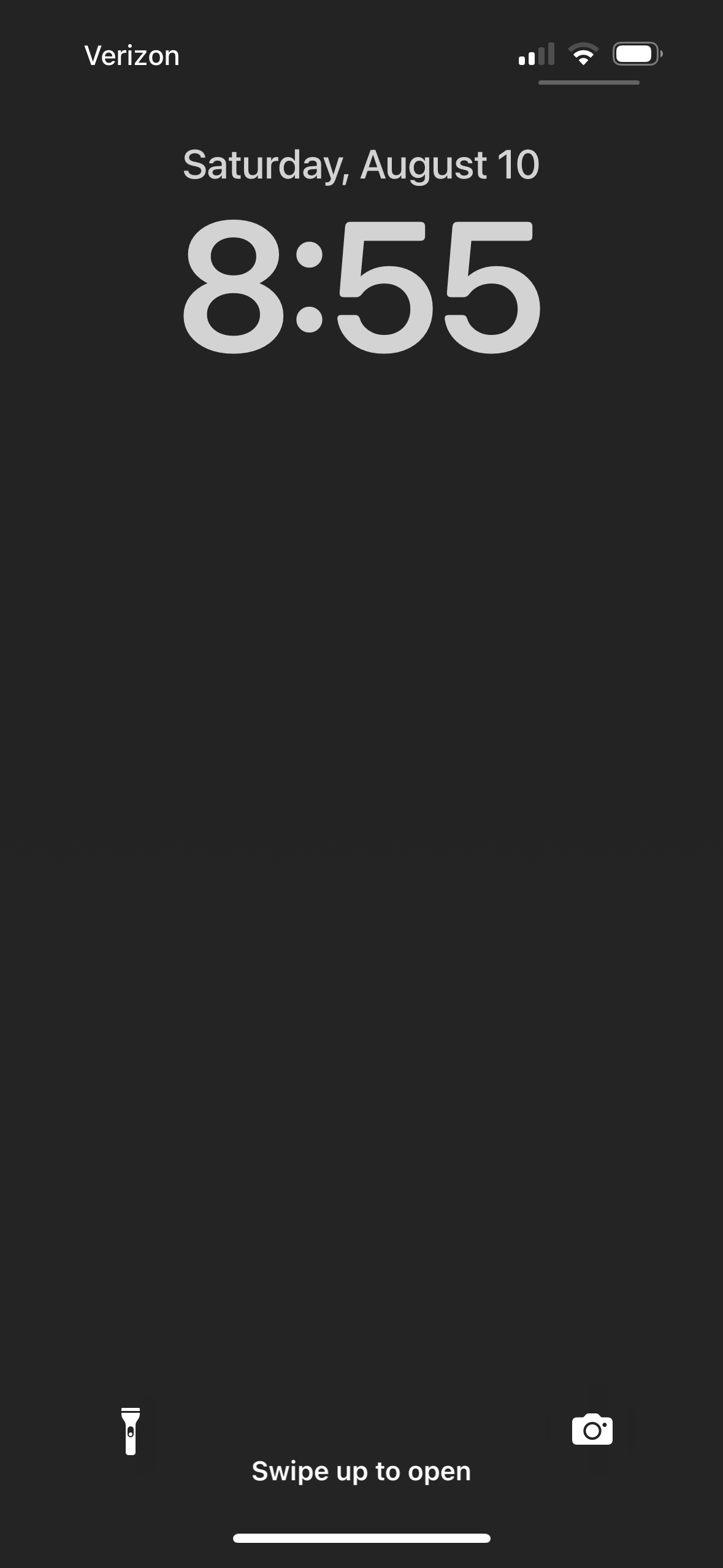
In addition, when I open my phone, I get an immediate reminder that I really don’t need to be checking Instagram, Goodreads, LinkedIn, or whatever, right now due to the interface. That simple reminder, a reminder of virtuous smartphone usage if you like, is all I need to put my phone down.

Many people, when using a tool like Dumify, delete a lot of their other apps. I have not done this. I still like my iPhone. I just use it differently. A bit like being smart about alcohol consumption while driving. An unexpected bonus has been that I have been finding myself leaving my phone in my jacket pocket when I’m in the car. The temptation to check an app while at a set of traffic lights is now gone.
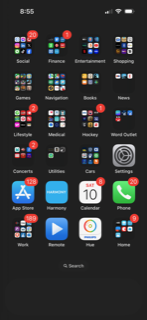
While the setup of Dumify is simple, and the app contains shortcuts to most popular apps, some research for company specific apps may be required. There are also multiple short videos embedded into the app to help the customization process. On the iPhone, the app uses URL Schemes and while it blithely suggests “just search on Google” for anything the app does not already have, I found this a little more complicated than I would have hoped. This might say more about the appalling state of Google search right now, than a lack of awareness by the app developers.

I found this article on URL Schemes extremely useful, however I did end up finding a few on my own either through searching or trial and error. It should be noted that the app uses a very basic implementation of URL schemes, and a lot of the documentation is about how developers can hack iPhone apps to do very specific things. When this is the case, I found just stripping the URL to its most basic form worked great.

These are the URL schemes I ended up having to make myself. I made most of them through trial and error as they are pretty simple.

Harmony Remote          harmony://                       

Hertz                                    hertz://

Lyft                                        lyft://

Music                                   music://

Open Table                        opentable://

Outlook                               ms-outlook://

RingCentral                       rcapp://

Southwest                         southwest://

Wallet                                  wallet://

Itunes Remote                 remote://

Dumify will also make you download a second app for some links. But this is seamless once it is downloaded.

Dumify is a onetime $4.99 purchase – another reason to love it. There are couple of other apps out there that do similar things to Dumify, but they follow a subscription model, and I was less impressed when I looked at them.

Dumbing down your smart phone is not for everyone. Just like being always connected is not for everyone. But it is nice to have choices, and I feel genuinely more in control of my time and feel that access to this wonder of the modern age is now on my terms and not on its terms.

I recently installed a new VOIP (Voice Over Internet Protocol) based phone system in two veterinary hospitals. I consider myself a reasonably technical person who had a grasp of the issues and drawbacks of such as system, as well as the benefits. I learned a lot during the process. While I am ultimately happy with our system, and how the installation process went, there were multiple things that I wish I had known before getting into the project. This is an attempt to pass on some of those lessons.

It should be noted that some of these lessons can also be applied to cloud-based mission critical software, such as cloud-based practice management software in the veterinary world; however, I do not have enough experience with such systems to make them a feature of this article.

First things first…

Are you the right person?

If you do not have a good understanding of how the business concerned works, at a process and protocol level, you are the wrong person to be purchasing a VOIP phone system for that business. It is very easy for people, even those who deal day in and day out with phones, to completely misunderstand the needs of a business and its phone system. Modern IP based phone systems can be very flexible and yet still have limitations. If you are the right person, don’t be afraid to get input from others; you are not perfect. You are about to radically affect how your colleagues work each and every day. Getting things right, and getting people on board, is critical.

Understanding Workflow

Map out exactly how the phone system is to work on paper with a schematic for call flow with all the relevant parties. For example, veterinary hospitals are very different from a lot of other businesses. They can have very high call volumes, few users will have dedicated extensions, and the way calls are answered can vary dramatically from other businesses.

Tackling Phone Trees

IP Phone system vendors love phone trees. They cover a multitude of sins. You may also love phone trees. Your business may also be right for using phone trees. Don’t, however, be bullied into using phone trees if you don’t want to use them. There is nothing to say that just because a phone system is capable of having a phone tree, that they have to be used.

Phone trees can work great if a business can guarantee that an employee will be a particular extension 90% of the time that it is rang, and is able to perform a particular function. If employees are constantly in flux, and rarely at a specific extension, phone trees may not be a good solution.     

Recruit Allies

Spend way more time figuring out who is installing and configuring the phone system, than the company that the phones are to be purchased from. Simply put, the installer will make or break a new phone system.

Yes, it is possible for you to configure your own system with phone based technical support.

Yes, this is a very bad idea and you will be miserable.    

In addition, get your IT vendor, or person who looks after business’s network, on board. You are about to make their lives much more complicated. They have to be on board or the installer and IT will be at locker heads from day one and setup will be hell.

Your Internet Sucks, You Just Don’t Know It

Obviously, internet speed is a potential issue with IP based phone system; however, reliability is often overlooked. When browsing the web, having the internet drop out, or have significant latency or packet loss, for 30 seconds to a couple of hours, does not often come to a user’s attention. With an IP based phone system, however, four minutes of internet down time, which will mean that a business will have no incoming or outgoing calls, can be an eternity.

The only way to find out if there are internet issues, with a current internet service, is to use a tool that looks for them. A tool such as Multi-Ping, can monitor the internet constantly for days and weeks, and send alerts about outages. This is not a complicated tool to use, or setup, however, getting some input from both your phone system installer and your IT vendor is probably sensible.

The solution to some internet issues may be to move from cable internet to having a dedicated fiber connection. This can be significantly more expensive, or may not even be available in your area. IP phone systems usually mean significant savings over traditional line-based telephones; however, the need for fiber can put a significant dent in those savings, or wipe them out entirely. It is worth looking at this issue during the initial planning stages rather than once you have an IP phone system and are dealing with multiple outages.

Choosing A System

Identify key new features that are needed in the new phone system, and features from the old system that need to be kept. Make the demonstration of new phone systems address each of these issues in detail – take nothing for granted. Have each potential vendor go through the training process on how the phones work before a purchase is made.  Don’t just settle for a demonstration. Irksome functionality, or lack of features, will only come up during training and are two easy to overlook during a sales demonstration.

Things to look out for:

  • How can a call be parked and picked up by other users?
  • How can multiple phones be paged so that users know a call is parked for them?
  • Are there different rings for internal or external calls?
  • What happens when a call is made to an extension that is in the process of dialing out?
  • How are incoming calls routed?
  • What happens when incoming calls are not answered?

Call the technical support line for the new phone system and ask some dumb questions. Do you like what you hear? How long does it take to get through?

Visit a business that has your potential new phone system already installed and has been using it for a while – even if that business is in different field to your own. It will provide valuable insight into the system working in the real world.

Signing the Contract

Get a guarantee about getting out of a new contract.

Usually, companies offer a 30-day money back guarantee. That is probably the minimum amount of time that it will take to setup and configure all but the simplest of systems. Try to get at least 60 days and agree with your installer and the phone vendor on date to go live within this period. That way, if major issues arise during the first month there are options, and leverage.

Phone Lines and Phone Numbers

In a traditional phone system, every incoming and outgoing call takes up a phone line. Each line has a phone number associated with it. With IP based phone systems there are no telephone lines and does your business want to keep these phone numbers? What will happen when a client calls one of these numbers when the new phone system is in place?

Moving numbers can take a significant amount of time and will almost certainly dictate the date and time of the new phone system going live. This is also a process that can go wrong. The disconnection of lines that are no longer needed invariably does go wrong. Ensuring that the correct lines have been disconnected, and the correct lines have been transferred is an important area to double check.

Ye Oldie Fax Machine

Faxes are pretty old school these days; however, here are plenty of businesses that continue to use them. If this is your business think long and hard before turning over this piece of phone technology to the IP phone system’s solution. There is a reason that your business has not moved away from the humble fax machine, and it is almost guaranteed that the new phone system’s fax solution is going to look a lot like email.

Consider keeping your fax machine as is until the new phone system is in place and settled. It is a change that can be made at a later date without too much trouble. In a worst-case scenario, it also gives you a backup form of communication should there be issues on day one of going live with the new system.

The Human Element

Have cheat sheets, extension lists, and phone maps ready before the system goes live. If users have to make their own it can be difficult to stop bad habits from developing. Give your team the tools to succeed.

Be prepared to make changes. Field Marshal Helmuth Karl Bernhard Graf von Moltke, a 19th century Chief of Staff of the Prussian General Staff, is famously quoted as saying; “no plan of operations extends with any certainty beyond the first contact with the main hostile force.” This is often paraphrased as; “No battle plan ever survives contact with the enemy.”

Employees, and colleagues, are not the enemy, but the concept is the same. There will be things that have not been thought of in the planning stage, even if you have involved as many people as possible in the design of the phone system. Be prepared to make changes, and adapt to make a new phone system a success for everyone.

Preparing for Disaster

What happens in an emergency, such as a complete loss of internet, or power? It is easy to leave the planning for emergencies, until all the kinks have been resolved in the new system.

This is a mistake.

Have those plans already worked out, and the kinks in the emergency plans worked out, before the new system goes live. By making the emergency plan part of the main plan it will mean that you are not scrambling when there is an issue sooner than you had hoped.

Make testing your emergency solution part of the going live process. Also make sure that the emergency procedures are written down and easy to follow. Staff are going to absorbing a lot of new information when dealing with a new phone system. It is unlikely that they are going to remember how to switch over to the back plan, weeks or even months after it was explained to them.

All the Shiny New Toys

The aim of rolling out a new phone system should be to replace the existing phone system and address some of its shortcomings. Don’t be in too much of a rush to show off just how powerful and “cool” this new toy is. Get the basics sorted and stable. Adding new features to your workflow, and foisting large amounts of change all at once, while being unable to perform key functions of the business can easily back fire and cause hospitality. There is nothing wrong with rolling out features in stages to make managing change more, well, manageable.   

Final Notes   

VOIP phone systems are tools. They should not dictate how a business functions, unless that business considers the change a benefit. It is the job of the tool to change to suit the needs of the business. For this reason, VOIP phone systems can be complicated beasts. It is therefore to be expected that installing a new phone system is a collaborative effort. Stick to your guns about what you want from a phone system, because it will be you who will suffer if it does not work how you want it to.

It is a cliché, but an ounce of prevention really is worth a pound of cure.