Archives for category: Race

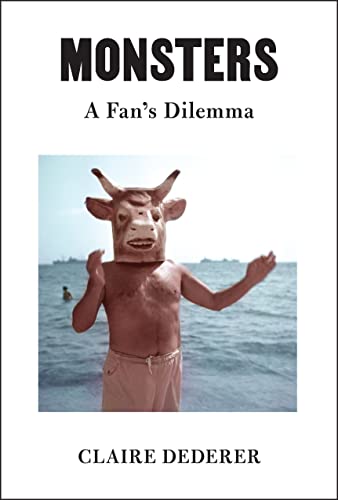
How should we feel about those whose work we admire, or even love, when they turn out to be awful human beings or even just deeply flawed? Are you a better artist if you become more selfish? This is the subject of Claire Dederer’s exceptional book – Monsters: A Fans Dilemma.

Do great artists become assholes (or monsters) because of their singular commitment to their art or do assholes / monsters become great artists because they know their transgressions will be forgiven? How should we feel about Wagner, Miles Davis, Roman Polanski, Woody Allan, David Bowie, Sylvia Plath, Joni Mitchell, Valerie Solanas, Doris Lessing, and many, many more?

Male artists who are considered monsters are usually considered so because of violence or abuse. When female artists are considered monsters, it is usually because they have abandoned their children – something that male artists do without seeming consequence or judgement. There is also an added dimension of racism. As Ms. Dederer points out by quoting the often-maligned Kanye West; “I’m not a rap star, I’m a rock star.” Why? Because rock stars generally do not experience what Kanye West has experienced ad nauseam: repercussions. A fact that Ms. Dederer points out by not covering the army of white make rock stars accused of sexual predatory behavior.

This is perhaps one of the most complex questions of our times. Claire Dederer does a superlative job of sorting through the mixed emotions we all feel about such figures, and she herself feels as an artist with the choices she has made on her own artistic journey as a writer, a mother, a partner, and as an alcoholic. She also tackles whether this is a price too high for the #metoo movement (spoiler alert: it’s not.)

At its core, Monster is an exploration of the meetings of biographies; the biographies of those with fans and the biographies of the individual fans themselves. It also embraces the fracture points of our society, racism, sexism, and violence. Our reactions to the transgressions of those who make the art we love are subjective and are based on both the artist and the viewer. We can still consume the art of terrible people because there is a difference between what we feel – the emotional response to great art – and moral thoughts. We can look at great art and see the stain left by the actions of its creator. For some the stain will ruin the piece, for others they will see past the stain. What is right for one person will not necessarily be right for someone else.

Monster also places this discussion in a historical context. We often feel that we are in an enlightened time. That we are in an apolitical present where we know better than the past. As Ms. Dederer states – we don’t know better because we woke up, we know better because some people spoke up. We can all look back on the past and say we would have spoken up, however, how many of us do when the world around us burns? The things we thought we had transcended are still there – minority communities have always known this. It is not helped by the fact that everyone still loves an asshole. How any of our beloved characters in book, television, and film we would abhor in real life if we had to deal with them? “Don’t you know who I am,” is an awful and entitled addition to any disagreement. Yet we all love the scene where the clueless front desk clerk tries to stop someone from entering the building they actually own, and the clerk works in.

Stepping away from the art discussion for a moment. Monster is also an excellent discussion of the pressure of career vs. motherhood and the goals of careers in general. Returning to Kanye West for a moment, the line; “People want power and vacations” is an insightful view of what drives people in the modern world. But the balance of motherhood and career is where Monster shines brightest. If it is a real choice to trade levels of career success for the time a mother spends with their children – how does that express itself with professionals? How do both employers and employees recognize this dilemma and neutralize its effects for everyone to get what they want and need?

While the author eschews the term “cancel culture” as non-useful it permeates the book. Is a love of a piece of art enough to make up for the transgressions of the past by the artist? The is the fans dilemma – the subtitle of the book. Ms. Dederer gives no easy answers here but does give us a lot to think about. Is art, or career, worth the price that the artist (or professional) will have to pay or make others pay? Both the viewer and artist need to make that decision.

Monsters is a start to that conversation.  

The TV show on Apple TV + “Five Days at Memorial” based on the book of the same name (which in turn is based on a Pulitzer Prize winning article) is about three quarters through as I finished the book and I write this. Therefore, my criticism and praise of the show should be seen in this context. I’ll try to keep this review free of major spoilers for the TV show, but it is difficult to discuss the issues of this true story without covering some of the events involved.

“Five Days at Memorial” tells the story of what happened to the doctors and patients at Memorial Hospital during Hurricane Katrina in New Orleans when they lost power, were flooded, were abandoned by authorities, and evacuation was difficult to impossible. It is a challenging story that involves issues of disaster preparedness, corporate ownership of hospitals, death, euthanasia, quality of life, triage, race relations, rationing of care, and the potential criminal culpability of doctors for decisions made during emergency situations.

The TV show seems to be told from a particular point of view which in a story like this means taking a particular side. It paints a bleak picture of hospital ownership, which according to the book, are certainly due for criticism; however, the lack of care and forethought shown is disingenuous. It does set a similar tone, but like many “docudramas” it combines characters, invents new ones, and seems to invent situations to fit story arcs and running times. The acrimonious relationship between the staff at Memorial and the staff of the Life Care Hospice hospital, that inhabited the same building, seems to be a fiction made for TV.  It also wholesale moves one situation from a different hospital, Memorial was not the only hospital with major issues during Katrina, to Memorial for dramatic effect.

While I’m painting a picture of the show as being an unreliable narrator that is not to say that it is not entertaining and emotionally engaging. It also shows the importance of disaster preparedness and the dedication of medical professionals. Being in the veterinary profession, the plight of pets and the role they play in the movement of people during emergencies, is of particular interest. While the book does an excellent job of recognizing the issues that looking after pets in an emergency raise, the TV show pays only lip service to this, except for one brutally accurate scene in episode six.

As of episode six, the show is of limited use as a teaching tool about disaster response and medical ethics although it is a show worth watching. It does do an excellent job of showing how rumors start and get out of control but provides no solution for controlling them – unlike the book which forays into comparing how other hospitals, during Katrina, dealt with the same issues as Memorial differently or made the same mistakes.

As a teaching tool for disaster response issues, the book is remarkable. It acts as the crucible for ideas that was never able to be had in public and really needed to be. These are issues that affect us to this day. The book, written in 2013, makes this clear with hindsight as it discusses the withdrawal of ventilators from patients during a potential Influenza pandemic. While Katrina changed many things about disaster response and emergency preparedness, this book shows how much still has to change nine years after its publication and 17 years after Hurricane Katrina.

The book swings wildly between differing points of view on the more contentious issues which buffets the reader much as the characters in the book must have felt. The research is impeccable and paints an impressively detailed picture of both Memorial during Katrina and  that of public opinion, law enforcement, politicians, and the medical community in the aftermath.

It also explores in depth not only moral quandaries faced by doctors and emergency personnel, but also the ethical and legal issues that also arise. It does an extraordinary job of showing how people in decision making positions get trapped by a lack of situational awareness and become prisoners of decisions made with different information at different times.

What Five Days at Memorial shows, both in written form and to a lesser extent its TV cousin, is that heroes can be flawed and that villains can do good. What really needs to be our focus is values. Do emergencies change our values or do our values inform how we respond to emergencies? We need to discuss that, particularly considering COVID 19, and if the TV show helps that happen then it will have done a great service to our society.

However, it will be the book that informs that discussion and that we should use as a foundation. This is what great books do. They focus our minds and give us evidence to think. There are no easy answers in Five days at Memorial and a lot of questions. But what Ms. Fink (more accurately addressed as Dr. Fink since she herself is an M.D.) has done is set us a table for us to dine over and have those discussions. These issues will not go away, and as the book makes clear in the epilogue, we are doomed to make the same mistakes, with the same justifications, or go down potentially dangerous roads, if we do not have frank discussions about how we as a society actually feel about ethical and moral quandaries that often arise in the most trying and difficult of times.

This is the hardest book review that I have ever undertaken to write.

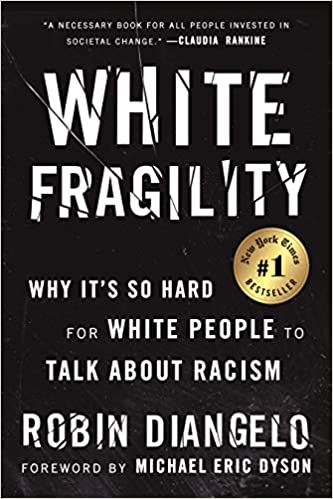
There are books that I do not feel I have the intellectual rigor to do justice too, The Righteous Mind by Jonathan Haidt for example, which was one of my favorite books of 2018, and there are books that I can’t say much more about other than “read it,” Traction by Gino Wickman falls into this category. White Fragility is both; however, it also shook me to my core, and I felt I had no choice but to try and do it justice. I can count on one hand the books that have upended my beliefs, as White fragility has done, during my life.

I was initially skeptical of Ms. DiAngelo’s New York Times bestseller. I was uncomfortable with a white author discussing race for a primarily white audience. Considering myself a reasonably “woke” individual, but never as pretentious to use such a term, what can I, as a reasonably well read and liberal individual be taught through a third party’s experience of racism?

That I am part of the problem.

Ms. DiAngelo’s book is a tour de force and a wakeup call for those that consider themselves allies, but all too often support racist structures and prejudiced behavior.

“Our simplistic definition of racism as intentional acts of immoral individuals engenders a confidence that we are not part of the problem and thus our learning is complete.”  – From White Fragility

White Fragility changes, some may say clarifies, our definitions of words that have melded into, as Ms. DiAngleo would probably agree, a binary good and bad. I cannot be those things because I, or they, am a good person. By not being to get past this logjam, true discussions of racism are impossible.

As quoted in White Fragility; “Racism is a structure not an event. A structure of oppression that goes beyond individual prejudice and discrimination.” In other words, racism is tied to societal power. Only whites can be racist because only whites, in the United States, hold societal power. That whites cannot help but be racist, is partially explained by being brought up in a racist society.

These are powerful and disturbing words for most white people to hear, let alone believe. It is helped by defining other terms, not just in their racism framework but in anthropologic one.  Prejudice is prejudging someone based on the social groups that the person belongs to and based on little or no additional information. “All humans have prejudices,” writes Ms. DiAngelo. Discrimination is action that is based on prejudice. It is therefore possible to be racist, because one comes from a racist society, but not be prejudice or practice discrimination.

In a devastating section of White Fragility, Ms. Diangelo shows us how “whiteness” has become the norm for “human” and challenges us to think about the patterns of friendship, culture, and society in general that we grew up in and continue observe today that reinforce a racist society. That believing we are in a post racial society, or that by our uniqueness of experience or background, means that we are immune to group messages and “white solidarity,” is expertly dismantled by Ms. DiAngelo’s totally logical arguments.  That “good schools” has become a metaphor for a “more white neighborhood,” is the most obvious example of this.

“The way I see the world, drives my actions in the world.” – White Fragility

White Fragility is not an easy read. This is not because of Ms. Diangelo’s prose, which are excellent, but because this is a book that you will disagree with. That is its purpose, to challenge your basic assumptions about the society we live in. To see the world in a different way. To understand the world as people of color understand the world. And hopefully understand the strictures that are in place that make it so hard for white people to have discussions about race, in any meaningful form.

White fragility is a starting point to allow our world view to be changed, and perhaps to make us more open to hearing feedback on when the society we grew up in, and live in today, intrudes on our interactions and friendships with people of color.

Read this book.