
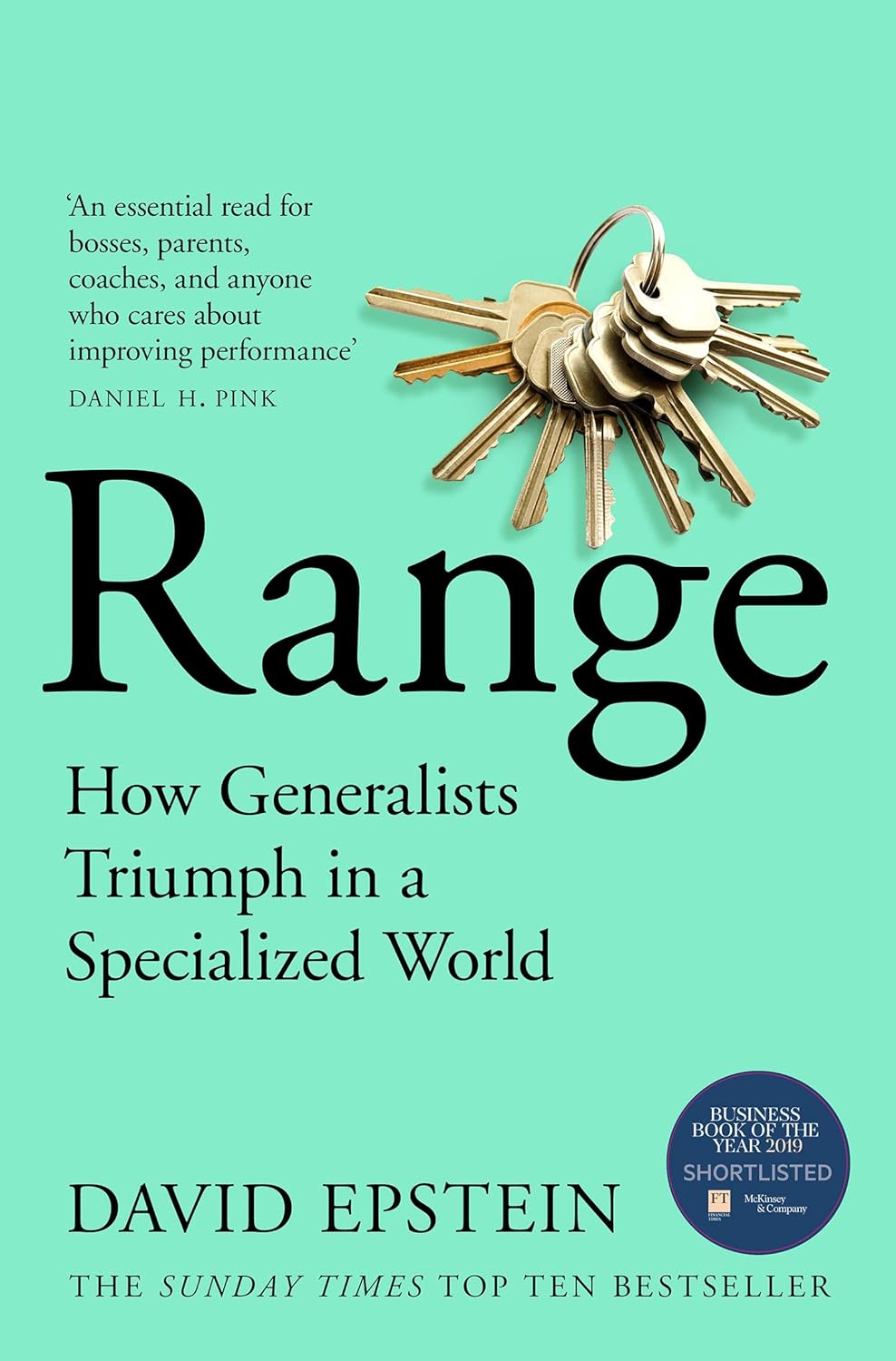
As a society we tell ourselves stories that, while convenient, are not always, or even ever, true. In what is probably Malcom Gladwell’s best book “Outliers” (which I can’t believe I have not reviewed) the author tells of the often decade long stories, and tales of extraordinary advantage, of seemingly overnight successes. David Epstein, in “Range: Why Generalists Triumph in a Specialized World”, is also debunking one of the stories we tell ourselves – that to be really good at something, or to have great success at something, we have to have focused on that thing for a long time – if not forever.
Before I go any further a word to my veterinary and human medicine readers. In this post, and indeed in Mr. Epstein’s book, when we talk about “specialization” we are using it in the general sense as opposed to the legal (small “s” rather than capital “S”). Although, I do believe that there are lessons for students from Mr. Epstein’s excellent book. Don’t be in too much of a hurry to map out your career. It’s a good thing to try out different interests and to change your mind – you’ll be better in the long run for it.
The pressure to focus on one thing, whether it be in sports, music, or entrepreneurship is all pervasive and often has business interests behind the marketing of “hyper specialization.”
It is a good story.
The Tiger Woods story is one that the author highlights. It is a story of the very young Tiger playing golf before he could talk and spending all day at the golf course. It is a story of winning tournament after tournament and having an unflinching goal of winning more titles than anyone else. Mr. Epstein juxtaposes the “Tiger story” with the far less well-known story of Roger Federer. Federer’s mother was a tennis coach but she refused to coach him and actively tried to dissuade him from playing tennis. A young Federer also seemed far more interested in soccer, basketball, skateboarding, handball and skiing. It was not until his teens that Federer started to gravitate towards tennis and then his goals were not lofty, but the rather quaint “meet Borris Becker” and “play at Wimbledon.”
This wide range of experience and lack of focus is the author’s main argument – that, more often than not, it is range that leads to success rather than specialization. That depth of experience of different fields matters more than depth of experience in just one. Interestingly, the evidence that Mr. Epstein quotes, rather persuasively, is that while early hyper specialization can lead to children getting a head start in that chosen area, they tend to fall into line with their peers rather than stay ahead as time goes on.
Where the book misses, for me, is that it seems to continue to fall back to specialization being a worthy goal via a route of different experiences, rather than the range of experiences being a worthy goal in itself. However, this minor quibble aside. The book makes a very strong case for experience in general and for following one’s interests. A great example is the idea to not ask kids what they want to be when they grow up, but rather to ask them what they are interested in. Our education, and in our careers, we often ask others where they are headed and penalize them for not knowing. This may be a mistake.
When I look at my career, I’ve had very specific goals at different times and while I have met some of them, I have taken some spectacular left turns that has led me to areas I would never have even considered just a few years earlier. No one is more surprised than me that I live in Las Vegas, watch a lot of hockey, and write poetry.
This is an important book for those who mentor, or lead, others. How we choose to guide – matters. We are often a deciding factor in whether to specialize in an area or to follow seemingly unconnected interests. There is value in a range of interests and experiences that benefit both the person and the employer.
A more enlightened view of the goals of mentoring will benefit everyone.

 Mike Falconer