
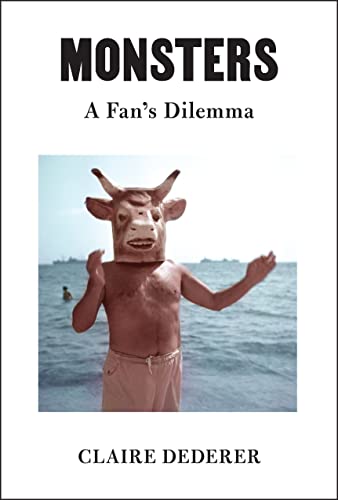
How should we feel about those whose work we admire, or even love, when they turn out to be awful human beings or even just deeply flawed? Are you a better artist if you become more selfish? This is the subject of Claire Dederer’s exceptional book – Monsters: A Fans Dilemma.
Do great artists become assholes (or monsters) because of their singular commitment to their art or do assholes / monsters become great artists because they know their transgressions will be forgiven? How should we feel about Wagner, Miles Davis, Roman Polanski, Woody Allan, David Bowie, Sylvia Plath, Joni Mitchell, Valerie Solanas, Doris Lessing, and many, many more?
Male artists who are considered monsters are usually considered so because of violence or abuse. When female artists are considered monsters, it is usually because they have abandoned their children – something that male artists do without seeming consequence or judgement. There is also an added dimension of racism. As Ms. Dederer points out by quoting the often-maligned Kanye West; “I’m not a rap star, I’m a rock star.” Why? Because rock stars generally do not experience what Kanye West has experienced ad nauseam: repercussions. A fact that Ms. Dederer points out by not covering the army of white make rock stars accused of sexual predatory behavior.
This is perhaps one of the most complex questions of our times. Claire Dederer does a superlative job of sorting through the mixed emotions we all feel about such figures, and she herself feels as an artist with the choices she has made on her own artistic journey as a writer, a mother, a partner, and as an alcoholic. She also tackles whether this is a price too high for the #metoo movement (spoiler alert: it’s not.)
At its core, Monster is an exploration of the meetings of biographies; the biographies of those with fans and the biographies of the individual fans themselves. It also embraces the fracture points of our society, racism, sexism, and violence. Our reactions to the transgressions of those who make the art we love are subjective and are based on both the artist and the viewer. We can still consume the art of terrible people because there is a difference between what we feel – the emotional response to great art – and moral thoughts. We can look at great art and see the stain left by the actions of its creator. For some the stain will ruin the piece, for others they will see past the stain. What is right for one person will not necessarily be right for someone else.
Monster also places this discussion in a historical context. We often feel that we are in an enlightened time. That we are in an apolitical present where we know better than the past. As Ms. Dederer states – we don’t know better because we woke up, we know better because some people spoke up. We can all look back on the past and say we would have spoken up, however, how many of us do when the world around us burns? The things we thought we had transcended are still there – minority communities have always known this. It is not helped by the fact that everyone still loves an asshole. How any of our beloved characters in book, television, and film we would abhor in real life if we had to deal with them? “Don’t you know who I am,” is an awful and entitled addition to any disagreement. Yet we all love the scene where the clueless front desk clerk tries to stop someone from entering the building they actually own, and the clerk works in.
Stepping away from the art discussion for a moment. Monster is also an excellent discussion of the pressure of career vs. motherhood and the goals of careers in general. Returning to Kanye West for a moment, the line; “People want power and vacations” is an insightful view of what drives people in the modern world. But the balance of motherhood and career is where Monster shines brightest. If it is a real choice to trade levels of career success for the time a mother spends with their children – how does that express itself with professionals? How do both employers and employees recognize this dilemma and neutralize its effects for everyone to get what they want and need?
While the author eschews the term “cancel culture” as non-useful it permeates the book. Is a love of a piece of art enough to make up for the transgressions of the past by the artist? The is the fans dilemma – the subtitle of the book. Ms. Dederer gives no easy answers here but does give us a lot to think about. Is art, or career, worth the price that the artist (or professional) will have to pay or make others pay? Both the viewer and artist need to make that decision.
Monsters is a start to that conversation.
 Mike Falconer