Archives for posts with tag: Amazon
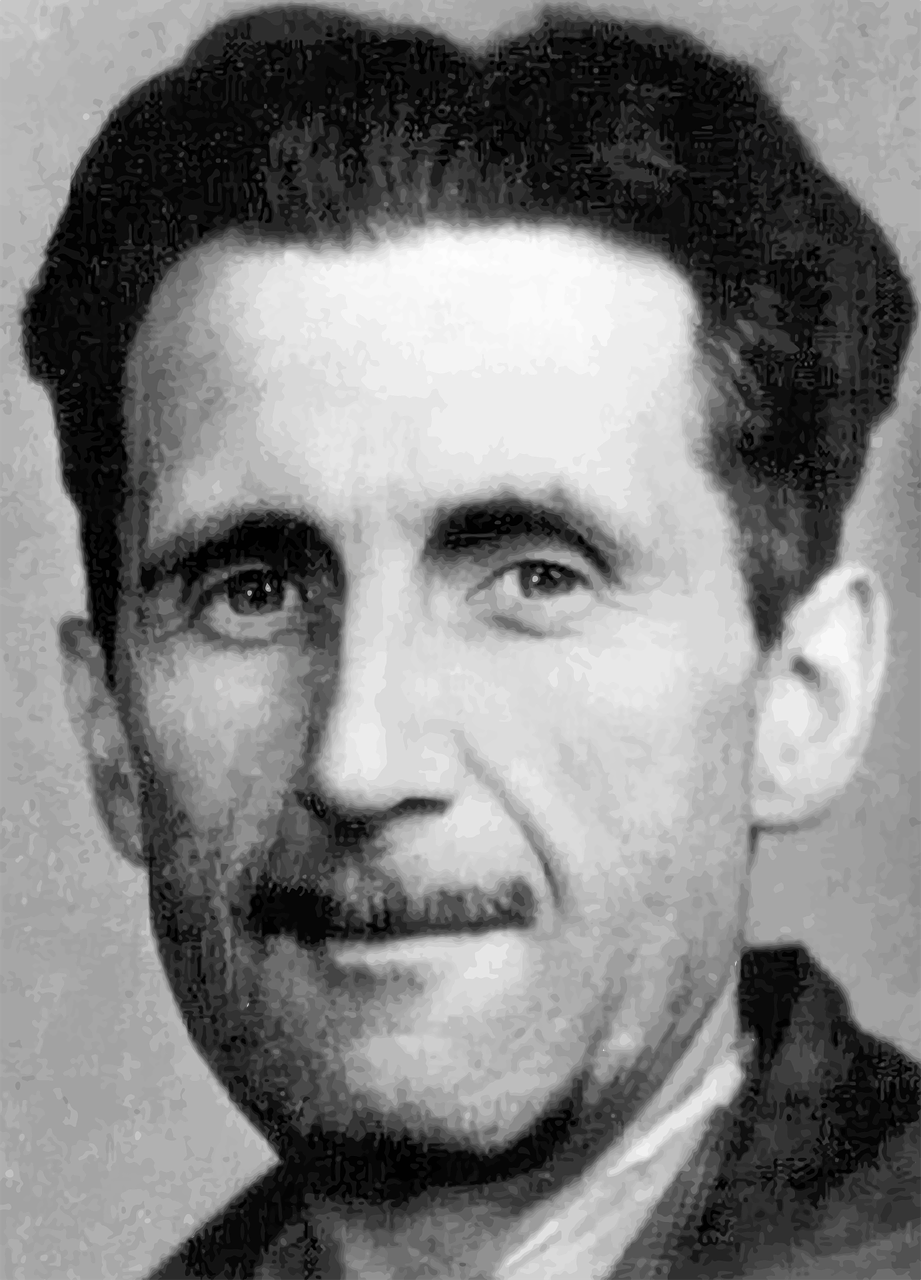
Image of George Orwell by Gordon Johnson from Pixabay

“Any sufficiently advanced technology is indistinguishable from magic” – Arthur C. Clarke.

In a remarkable about face for a technology company, Amazon has confirmed that it is moving away from its “just walk out” technology at its Amazon Fresh stores. The technology boasted that it used a mixture of cameras, sensors, and artificial intelligence (A.I.) to know what consumers had put in their baskets and to accurately bill its customers without all that tedious checking out and interacting with another human being at the grocery store.

Image Copyright Amazon.com used under fair use for criticism, comment, or news reporting.

What was actually happening was that up to 1,000 people in India were watching and tagging videos to ensure that customers were billed correctly. Amazon has apparently laid off almost its entire development team of this “technology” and will start to phase out this service from its existing Amazon Fresh stores. This is all the more surprising after Amazon’s experience with A.I. recruitment. In 2015 Amazon had to abandon an A.I. résumé reading project due to being unable to stop it from discriminating against women. It was seen by many as a humiliating comedown for the tech giant.

Image Copyright Amazon.com used under fair use for criticism, comment, or news reporting.

“Pay no attention to that man behind the curtain!” — The Wonderful Wizard of Oz, L.Frank Baum.

While many will smirk at Amazon’s second major public A.I. failure, and I have to admit to being one of those people, there is a bigger issue here which Amazon should be commended for. It is the lifting the vail on A.I. tools that are not some magic that comes out of the ether. They often require human intervention to be usable- both in front and behind the keyboard. In addition A.I., or more accurately Machine Learning , need examples of human labor in the thousands, if not millions, to be trained. The training of these A.I. “models” has become a contentious subject for those with an interest in A.I. both as supporters and critics.   

“Any technology distinguishable from magic is insufficiently advanced” – Barry Gehm’s corollary to Arthur C. Clarke’s original quote.

The main issue with machine learning is that the A.I. industry, almost without exception, sees art, music, writing, film, and pretty much the entire internet as fair game for training A.I. models, which they in turn sell to us in the guise of generative A.I. Those of us on the other side (waves hand in air to indicate exactly where I stand on this subject in case you had not already guessed) say that copyright does not work that way. Derivative works are still derivative.

 It is indeed hilarious to watch companies such as Disney try to navigate this brave new world. On the one hand, Disney has tried to argue that generative A.I. is fine for them to use to create new works based on the work of artists they have employed in the past. But Disney has then complained about possible copyright infringement when someone else has tried the same trick with copyrighted works they own.

Image Copyright Walt Disney Company used under fair use for criticism, comment, or news reporting.

The lawyer who used ChatGPT to write a legal brief might want the machines to infringe a bit more. To his cost, literally, the lawyer found out that the pesky machine had just made up all the cases that it sited in its argument which he signed his name to. He was sanctioned and fined after he was found out. I just love that generative A.I. tools hallucinate (the developers term, not mine).

One of my favorite activities these days is to ask A.I. peddlers what they use to train their models. Indeed, I had a most entertaining afternoon doing just that at this year’s Western Veterinary Conference. Amongst the answers I received were “none of your business – who are you” (my favorite), “medical records from a university,” and “the internet.” None of the vendors I spoke to were willing to discuss privacy, copyright, or what happens if they are no longer allowed to train their models that way. One gets the distinct impression of building on borrowed land.

The latest darling of the A.I. generation tools is Sora, which creates beautiful full motion video from text prompts and is from the OpenAI stable. However, in a recent interview with the Wallstreet Journal, Mira Murati, OpenAI’s Chief Technology Officer, refused to answer questions about where Sora’s data set for modeling came from. Murati also refused to say whether the data set that Sora used included YouTube and Instagram videos – stating that she “did not know.” That in turn has led to some serious questions about licensing, as YouTube’s CEO Neal Mohan, confirmed that OpenAI using YouTube content for modeling purposes would be a violation of YouTube’s terms of service.  

“Thou shall not make a machine in the likeness of a human mind” – Dune, Frank Herbert

There is a temptation to label those who speak out about our current infatuation with A.I. tools and criticize the foundations those tools are built on as luddites. While our current use of the word brings to mind hoards of unemployed mill workers bent on smashing “the spinning jenny,” the truth about the Luddites is actually far more nuanced and carries a message for today.  The Luddites did not hate all machines, they in fact were fine with most and just wanted them run by workers who had gone through apprenticeships and were paid decent wages. The Luddites main concern were manufacturers who used machines in “a fraudulent and deceitful manner” notes Kevin Binfield in his book “Writings of the Luddites.” Outsourcing the cashing out of grocery shopping to a developing country, and labeling it as new technology, is a tactic the Luddites would have been all too familiar with and would have been happy to march against.

While I am not advocating for a Butlerian Jihad as Herbert described as the backdrop for Dune, there is merit in the context he provides to the proscription on thinking machines.

“Once men turned their thinking over to machines in the hope that this would set them free. But that only permitted other men with machines to enslave them.” – Dune, Frank Herbert.

As author SJ Sindu wrote on Twitter (I refuse to call it X on general principles); “We don’t need AI to make art. We need AI to write emails and clean the house and deliver the groceries so humans can make more art.”

A.I. art needs human art to model itself on and the pushback from artists and consumers is already significant. When the argument over modeling reaches the courts, the damage may already be done. Only then will we see the parallels between the creative arts and A.I. that we saw in the 2000s with Napster / Pirate Bay and music. Will it be too late to put this tool back in its box?

A healthy skepticism when it comes to A.I., I think is all important. And not just a skepticism for what A.I. can do but for the intentions of those that wield it.

A.I. will need to be “open” and not just open as in the name of a for profit corporation. Its models will need to be transparent and be able to be questioned. As I wrote about in my review of Hilke Schellmann’s book on A.I. in hiring and Human Resources “The Algorithm”; …it is often difficult to impossible for candidates or employees to challenge decisions by managers which they may feel have been affected by bias. How much more difficult is it when it is not a human making the decision or recommendation? A tool of which we cannot ask the most basic of questions: what were you thinking?

Footnotes and links would be a great start. But most generative A.I. companies consider this proprietary information and therefore refuse to provide what would seem a most obvious step when it comes to trust. That, in fact, is exactly why authors use footnotes and links, to allow others to follow their thinking on how they reached their conclusions. I’ve tried to add as many links and footnotes as I can to this article without becoming burdensome.

I am not a Luddite in the modern sense, but I do share a lot of the same concerns of the Luddites of old. We only need to look at our world to see why we should be concerned. It is a world where poor people in the developing world watch us shop so that we can pretend we are living in a magic future where machines do all the work. Where the drudgery of making art has been taken away from us so it can be sold back to us by corporations owned by billionaires.

I’m not sure I want A.I. to write my emails, but I can think of plenty of things that I’d like it to undertake. I already use it in a number of ways. I’ve used A.I. images in my books (although I probably will not do so in the future). I currently feel that A.I. has to earn its place in my world by proving its benefits not just to me, but the world as a whole. Will the undertakings of A.I. be for the benefit of people? Currently, that seems to be the last thing on the developers’ minds.

“The tune had been haunting London for weeks past. It was one of countless similar songs published for the benefit of the proles by a sub-section of the Music Department. The words of these songs were composed without any human intervention whatever on an instrument known as a versificator. But the woman sang so tunefully as to turn the dreadful rubbish into an almost pleasant sound.” – 1984, George Orwell

I’ve been holding staff meetings in veterinary hospitals since I started in veterinary Medicine in 2005.

That is a lot of monthly staff meetings. In 2017, it occurred to me perhaps others could use some of this information for their own meetings in the same way that I used this information from where ever I stole it from. You can find Part One on The Client Centered Practice herePart Two on Team Building Exercises and Games here, and Part Three on Communication Tools here. What I did not cover in these initial three articles was how to actually best hold staff meetings. This post is an attempt to rectify that oversight.  

Meetings get a bad rap, and it is usually because they are badly organized, and don’t obey some basic rules.

Meetings should not be about delivering information. Meetings should be for discussing things. If a lot of information is to be delivered, consider writing an email or a white paper and distributing the information beforehand.  

All meetings need an agenda. In an ideal world, this agenda is distributed to all attendees before the meeting to allow them to prepare or bring any supporting documentation they may need. Agenda items need to be given an allotted amount of time. This prevents over stuffed agendas that cannot be gotten through in the time allowed. Participants should be encouraged to submit items for the agenda ahead of time. Always leave time in the agenda for any other business, but keep to time limits (see below). Any other business, should be a last-minute catch all, not the method by which participants submit their agenda items.

Start on time. End on time. One of the reasons meetings get a bad rap is because we allow them to run on longer than they are scheduled for. Nobody will complain if a meeting ends early. Ending on time also provides other stakeholders the assurance that employees will return to their normal duties by a specific time. There are managers who lock the entrance to meeting rooms at the meeting start time to exclude a anyone who does not turn up on time. While this has a certain “shock value,” it does not trust employees to be adults, or recognize that things happen and that employees have other responsibilities particularly when we ask them to attend a meeting in the middle of their day.

Make attendance easy. If the COVID 19 pandemic has shown us nothing else it has shown us the benefits and the drawbacks of virtual meeting tools such as zoom. However, while tools such as Zoom do not provide a complete replacement for a person being at a meeting in person, they do provide a good enough presence to make them an option for employees who are not on site or who would have to travel into work only for the specific meeting.

Consider attendees days off and the hours of their shift when setting the date and time of meetings. If there is an employee who needs to leave at a certain time, try to adjust the agenda to allow the items most relevant to them to be addressed before they have to leave.

Pay employees for meetings. Meetings are work – therefore employees should be paid. If a meeting is held over lunch time, provide lunch. It is the least that an employer can do.  

Do not make meetings a vehicle for complaints, and negative opinions. Meeting should be able working together as a team to solve problems – ensure that the language of the meeting. This starts at the top. If the agenda is all negativity, and all the things that are wrong, that is the meeting that will result.     

Meetings should be limited in size if possible. Jeff Bazos, the CEO of Amazon, is famously quoted as saying that a meeting should be able to be fed by a single pizza. There is a lot to this.

I believe that once meetings get above 12 people, they become unwieldy, and back and forth discussion becomes either impossible or impossible to control. Of course, there will always be times when “all hands” or “town hall” type meetings need to be held, but understand their limitations and consider if your goals would not be better served by holding multiple smaller meetings. Departmental meetings, for example, may serve your business better and provide better opportunities for engagement.

Where town hall meetings can work very well is to provide context for an announcement, good or bad. These single-issue meetings, can act as a pressure value and allow concerns to be voiced, or addressed, in a relatively controlled environment.

If meetings are a routine affair, and they should be, keep the meeting’s agenda structured. A structure that I used when I used to hold townhall meetings was:

  • Performance results
  • Customer service metrics results
  • Small items
  • Team building exercise
  • Main theme

Examples of main themes can be found in parts one and three of this series, and examples of teaming building exercises can be found in part two.    

I continue to use structured agendas even in very small meetings to ensure that the continuity for one week / month to the next.

Minute Meetings where possible. Keeping a record of decisions, and things that are to be followed up on is essential if meetings are to become more than a group of people talking. Minutes hold people accountable because they do not rely on the memories of participants.   

I believe meetings are important, and that good meetings are a sign of a healthy culture. I also believe you get out of meetings what you put into them – and that does not mean a fancy PowerPoint deck. Just because meetings are held does not mean that they are useful or even needed. Meetings are expensive and time consuming. To make them work, and for them to be relevant, takes effort and energy. It also takes commitment from all involved.

Without that, meetings are all talk.

(Clicking on the image above will take you to Amazon where a tiny percentage goes to help my movie and book buying habit.)


 Zappos, Tony Hsieh, and the Downtown Project are controversial subjects in some quarters of Las Vegas – although I have always been a supporter. In my opinion, it is hard to not give credit to Mr. Hsieh for having the courage, faith, and energy, to move his company and sink millions into the depressed center of Las Vegas, a city I love living in and call home.

That makes Aimee Groth’s tell all book about living inside, or at least partially inside, the bubble of Tony Hsieh’s circle throughout the first five years of the Downtown Project all the more difficult, and fascinating to read. With Ms. Groth becoming part, if not the driving force, of the narrative this is very much a piece of Gonzo journalism which gives some first person perspective to the stresses and confusion that many in the story recall.

To give some background, Tony Hsieh is the CEO of Zappos, an online shoe retailer which is owned by Amazon. In 2013, Zappos moved its headquarters into the former city hall building of Downtown Las Vegas. Downtown Las Vegas, and in particular the area east of Las Vegas Boulevard, had been a rundown collection of tattoo parlors, pawn shops, seedy bars, and ultra-cheap motels. With the result, it had all the problems of a depressed city center, with homelessness, prostitution, and drug dealing on most street corners. With Zappos’s move to Downtown, Mr. Hsieh created the “Downtown Project” with $350 million of his own money. Almost half the money was earmarked for the purchasing of real-estate with the rest to be invested in businesses and startups centered in Downtown Las Vegas. The stated goals of the Downtown Project was not only the creation of a new business and a technology startup environment, but to make Downtown a place with a thriving innovation culture.

The story follows Ms. Groth’s intial conversations with Mr. Hsieh and other invited guests to the Downtown Project, through partying and becoming part of Mr. Hsiehs entourage, the first cracks appearing in the startup culture, to the major reorganization of the Downtown Project, and the internal strife at Zappos due to the move downtown and Holacracy. Holacracy is a new management system and communication tool that was adopted by Zappos. I reviewed Brian J. Robertson’s book on Holacracy here.

However, the main thrust of “The Kingdom of Happiness” is on Mr. Hsieh’s, and those around him’s, response to these events and to their motives in the first place. As the story is told there is almost a willful lack of support, and management, given to the early entrepreneurs, lured to Las Vegas with promises of financing to follow their dreams and the expectation of mentoring. With the result that many were essentially setup to fail, or at the very least felt that way.

“…the young entrepreneurs who didn’t naturally seek out assistance or know how to navigate an ecosystem like this were left to fend for themselves.” – From The Kingdom of Happiness.

There is also a darker undercurrent that flows through the book, and that is the potential conflict of interest in the due roles of the Downtown Project as both landlord and investor to various new and startup businesses. At one point in the book an entrepreneur wonders at the oddness of trying to avoid their investor and business partner, because they are also their landlord. There are numerous mentions throughout the book by those in the Downtown Project, that a source of profits for the Downtown Project is the real estate rather than in the businesses they have investments in. An uncharitable reading might question the ethics, or morality, of this arrangement.

 What I feel is the main takeaway from the book, and makes it of particular interest to business people,  is the balance between Vision, Leadership, and Management, and how this seems to have gone awry at both Zappos and the Downtown Project. At one point Mr. Hsieh snaps at Ms. Groth that he is not a leader but a visionary and it is hard to argue with him. But if Mr. Hsieh is not leading then who is?

The move to Holacracy, a system that dispenses with traditional management structures, through the lens of Ms. Groth’s book, seems to be an imperfect answer to some difficult questions. There has been plenty of vision at Downtown Project and Zappos. There is also some merit in the argument that there has also been leadership at Zappos (you don’t undertake something like Holacracy without leadership pointing the way). But the cult of personality surrounding Mr. Tsieh, and Zappos’s focus on its non- traditional internal culture, maybe filling in for actual leadership.

What is clear, particularly at the Downtown Project, is that there has been a failure of leadership through a lack of management. In a drive to be different, focus on making things “happen,” and create a self-sustaining entrepreneurial culture, the basic structures and support networks have never been put in place that would seem to be a prerequisite for this type of project.

I, for one, am a supporter of the Downtown Project and Zappos – particularly for Zappos’s focus on internal culture. One only has to walk through downtown to see the enormous impact that Downtown Project and Zappos have had. However, there have been significant costs, and without examining the issues that The Kingdom of Happiness raises we are doomed to repeat them. In business, but particularly in the startup culture, there is a focus on leadership to the expense of everything else and an almost dismissal of management. What the story that Ms. Groth tells us is that visionaries abandon management at their peril and that leadership, while the key ingredient in all successful companies, cannot survive without good management.