Archives for posts with tag: HR

It seems that everywhere one turns today artificial intelligence (AI) is being added to every aspect of daily life. Whether it be the arts, education, entertainment, search, or the workplace – AI is everywhere.

Often, those of us who are distinctly dubious about the claims that are being made about the current generation of AI, more appropriately labeled machine learning, can often feel like Cassandra of  myth – fated never to be believed. At worst we are labeled as luddites, rather than as people who believe that technologies should earn their places in our lives and societies rather than being instantly adopted after being told by people hoping to get rich that they work great and everything will be fine.

Ms. Schellmann’s exhaustive exploration of AI in the workplace is pretty damning.

It catalogs how Human Resource (HR) departments have been adopting technologies that are often little understood by their users and are often working under misapprehensions as to the scientific backing of the ideas behind these tools. The fundamental problem is often one of garbage in – garbage out; a phrase that has been with us from the dawn of the computer age. For more on this I recommend the excellent “Weapons of Math Deception” by Cathy O’Neil which I reviewed here. The majority of AI tools are black boxes that we can’t look inside to see how they work. The manufacturers consider the algorithm’s inside these black boxes proprietary intellectual property.  Without being able to look inside the magic black box, it is often impossible to know whether an algorithm is biased inherently, whether it is being trained on biased data, or just plain wrong.

One of the things that comes up again and again in “The Algorithm” is AI’s, or the people that program it, inability to know the difference between correlation and causation. Just because a company’s best managers all played baseball, does not mean that baseball should be a prerequisite for being a manager – particularly if it means that an AI would overlook someone who played softball – which is essentially the same sport. When one considers the fact that men tend to play baseball, and woman tend to play softball, it is easy to see just how problematic these correlations can be.

The problems with correlation and causation are of course magnified when junk science are involved. Tones of voice, language usage, and facial expressions, are being used in virtual one-way interviews for hiring and have little to no science behind them. In one highly memorable section of the book, Ms. Schellmann speaks German to an AI tool, reading from a Wikipedia entry, which is assessing her customer service skills and quality of English. The tool rates her highly in customer service and English even though she is speaking a different language and does not even try to answer the questions being asked.

Where the book falls down a little, but probably says more about the sad state of business thinking, is on personality testing. The author seems to accept as scientifically valid that employees can be categorized as one of a few simple types. You can read my review of “The Personality Brokers” by Merve Emre here for more on this nonsense and dangerous business tool. As Ms. Schellmann rightly states in her take down of how AI handles personality testing, but could actually just apply to all personality testing; “we’d be better off categorizing by star sign.”

It is disturbing just how much AI has already invaded the hiring space in the HR offices at large companies and gives one pause as these tools become more mainstream. While it is true that it is often not the AI software itself that is the problem, but how the humans that wield such technologies choose to use them. There is also the problem of how hard it is for a human employee to challenge a decision that is made by an algorithm – which by its very nature is a secret. The developers will often say that these tools should not be the final word in hiring or firing; but the knowing wink and smile behind these statements tells us everything we need to know.

Ms. Schellmann’s work is laser focused on human resources, an area where bias has been and often is a significant problem. The idea of a tool that can be used to eliminate bias, and that companies want to use tools like this, is not inherently a bad idea – in fact it is admirable. The problem is that bias in hiring is often unconscious bias and tools that are wielded by those who are not aware of their own biases are most likely fated to continue to have these biases and therefore affect the process. In addition, it is often difficult to impossible for candidates or employees to challenge decisions by managers which they may feel have been affected by bias. How much more difficult is it when it is not a human making the decision or recommendation? A tool of which we cannot ask the most basic of questions: what were you thinking?

This is an important work for our time – hopefully one not fated to be a Cassandra.

Chef 1:- I just… I don’t think it’s fair (talking to Chef 2)

Kiki: Chef!

Kiki: Chef!

Chef 1: Yes, Kiki, what is that?

Kiki: A man on table six wants an eggless omelette. He wants an egg…

Chef 1: Kiki you can’t have an eggless omelette, can you?

Kiki: Why do we not have any?

Chef 1: No, they don’t exist, do they? Because there’s no… Breadsticks, what are they made of?

Kiki: Bread.

Chef 1: Bread, very good. OK, take away the bread, what are you left with?

Kiki: Sticks?

Chef 1: No, Kiki! (Sprinkles a few herbs on an empty plate) There you go, that’s an eggless omelet.

Kiki: Okay (takes plate)

Chef 1: No, don’t take the plate, Kiki, what are you doing? Please!

Chef 2: Kiki, just ask the nice man if he’d like his omelet made with whole eggs or just egg whites. (Kiki smiles and goes to leave)

Chef 2: You can leave the plate.

When I was first shown this scene from the British restaurant-based sitcom “Whites” I found it amusing like I’m sure most of you did. How we can laugh at how silly Kiki is being and how she lacks all common sense. And the scene is funny, but it reflects a real behavior that we see every day, admittedly pushed to extremes.

But this is an attitude that needs to change. Just like to scene where the security guard gets humiliated for not stopping the scruffy young man from entering the fancy building and not recognizing that he in-fact owns the building and is ultimately is the security guard’s employer. The poor guard is just doing his job. Just because you walk around like you own the building does not automatically mean you actually do. We’ve all seen the videos that prove you can get it almost anywhere if you are carrying a ladder. Employees, just like clients, can suffer from being of the loosing end of the curse of knowledge.

The curse of knowledge is where we humans can’t understand that others may not have the same life, education, and training as us and therefore may not know the same things. What is obvious and, in that most awful of phrases, “common sense” may not in fact be widely known or common sense. For more on my hatred of “common sense” you can read this post.

But yet we do this all the time. The client who does not know to vaccinate their new puppy. The coffee drinker who does not know that Starbucks calls its large “Venti” or a regular coffee an “Americano.” There is a whole video just about that too.

With employees a lack of knowledge is a teaching moment. Of course, it can be frustrating and if we find ourselves teaching the same thing over and over again we have a different problem, but we can’t criticize, or worse snap at, for a lack of knowledge – even when we think employees should have this knowledge. In any other environment, we would recognize this behavior for what it is; bullying.

Recognizing that teams need be able to express when they don’t know something helps to create a safe space for learning. Teachable moments should be embraced for what they are – a chance to get better, to improve. Its also just the decent thing do to. There can also be more going on than just not knowing something.

New employees, for example, don’t know the limits of their knowledge yet. So while they may not of heard of something does not mean that it does not exist. We don’t want them to guess – so employees ask. They need to praised for checking and confirming that what we think is obvious is actually not. We all need to be better about this. I for one know that I can be bad at this but, as with most things, recognizing when you have a problem is the first step in fixing it.

The Kiki’s of the world deserve that we try.

Why on earth am I reviewing a field manual on sabotage by the OSS (the predecessor to the CIA) from World War two?

Well, there are a couple of reasons other than the most obvious one that someone suggested it.

This very short reprinting, which would usually only be of interest to historians or those with underground bunkers and very full larders, is glimpse into the mind of a someone who wants to disrupt or destroy an organization both physically and psychologically.

There is not much that the average person could not have thought of themselves when it comes to physical sabotage, but it is interesting to note how just not doing simple things in the workplace can create serious problems and should therefore be taken seriously by managers. Most disgruntled employees are not quite so literal in showing their displeasure, but one does become aware, through the numerous examples, of just how vulnerable most workplaces and organizations are.

 There is an illuminating passage early in the book.

“It should be pointed out to the saboteur where the circumstances are suitable, that he is acting in self-defense against the enemy, or retaliating against the enemy for acts of destruction.”

I, and most modern managers, do not think of employees, even problem employees, as the enemy. However, it is not a far stretch to think that there have been times when an individual employee on a disciplinary path may feel that they are in a battle of wills. This might not lead to outright sabotage, one hopes, but “quiet quitting”? Quiet quitting is the phenomenon of an employee doing just enough not to get fired – but no more. As the book says a couple of sentences on…

“The saboteur may have to reverse his thinking… Where he formerly though of keeping his tools sharp, he should now let them grow dull…”

Where the book really becomes of interest for managers, however, is in the final seven pages where it discusses what steps managers and supervisors can take to disrupt an organization’s psychology. If you recognize your organization within these pages – it is time for change. It is also a great reminder of seemingly well-intentioned actions by leadership teams. Insisting on perfect work where it does not matter, for example. Or “see that three people have to approve everything when one will do.”

There is even guidance for meetings and committees to be found in this later section. Warnings to try and increase the size of meetings or committees to the point where they become unwieldy is reminiscent of the often-told Jeff Bezos, the CEO of Amazon, anecdote that he will not attend meetings that cannot be fed by a single pizza.

A thoughtful reading of this short book by managers should act as a warning and a reminder both to themselves and about others.  I think is also a good training tool for new managers to show what not to do and to be aware of the traps of self-sabotage that managers can often fall into. It is also a good reminder of where the line exists between performance problems and being a disruptive influence in the workplace.

Eighty years old it may be, but this short book still has some things to teach us.

After I reviewed both the TV show and book, Five Days at Memorial, I swore I was not going to make a habit of this.

And yet here we are.

Super Pumped, the book, is an in depth look at the rise and fall of Uber CEO Travis Kalanick. Impeccably researched, and detailed, it goes into the twists and turns of the Uber story. A story of hubris, a complete lack of ethics, a toxic working environment, and a deep dive into the cult of personality that often surrounds tech founders and CEOs. The book also has a few gonzo moments as the author finds themselves part of the story they are covering for both for good and bad.

Super Pumped: The Battle for Uber, the TV Show, is the first season in an ongoing anthology series. The second series will be based on a forthcoming book, also by Mike Isaac, on Facebook. The TV show does an excellent job of capturing all the major beats and intrigues of the book, while also adding a distinctly more human face to its subjects. Kalanick is much more fleshed out in his relationships with girlfriends and family. There is also much more focus on how much the key figures start out liking each other rather than just being marriages of convenience. However, how much of this is “added drama” is unclear. But given the attention to detail of most of the rest of the story, I am inclined to believe the implication if not the actual events themselves.

Where the TV show really shines is in its portrayal of the side characters and their experiences with Kalanick and his “Bro” culture. Episode five is an extraordinary study in sexual harassment and a dysfunctional Human Resources department as experienced by regular employees. Another scene that stands out is when (spoiler) Kalanick’s girlfriend is breaking up with him, an event that clearly affects him, but yet he stops the argument so that he can answer an email on his phone. The book certainly focuses on the sexual harassment aspects of Uber’s culture, however, the visceral nature of the TV dramatization makes for uncomfortable viewing without straying into exploitative / voyeuristic territory. A thoughtful selection of scenes from this episode would make an excellent starting ground for understanding sexist work cultures and how to avoid them and the sexual harassment that ultimately results for managers – both new and old.

The story of Uber and Travis Kalanick is an extraordinary one and is worth your time as a cautionary tale and as a reflection on our cultural blind spot when it comes to convenience. What kind of world do we live in where convenience trumps ethics and the celebration of behavior this is, not to put too fine a point on it, despicable? Does success excuse bad behavior or does success breed a lack of respect for the rules? Does startup culture, which embraces out of the box solutions, also include the idea that as long as you are successful all will be forgiven?

While Travis Kalanick is undoubtedly an extraordinary individual, the TV show rarely makes the viewer feel anything other than deep unease if not downright dislike. The book, while less personal and emotional, is able to illicit sympathy for Kalanick during a meeting with the author and, when out of spite, one of the Uber board members leaks details of Kalanick’s departure from Uber – humiliating him, when the agreement was for a face-saving departure.

By the nature of a TV show, even a series, it can’t go into the detail that a book can. It is interesting that Super Pumped the TV Show starts when Uber is already a reality and uses conversations between protagonists to comment on its past founding and early days. Whereas the book starts from Kalanick’s previous start up and Uber’s humble beginnings as an idea of Garrett Camp when he could not get a cab. Likewise, the TV show ends with Kalanick’s ouster as CEO whereas the book continues into the intrigues of finding a successor and the settling of various lawsuits.

While Super Pumped the book is very much worth your time; Super Pumped: The Battle of Uber, the TV show, is the more extraordinary piece of media. Incredibly watchable, and a useful tool for managers when it comes to toxic internal cultures, the TV show is worth staying up till 2:00AM, as I did, to watch the entire thing in one hit.

Both will also make you download the Lyft app.

One of the many changes wrought by COVID-19 was not the move to working from home and the use of virtual meetings, but the discovery of the shortcomings of these modes of work and the “zoom burnout” which a significant majority of white-collar workers experienced.

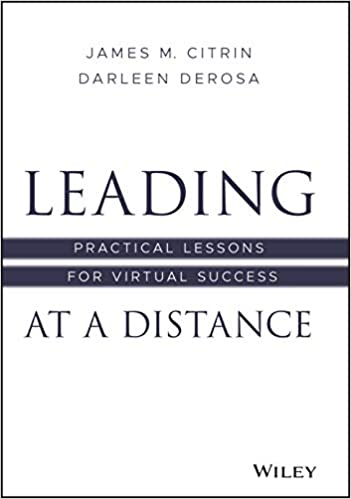
Mr. Citrin and Ms. Derosa’s book, Leading at a Distance: Practical Lessons for Virtual Success, is written with these realizations in mind. Written from the perspective of mid-pandemic, the writing was finished in the fall of 2020, it was not aware, however, of how quickly people embraced returning to normal wherever possible. Remote work may be here to stay, as the book suggests, however, the tolerance for it both from employers and employees, is less than may have been expected at the time of the book’s writing.

What is interesting from the research that the authors have conducted is that there have been positive benefits to using virtual tools – particularly when it comes to expensive and complicated travel for meetings which are about getting to know people. What Leading at a Distance stresses is that it is easy to become too focused on the job of work, without allowing time, energy, and opportunity for the personal connections that make work fun and help to build trust. Checking in with teams can create an atmosphere of micromanaging, while managers who worry about micromanaging, can be seen as too distant because it is hard to causally “check-in” over Zoom. Building trust is often about personal relationships and so the authors stress the need to make time for these connections with remote teams and in particular with new remote employees.  

A problem with Leading at a Distance is that it is written with large corporate organizations in mind. This includes its research and its general outlook on company structure. While large corporate organizations are more likely to rely on virtual communication tools as a way for managers to communicate, smaller businesses have had to also embrace these tools and their challenges are often different from that of larger organizations.

What really works in Leading at a Distance, is it focus on results and culture with remote teams rather than whether they are busy at any particular moment. The book suggests that managers need to set goals and be happy that they are being met rather than on the how those goals are being met. What is surprising is the effectiveness of location when meeting with remote employees. There is always the temptation to multitask, or try to, when coaching, or being coached, over zoom while sitting at one’s desk. The authors suggest that having coaching conversations, particularly when it comes to difficult conversations, while on a walk or a calm setting such as a park or beach. This makes sense for anyone who appreciates the benefits of meeting out of the office, but it is rarely adopted virtually.

Having a hybrid team has its own challenges, say the authors. In particular, it is important to ensure that remote workers do not feel isolated or experience unconscious bias due to their remote role. This may require special attention from HR to ensure that there is a level playing field if we are to ensure that remote workers are a success.

Remote working is here to stay in some form. While the pandemic has shown what is possible, it has also shown how the tools are lacking for remote workers and that management will also need additional tools and training to allow remote teams to succeed. Leading at a distance is a good first step in a field that will continue to evolve and grow but is lacking in literature to help it do so.  

feminist Fight club

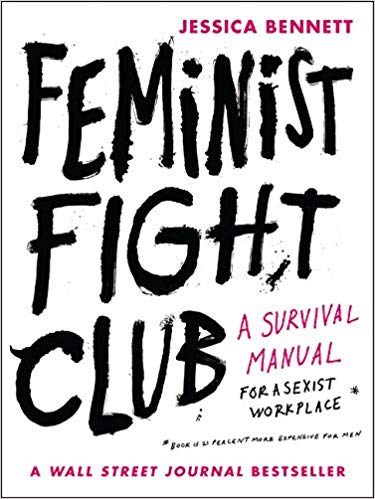
Its not often that someone recommends a book for me to read and that they then warn me about the same book. Feminist Fight Club came with the warning: it is not for the “faint of heart” supporter of feminism.

Feminist Fight Club is not for everyone. In fact, I’m sure it will annoy a number of people. Not so much for its content, but for its tone. It sometimes feels like one is reading the Communist Manifesto. Make no mistake, this is a revolutionary guide for the repressed in both tone and content. As with my caveated recommendation; I agree that not everyone is going to agree with Feminist Flight Club’s view of the world.

I am not one of those people.

This is a handbook for women who find themselves sidelined, un-listened to, and the victims of idea theft, by oblivious and clueless male managers and colleagues. The book makes the assumption that the workplace has evolved beyond the blatant sexual harassment of the “Mad Men” era; but that there is still a long way to go. It is a book to dip in an out of rather than read in one sitting; which is where its tone may become wearing over an extended period of time.

However, there is some superb advice, and insight, dressed up as rhetoric in the book. While the section on meetings can be found from many other sources on meeting etiquette; the book has one of the best chapters I have ever read on holding salary negotiations with a manager – regardless of the sex of either party.

If there is a fundamental problem with the book; it is that in its zeal to evangelize one audience it risks alienating another. What is potentially lost due to this zeal is actually some excellent advice on office politics and the way interactions between colleagues should actually take place. That being said there are not a lot of books that are as “in your face” and confrontational as this one is and that makes it all the more interesting.

From this male view point, Feminist Fight Club did make me re-examine how I have interacted in particular circumstances, and made me more aware of subtle and institutional sexism on television, and one assumes in real life.

This is not a book to convert anyone, it is a book to hone one’s skills, to become a better feminist, a call to arms, or to just become a better person.

One of my most popular blog posts is “The Cost of Servant Leadership” which I published in 2012. Due to some renewed interested, I thought it would make a nice first choice as the core content for my first experiment into animation. I hope you enjoy!

If you would like to read the original post, The Cost of Servant Leadership, you can find it here.


lego-1698657_640
(image courtesy of https://pixabay.com )

I’ve written a lot about Yelp.

Why I think Yelp’s business model is flawed, how I’ve pretty much come to terms with Yelp on a daily basis, and how to defend yourself from Yelp Bombing when things really go wrong. However, there is a new review demon out there, and they are making all the same mistakes as Yelp and the other review sites, but unfortunately, they also are adding a raft of new ones. This is the rise of the job boards allowing for reviews of employers from “in theory” former employees.

Indeed.com, and Glassdoor.com, are the two that have recently come to my attention, but I am sure there are other sites going down this road and it is such a flawed idea that it is actually quite amazing that it got past the development stage.

Glassdoor, is a site whose purpose is attract reviews of employers by former or current employees. They actually do a reasonable job of allowing a platform for employers to promote what they do, the benefits they offer, and the company culture. Glassdoor also state that they perform checks to ensure that reviews are genuinely from employees, have a flagging system for reviews with issues, and also have a platform for companies to respond. Glassdoor also offers companies the opportunity to place job ads through their system as a source of revenue – if not the only the only one.

Indeed.com has followed a slightly different path. They have an extremely successful job posting board, with fantastic SEO properties at a reasonable cost. I’ve used Indeed.com for years. However, Indeed.com now offers users of their site to review employers.
So, what is the problem with job sites allowing for the reviewing of employers?

Let’s, for a moment, think about those who go to job board sites on their free time. By definition, those people are either out of work or looking for work so they can leave their existing job. There is absolutely no reason for a happy and content employee to visit one of these sites. This is in stark contrast to Yelp and other consumer view sites. People tend to have just one job, but everyone uses multiple businesses every day. Therefore, the majority of people in a position to review on a jobs site are those who have either chosen to leave, or who have been terminated from a job. The number of terminated employees who have warm feelings towards their former employer, regardless of the right or wrong of their termination, are pretty minimal. There is a reason that it is against Yelp’s terms of service for former employees to review a business they used to be employed by.
Reviews are anonymous. It’s hard to respond to a review that states “I was wrongly terminated” other than with the most generic of responses when you have no idea who the employee might be.

In addition, most HR departments and employers decline to give any kind of review about an employee’s employment due to the legal consequences of doing so. It’s hard to see these kind of reviews as anything other than an attempt to entrap an employer. Much like Yelp and the other online review sites, the sample volume is pitiful – only more so. If an employer has 200 employees, but only three reviews, how is that in anyway a representative sampling.

Finally, employers are the ones being asked to pay for this system. What is in it for employers? Sure, great reviews might help attract new talent, but not in a system that seems geared towards creating bad reviews. Indeed.com, for example, at the time of this writing has no flagging system for bad reviews and no way of communicating about a review other than sending an email to Indeed.com’s main customer service department. Indeed.com’s reps, much like Yelp.com’s reps, state there is nothing they can do about a product they are asking employers to pay for.

Now gaming this system would be a pretty straight forward process. These sites are actually asking for employees (current and past) to review their employer and unscrupulous employers can bring pressure to bear on employees, whether perceived or actual. But then what is the point? If the sites want genuine reviews, this is not how you go about getting them – it might not even be possible. There is a reason why LinkedIn, for all its faults, has never gone down this road other than with personal endorsements. You can read a lot into a lack of endorsements on LinkedIn.

Because of the legal climate, former employees get little in the way of references from the majority of employers. It could be that if both employers and employees genuinely want an open review ecosystem then that could be possible. But that would mean that employers would have to be free to review former employees. That is not going to happen any time soon and I’m not sure anyone wants to see what kind of bloodbath that would cause.

Company reviews from jobsites, as they currently stand, are untrustworthy at best, and perhaps a platform for dishonesty and disingenuous communication. They should be treated with scorn by both employers, who are being asked to pay for them, and jobseekers to whom they do a disservice.

As a manager, you are never going to please everyone.

Some might even argue that if you do, you are not doing your job correctly. You will be called upon to discipline and even terminate employees, some of whom you might consider friends if you no longer had to manage them, and who may already consider you a friend. That is until you fire them – no friendship survives that.  Moreover, a portion of your job is to stick your head above the parapet wall and take the pot shots that people send your way: customers and employees alike. You may well take the wrap for decisions that other stakeholders, and even the courts, have made and the people you work with will almost certainly never know about the arguments that you have won to protect their interests.

If you are someone who values internal culture, like I am, then you have the added concern of trying to make any piece of feedback positive. Gone are the days, for the most part, of managers losing their tempers and yelling at the people the work with. I won’t say that I have never lost my temper at a member of staff but I have made sure to apologize afterwards and I have always felt that loosing one’s temper is counterproductive: If it actually hurts what I’ve trying to achieve then what is the point? Management is hard, we are all over worked, underappreciated, our hands are often tied, and the goal posts are always shifting. However, the rewards make it worth it: financial, recognition of your peers, and the sense of achievement when you see both people and businesses grow.

And then there are things like this:

“I loved the actual job here. Worked here for almost a year. If you could rise above petty back-stabbing and the fact people would be super nice to your face, and cut you down in a heartbeat behind your back, then it was a great job. Hospital chief administrator suffered from Little Big Man syndrome and needed to be avoided at all costs – unless you wanted your day ruined, as he was always incapable of saying anything nice, and preferred to berate – even if praise was his intention! Some of the doctors were difficult, but most were really great to work with. Overall, if you have thick skin, this was a good place to work – but no benefits other than an employee discount for vet services.

Ouch.

Other than the obvious of “what else would you expect a terminated employee to say?” What else can be learned from this from a management perspective? What can I learn from this since I feature so prominently?

Well yes, I am short – well spotted. Not much I can do about that. I guess you could argue that as someone of limited stature I have to be additionally careful to not appear angry so as to not play into the stereotype. As noted above, this is actually in my own interests anyway but a helpful reminder that I need to live up to my own standards.

If I am to be avoided, then that is actually pretty difficult. I try very hard to check in with every employee on both shifts every day and I am obviously sorry they felt this way. I think the comment of being “incapable of saying anything nice, and preferred to berate” is a little harsh. We, as an employer and I personally, have put a number of programs in place to improve and celebrate employee recognition. However, I will admit, that I do need to praise more in person than I currently do. Most managers do suffer from this and it is probably one of the more difficult aspects of the job. It is particularly hard when you have an employee who is not doing anything particularly wrong, but also not doing anything particularly exceptional. Since the above quote is from an anonymous post it is difficult to know for sure anything about this former employee, but as a general takeaway I think this rings true.

A “reading between the lines” insight, and backed up by some feedback from former employees who are now friends (see I’m not all bad) is that there is perhaps a lack of trust at times. A feeling that I did not have the employee’s “back.” This is probably a feature of trying to make customer service central to what we do. If a customer complains about an employee or the service they delivered, unless the claim is outrageous, I will probably try to make to client happy. This can certainly be interpreted as taking the side of the customer instead of the employee. It shouldn’t – I’m trying to protect the business and therefore indirectly the employee. If I feel there is an issue to be addressed with the employee, I will address it separately; however, it is easy to see how this issue arises and perhaps I need to do a better job of dealing with this unintended tension.    

As a final note, it is interesting that this former employee felt that discounted vet services was all the benefits that were on offer. I would take away from this that I needed to do a better job of explaining the other things that formed our benefits package.   

I don’t want a lot of reviews like this – nobody does. But the same rules apply to bad reviews about yourself as to bad reviews about your business. They are an opportunity to get feedback that you would not otherwise be able to receive. And while anonymous former employee reviews are even more unfair than anonymous customer reviews, due to the legal issues involved, a little self-examination is not a bad thing. If nothing else, it hopefully made for an interesting blog post.

Is is just me, or is hiring getting more difficult due the bad behavior of the un (or under) employed?

I mean I get it, and employers are partly to blame, looking for a job can really suck. Employers rarely respond to applications (guilty), some employers insist on their own applications rather an accepting a resume, interviews are time consuming, and wages in some fields are stagnant.

However, none of the above explains some horrendous behaviors I have seen – in particular in the last year or so.
“Obviously you did not read the resume – good luck to you.” A message from an applicant after receiving a rejection email because they were totally unsuitable for position.

“Hi I’m very interested in the position, although I do not have any experience, could you call me back with more information?” A phone message from candidate replying to ad that clearly stated “NO PHONE CALLS.” I have 100 applications on my desk, if everyone does this I’ll do nothing else for days.

Harassing an employer with voicemails telling them that you are obviously the best person for the job and how dare they not hire you because you probably know more than they do. – Yes, this actually happened to me.

Replies to ads that directly contradict what is being asked for. – I don’t think I need to explain this.

Companies, or consultants, replying to ads for full time employees. – Please don’t assume I don’t know what I’m doing. If my ad explicitly states that telecommuting is not an option, an outside contractor is even less likely.

LinkedIn invites after an interview for an entry level position.- This is not going to get you the job and just makes things weird.

Not showing up – really! You accept an invite for an interview and then do not have the courtesy to call and cancel?

Photos on your resume. – We get it, you think you’re hot, but it really just makes most managers uncomfortable. It makes me uncomfortable.

Resumes in weird formats. – When did a PDF become so hard to create? Those of us who get a lot of email everyday are very wary of opening attachments from people we don’t know, but PDFs are a necessary evil for the most part. Word files are annoying but I guess I’ll live with it. Wps files? Google doc files? Jpegs? Screen shots from your phone? I get it you don’t have a computer, and are using your phone, but there are better ways. Just looks lazy.

Bringing a coffee or energy drink into the interview with you. – I’m sorry to get in the way of your morning routine, but I may be your future employer. Or not.

Dressing inappropriately. – It is an interview, not a nightclub, or a trip to the store on a Sunday morning, or a day at the beach.

Now a lot of managers blame the Millennial phenomenon for the above behaviors ; however, I’m not so sure. For one I’m not a big believer in the Millennials being that different from everyone else. They just happen to be young people who are not shy about saying what they want. And a lot of the above behaviors have come from people who do not fit into the generally agreed upon Millennial age bracket. I do think there are cultural things afoot, however, that transcend age. A lowering of the value of work, and generally a misunderstanding of a value of first impressions for starters.

As Tyler Durden from Fight Club might say: “you are not a beautiful and unique snowflake.”

If you want to impress an employer, try professionalism. There are so few practicing it that it will make you easily stand out