Archives for posts with tag: toxic

Veterinary Medicine is about communication. Our patients don’t speak. They can’t advocate for themselves so pet owners, doctors, and team members must communicate with each other on their behalf and as clearly as possible.

However, there is a relationship within the practice which is even more important. It is that of practice owner (PO), usually a DVM although the same applies to corporate practices with a medical director, and the hospital administrator / practice Manager / office Manager (OM).

If these two people cannot agree, or agree to disagree, all the other great things that can happen within the practice are subject to failure on a monumental level.

Everything flows from this relationship.

Protocols and standards of care can’t exist if the two people responsible for implementing them can’t agree on what they are and how they should be applied. How can equitable and fair human resource decisions be made if one of these two people plays favorites and overrides the other when it suits them? They must be able to have difficult conversations, where they both will have strong feelings about the results, and must be able to come out of that conversation without hard or hurt feelings that get in the way of their continued relationship.

Vision, Mission, and Core Values statements can go a long way to resolving these issues – but only if they are the living breathing guidelines of the practice. More fundamental is that there is mutual respect between PO and OM for both their respective roles and their responsibilities. They also need to present a united front on matters of change.

Unfortunately, this relationship is often unequal. Practice Owners, by definition call the shots and have the last word. Ideally, they empower their OM as their representative to make decisions and implement policy. However, if there is no trust, no respect, there is no way that is going to happen and no way for the OM to do their job. Likewise, if the OM is constantly aligning themselves as an employee rather than as a member of senior management / ownership they are unlikely to receive the trust from a PO that they would want and rightly so.

There is a balance to be reached and that’s why I advocate that the relationship between PO and OM has to work for anything else in the practice to work. This is also the reason why I am always against PO and OM being married or related in other ways – other parts of their relationship creep into the PO and OM dynamic. PO and OM should not be best friends – there are times they are going to disagree and that’s fine – that’s how it is supposed to be. They represent different interests of the business.  

So what if that relationship is not there or there has been a breakdown?

Communication.

Communication.

Communication.

Fundamentally if PO and OM can’t communicate then the relationship is dead. Unfortunately, that probably means the OM needs to leave either by resigning or being let go. It does no good to anyone for there to be infighting between the leaders of the practice. It certainly does not help the practice.

What sucks for the OM in this situation is that jobs of that type in the veterinary industry are usually one per practice. That means if there are ten practices in your town then there are only nine possible jobs for the OM and there are no guarantees that any of them are looking. There are, of course, opportunities in other industries; good leaders and managers are always in demand; however, that means learning another industry.  

If the relationship between PO and OM is broken something must change because this is the relationship that can’t be broken for the practice to function. Take care of your own mental health and that of your team.

Be honest about this relationship and either fix it or move on.

Feature image courtesy of Zahid H Javali & Dmitry Abramov from Pixabay
After I reviewed both the TV show and book, Five Days at Memorial, I swore I was not going to make a habit of this.

And yet here we are.

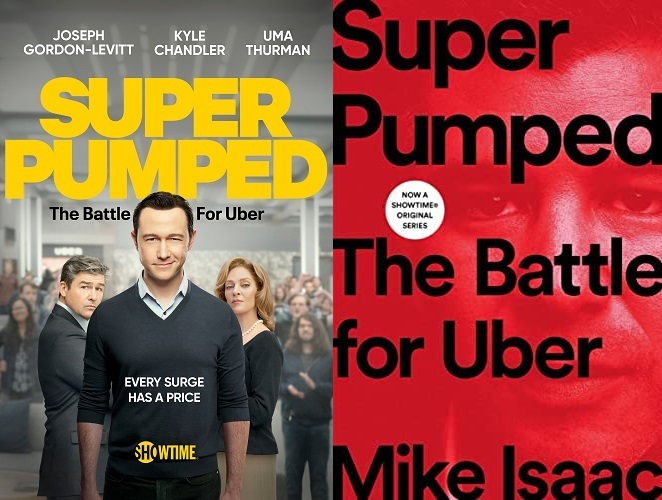
Super Pumped, the book, is an in depth look at the rise and fall of Uber CEO Travis Kalanick. Impeccably researched, and detailed, it goes into the twists and turns of the Uber story. A story of hubris, a complete lack of ethics, a toxic working environment, and a deep dive into the cult of personality that often surrounds tech founders and CEOs. The book also has a few gonzo moments as the author finds themselves part of the story they are covering for both for good and bad.

Super Pumped: The Battle for Uber, the TV Show, is the first season in an ongoing anthology series. The second series will be based on a forthcoming book, also by Mike Isaac, on Facebook. The TV show does an excellent job of capturing all the major beats and intrigues of the book, while also adding a distinctly more human face to its subjects. Kalanick is much more fleshed out in his relationships with girlfriends and family. There is also much more focus on how much the key figures start out liking each other rather than just being marriages of convenience. However, how much of this is “added drama” is unclear. But given the attention to detail of most of the rest of the story, I am inclined to believe the implication if not the actual events themselves.

Where the TV show really shines is in its portrayal of the side characters and their experiences with Kalanick and his “Bro” culture. Episode five is an extraordinary study in sexual harassment and a dysfunctional Human Resources department as experienced by regular employees. Another scene that stands out is when (spoiler) Kalanick’s girlfriend is breaking up with him, an event that clearly affects him, but yet he stops the argument so that he can answer an email on his phone. The book certainly focuses on the sexual harassment aspects of Uber’s culture, however, the visceral nature of the TV dramatization makes for uncomfortable viewing without straying into exploitative / voyeuristic territory. A thoughtful selection of scenes from this episode would make an excellent starting ground for understanding sexist work cultures and how to avoid them and the sexual harassment that ultimately results for managers – both new and old.

The story of Uber and Travis Kalanick is an extraordinary one and is worth your time as a cautionary tale and as a reflection on our cultural blind spot when it comes to convenience. What kind of world do we live in where convenience trumps ethics and the celebration of behavior this is, not to put too fine a point on it, despicable? Does success excuse bad behavior or does success breed a lack of respect for the rules? Does startup culture, which embraces out of the box solutions, also include the idea that as long as you are successful all will be forgiven?

While Travis Kalanick is undoubtedly an extraordinary individual, the TV show rarely makes the viewer feel anything other than deep unease if not downright dislike. The book, while less personal and emotional, is able to illicit sympathy for Kalanick during a meeting with the author and, when out of spite, one of the Uber board members leaks details of Kalanick’s departure from Uber – humiliating him, when the agreement was for a face-saving departure.

By the nature of a TV show, even a series, it can’t go into the detail that a book can. It is interesting that Super Pumped the TV Show starts when Uber is already a reality and uses conversations between protagonists to comment on its past founding and early days. Whereas the book starts from Kalanick’s previous start up and Uber’s humble beginnings as an idea of Garrett Camp when he could not get a cab. Likewise, the TV show ends with Kalanick’s ouster as CEO whereas the book continues into the intrigues of finding a successor and the settling of various lawsuits.

While Super Pumped the book is very much worth your time; Super Pumped: The Battle of Uber, the TV show, is the more extraordinary piece of media. Incredibly watchable, and a useful tool for managers when it comes to toxic internal cultures, the TV show is worth staying up till 2:00AM, as I did, to watch the entire thing in one hit.

Both will also make you download the Lyft app.

Whether in personal life or professional life, when toxicity rears it’s head, how we react defines toxicity’s power over us.

The revenge of “why should I bother when nobody else does,”  or “if they are going to speak to me that way then I’m going to speak to them that way,” becomes a race to to the bottom where everyone loses. A race where the most awful person wins a price nobody wants. It defines an toxic environment. To state that this is a vicious circle is to state the obvious. However, to do the opposite does not automatically create a virtuous circle. 

Being positive is never the easy choice. Toxicity is always easier. As Yoda would say of the dark side; “…easier, more seductive.” Revenge feels good. But that feeling is fleeting. Like in math, a positive number and a negative number added together can give a positive or a negative result. But two negative numbers always results in a negative result.

2 + -1 = 1

-2 + 1 = -1

-2 + -1 = -3

2 + 1 = 3

We all have a responsibility for not contributing to a toxic environment. We won’t always succeed, but if our positives outweigh our negatives, the chances are that we will have positive results. If we engage in negative behavior, particularly in an already toxic environment or as a response to toxic or negative behavior, we are guaranteed to have negative results. 

Real life is not simple math, but it is an example of how relationships between people, particularly groups of people, actually work.

Nobody said it would be easy. It might not even be fair. Or enjoyable. But rejecting toxicity, and not allowing it to contaminate you and therefore others, is the only way to behave that makes any sense. 

Not words to deliver enlightenment, but hopefully words to reassure that there really only is one path.