Archives for posts with tag: elon musk

There are a lot of books about Twitter out there right now. That is perhaps not a surprise given (Spoiler Alert) that it has become a corporate / Silicon Valley dumpster fire.

Mr. Wagner’s account is balanced and well researched; however, one cannot feel while reading the work that it is missing the insider juicy details that make tech CEOs squirm. Perhaps because so much of Twitter’s (now X’s) dirty laundry has already been aired there is little new revelations in the work.

What” Battle of the Bird” does do is provide a clinical timeline from Twitter’s founding through to the events leading up to its purchase by Elon Musk and the unravelling of the technology institution under his stewardship. This in turn provides insights into the failure of Jack Dorcey (Twitter’s former CEO and co-founder) and Elon Musk’s failures with X.

As I talked about in my review of “Kingdom of Happiness” by Amiee Groth which referenced the failures at Zappos and the Downtown Project, both Dorsey and Musk in hindsight have had a failure of leadership due to a lack of management. It is all very well being able to persuade people to jump out of a plane, but you have to ensure that they have parachutes and know how to use them.

There is no doubt that Dorsey and Musk both do, or more appropriately have at one time, loved Twitter and what it has brought to the world. While Dorsey, according to Mr. Wagner’s book, seems to have lost interest in Twitter as a company once the reality of being a public company set in. Musk on the other hand, seems far too interested in his own press and ego once he understood the challenges Twitter faced and continues to face even after his pointless rebranding to X. It is hard to feel sorry for billionaires when the world does not work the way they want it to.

There is a theme throughout the book that perhaps Twitter can’t be a company. Dorsey in particular laments that what Twitter should be is a technology like email, that allows for the exchange of information, but that is not gatekept by any one platform. This is the kind of wishful thinking of people who have been made rich by the decisions to take their company public and have second thoughts. That they wish the world could be a different place. It can be, but only if different decisions are taken – the kind of decisions that don’t make entrepreneurs and venture capitalists rich.

Like I said, it is hard to feel sorry for billionaires when things don’t go their way.

Mr. Wagner does go into some reasonable depth as to the ethical dilemmas brought up by Donald Trump’s tweeting and his eventual banning from the platform. These are bigger issues than Twitter, but the impact on Twitter for both Dorsey and Musk were profound and still rancor the platform to this day. I’m not sure I want a committee of Twitter employees making decisions on whether what a world leader says is appropriate for public consumption, but at the same time I am positive I don’t want Elon Musk making those decisions.

As a grounding in the backstory and drama that is Twitter, now X, Battle for the Bird is a great document. Not a thrill ride or exposé, but a methodical grounding in the facts.

This is probably for the best given its subject matter and the turgid realities of Twitter’s recent past.

Perhaps this is the account we need rather than the one we might want.

Want to read a takedown of the leaders of the tech world, that calls them out for their hypocrisy and recklessness?

Of course you do.

Burn Book is, for the most part, that book. A book that at its most fundamental says “you promised us a brave new world – and what you delivered us was a more rapacious form of capitalism.”

The author, Kara Swisher, is a long-time journalist and analyst of the “tech sector” – particularly in Silicon Valley. She is also the co-founder of the Recode conference and the co-host of the Pivot podcast.

Burn Book, through the narrative of an autobiography, is her journey into the San Fransisco technology sector and her gonzo view of the events that, for better or worse, have shaped the world we currently live in – particularly its technology.

Where Burn Book really scores is in its view of characters such as Elon Musk, Bill Gates, Mark Zuckerburg, Steve Jobs, and Sergey Brin. From their early days, the beginnings of their success, through to their either refusal to accept the damage of their legacy, or the issues with how that legacy was formed, but also for some of them; their efforts to make amends. One is left with a sense of these figures riding waves that they barely understand or control. That often these figures are deeply flawed individuals who’s flaws have help lead to their success, but that long term they themselves are unrecognizable from the people they once were. Changed by wealth and power and all its trappings.

As Swisher mentions in the introduction; “move fast and break things” is in retrospect indicative of the tech scene entrepreneurs and their willingness to not think through the consequences of their actions. (Move fast and break things was an early internal Facebook slogan that was widely adopted by the tech sector).

Where the book becomes annoying is the author’s habit of “I told you so.” While this may well be true, and the whole purpose of the book is essentially to name drop, and let’s be honest that’s why we are reading it, it can become a little frustrating and seemingly self-aggrandizing. Swisher has earned the right to trumpet her vision and does have a record of putting billionaires on the spot, however, she does seem to fail to see the larger picture of the issues with this kind of innovation model.

Swisher is a self-proclaimed “believer in tech,” and this leads to the impression that she feels if only developers and tech titans were nicer then the world would be a much better place. This is quite possibly true, but one has to wonder about an industry who are happy to undermine industries and even societies, while failing to follow the basic rules that everyone else follows.

To Swisher’s credit she recognizes how close she has become to the tech sector and how that potentially impacts the objectivity of the analysis she gives. Of late she has made efforts to put distance between herself and her subjects. It would be easy to see this book as one of those efforts.

Burn Book is for the most part an enjoyable read with lots of moments to savor for those who want to see the self-proclaimed “Masters of the Universe” taken down a peg and be held to account. It does also do a pretty good job of exploring the duality of some of the complex individuals who run or formed some of the largest companies on the planet with little to no oversight. The author lauds Steve Jobs, for example, but does point out some of the flaws and cruelty that mars his legacy. It is not an in-depth analysis of all that is wrong with tools such as Facebook and the tech sector as a whole, but then it does not set out to be.

This is an autobiography and a story about being in love with an industry. The all too predictable break up, with the realization that who you were in love with is not quite the person you thought they were, is just another part of that love story.

As that, Burn Book succeeds admirably.

The following is a short talk I delivered at the Uncharted Veterinary Conference in April 2018 as part of their Mic Drop Series.

How valuable is experience when it comes to leadership?

Should we value experience?

Is it a benefit or a hindrance?

So let’s define some terminology…

A leader is someone who is followed.

A visionary is someone with an idea or ideas.

And a manager is someone who makes things happen.

All of these can be combined, or not, depending on a persons personality, experience, or skill set.

Some examples of Visionary leaders…

Steve Job of Apple,

Elon Musk of Tesla and Space X,

Jeff Bezos of Amazon.

Visionaries who have, literally, changed the world.

they are all looked up to and considered gods of technology. People regularly compete to work for these people and to work on those products.

They also all have the reputation for being awful managers of people to the point of cruelty.

If Visionary leaders are horrible managers then what about managers who have vision?

Tony Blair – former British Prime Minister,

Michael Eisner – Former CEO and President of the Walt Disney “Company,

George Lucas – Film Director and former owner of Lucasfilm.

Tony Blair was elected in 1997 on a wave of hope and goodwill, he transformed his labor party in “New Labor” which had been out of power for 18 years. Despite some major successes, Blair resigned in 2007 and labor lost the next election and has not been in power since. New Labor is in ashes and Blair is widely reviled in the UK, and even by those in his own party, for his tone deaf approach to the Iraq war and for his corporate connections.

Michael Eisner led the Walt Disney Company from 1984 and 2005. He revitalized the company in the eighties and nineties with “Who Framed Roger Rabbit,” “The Little Mermaid, “The Lion King,” the expansion of the theme park business, cruise ships, and the creation of stage shows. He ultimately split with his long time collaborator Jeffery Katzenberg and Roy Disney and saw an unprecedented shareholder revolt in 2004 that lead to his resignation in 2005.

George Lucas – transformed the movie industry with the original Star Wars trilogy. Arguably then did more than anyone else to sink it with his widely panned prequel trilogy. He is criticized for having a singular vision and for not listening to the feedback of others.

If visionary leaders are horrible managers and managers with vision ultimately self destruct,what about managers who just manage?

Bob Iger – Current President and CEO of the Walt Disney Company,

Bill Gates – Former CEO and President of Microsoft,

Tim Cook – Current CEO of Apple.

When was the last great breakout product from any of these companies, who are led by these managers, that was not bought it?

These companies are profitable, they make good products, just not great ones.

Why do some mangers, particularly those with vision fail, when managers without vision can succeed?

How come some visionary leaders can break all the rules and still win?

This is my story.

The period of time I’m taking about I’d been in my job for about 4 years.

I knew the answers to all the questions I was asked.

I’d tried most of what is suggested by others and had strong opinions about those suggestions.

The ghosts of what had happened in the past in the workplace haunted my current interactions.

I anticipated the responses of others and therefore do not even try to have new interactions.

I overvalued my own experience.

I believed my own story, my own press.

The things that made me a good manager – a manger with vision, a leader, I now actively rejected since I had the experience to no longer need them.

And the staff, and the people I worked with, pushed back.

I became the bad guy.
I became the roadblock.
I became the one who would not listen.
I became less and less effective.
I became the manger who kept his own counsel on everything.
I was the most capable – but I was he least able.

Some call this burnout.

I call it not learning from the experience of others.

The first step in recovery is to acknowledge that there is a problem.

Interestingly during this time I, the experienced world traveler, for the first time in my life, missed four flights because I knew, knew, when my flights were and that I didn’t need to double check.

Solving this problem is not hard, you’ve, I’ve already been that person. You just need to find them again and be aware of the trap that you are currently trying to climbing out of.

The tools that made you a good manager, a great leader, when you started are the same tools that allow you to continue being so. You just have to remember that the process can be as important as result.

Capability only has value if you have the ability to use it.

Capability only has value if you have the ability to use it.

And it is those around you, those that you lead, that give you that ability. You undervalue it at your peril.

Thank you.


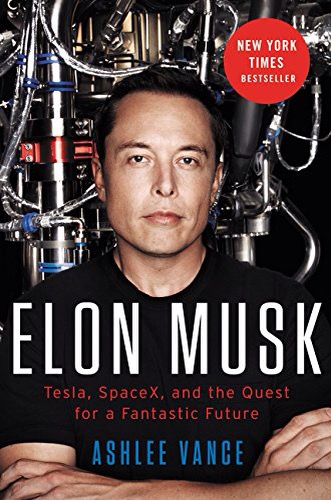
Any book about Elon Musk stands the chance of being wildly out of date before it hits book store shelves. 

This biography of Musk, by Ashlee Vance, originally published in 2015, already feels a little dated, but it does give a good profile of the man, his companies, and his roots. It is unfortunate then, that while acknowledging Musk’s propensity to be difficult, if not impossible, to work for it does nothing to mitigate the awe that the writer obviously feels for his subject. 

There is good reason for this. 

Musk is a larger than life character who if at a press conference announced; “l’m Ironman,” nobody would bat an eye lid. In fact it is hard to know whether the movie version of Tony Stark is based on Elon Musk or if it is the other way round. 
There is a lack of focus in this book on how appallingly Musk can treat other people. For example, he has been married 3 times, twice to the same woman, and he famously fired his long time assistant, and gate keeper, because she asked to be paid like an executive.  

What shines through, however, is vision. And that leads to an interesting question for Musk and for businesses in general: Can a dramatic and outsized vision, if you are good enough at selling it, make up for short comings in other areas such as management of people, sound business planning, and realistic expectations? 

For the moment, Musk seems to be on a roll; however, there are plenty that feel he has built a house of cards and from the stories told of the early days of Tesla are anything to go by, and the economists and manufacturers in Detroit are correct, it certainly could all come tumbling down any day. 

I also wonder how sustainable a company is when it relies on these most grandiose of goals? What happens when the company cannot achieve these goals? 

Elon Musk is undoubtably a unique individual, who has remarkable ambitions and achievements; but companies are built on a scalabile culture – not just vision. Mr. Vance’s book does a good job of profiling the vision, but not so much on the foundations and structures for sustainable businesses.