I left my veterinary practice, and the associated other ventures, after 13 years as Hospital Administrator, three weeks ago as of this writing.
I have left jobs before, I’ve even left vet practices before, but nothing came close to this. Thirteen years is a long time.
When you manage people for a living you hope that you make a difference in people’s jobs and by extension their lives. At the same time, you have your doubts…
“Did I really make any difference at all?”
Sure, there are people who say you’ve made a difference. People who you grow to care for – maybe even think of as friends. At the same time, one can never be unaware of the inequality of those relationships. Managers, by definition, are not on an equal footing with the people they manage.
“Are they saying that nice thing because they mean it or because I’m their manager and they know it’s what I want to hear?”
Leaving changes all that.
Who signs your card and who does not. Who finds the time for a quiet conversation – a mentorship confessional. Those who reach out over social media, knowing your aversion to mixing your personal life and work, is now no longer such an issue. The moving of people from the thought bucket of colleague to the one marked friendship. These are the subtle reminders that you matter. That despite all the challenges, you did good work.
The jaded manager in me, the one who regularly has to be beaten down less he rears his head with his negativity, would always whisper the word “fraud.” That making a difference had failed. That you were not the manager you aspired to be, that indeed you were not the manager you thought you were, that you were the manager you feared being. Many sarcastic thanks to the makers of The Office (either one) for adding to the management second guessing in case we inadvertently and momentarily became David Brent / Michael Scott. Although truthfully there are far worse managers out there, both on Television or Film and in the real world, than David Brent or Michael Scott.
But in leaving one can leave those thoughts behind. These are not the rose-tinted memories of times gone by – although I’m sure those are to come. These are the genuine thing. Reactions from people who care. Who recognize the role you have played. Whether it was a timely job offer, a suggestion of a new role or promotion, advice about how to deal with a colleague, or for faith and belief in another when everyone else has none. This is what work is supposed to be. The collaboration between people in pursuit of a shared goal.
Leaving makes you realize your value. That your value is that things will carry on. That you are not indispensable because you have dedicated your management career to ensuring that others thrive and have the skills they need to grow.
I should preface this review that I found The Pitt riveting television. I’ve always liked Noah Wyle as an actor and ER was always a favorite show of mine. This review will have some minor spoilers for the show so if you have not watched it – go watch it! Then come back and see whether the same things struck you as they struck me. The Pitt has a couple of problems, and they not only take me out of the show when they occur, they also perpetuate the myths that surround human and veterinary medicine (my world).
Administration is the Bad Guy
The character of Gloria Underwood, played by Michael Hyatt, who is credited as the Chief Medical Officer but acts as more of a non-medical Hospital Administrator, is portrayed, except for one scene (more on that later) as the bad guy throughout. This is not because they do anything particularly bad, but because they care about how long patients have been waiting and how they are treated by the doctors and nurses. The show treats this push back against the tyranny of customer service as a noble endeavor, as our hero character championing medicine over business.
The big problem with this mindset that can often be found in both human medicine and veterinary medicine is that “my time (the doctor) is more important than your time (the patient). There will always be wait times in medicine, but that does not mean they are a badge of honor that shows how much more important the medicine is from treating patients respectfully. Patients who leave because they won’t or can’t have an extended wait time are punished with worse outcomes. If we want what’s best for our patients we have to care about wait times.
The Pitt then seemingly redeems its portrayal of Gloria by showing just how good she is at her job. When the staff are informed of a mass casualty event, Gloria shows that she is three steps ahead of our hero Robbie, played by Noah Wyle, in having emergency supplies of all kinds already on the way. It’s a great moment and the disconnect between the doctors and nurses as they realize that this person who they consider the enemy is just someone who sees the wood for the trees.
…And then they go and spoil it by having Robbie curse Gloria out and call her a micromanager because she questions their use of unscreened blood from team members in patients.
The fact that Robbie is shown on multiple occasions to be struggling with his own mental health, and that while often right, he prefers to use his own intuition rather than facts or rules is shown as an honorable sacrifice. I hope that in season two we get to see Robbie be wrong because to do otherwise is disingenuous to the professions involved.
Likewise; Dr. Gregory House, from TV’s House, is a great and fun character to watch but nobody wants him as their doctor. When you are purporting to show a hyper realistic medical drama, falling into using these well-worn tropes does the show and its audience a disservice.
Poor Doctors
I have the upmost respect for human doctors and nurses, just as I do for veterinarians and veterinary nurses. I believe they all deserve to be paid well. However, The Pitt plays fast and loose with the socioeconomic realities of the ER and human medicine as a whole.
Robbie is unlikely to walk to work, or take the train, as is implied by his backpack as he walks through the park late at night, after his shift, where he can share a beer with other members of his team. Many of his team will have to use public transportation because they won’t be able to afford not to. Robbie will drive his BMW, which is parked in the hospital parking garage, he may even have his own parking spot, to his home in the suburbs.
By making Robbie seem like just one of the team rather than a member of senior leadership it frames Gloria, and therefore by example all Hospital Administrators / Chief Medical Officers, as only interested in money – rather than the health of the hospital and the team as a whole. Whereas in truth, Robbie is much closer or even exceeds Gloria in compensation than to the doctors and students he works side by side with. By framing him as “one of the boys” and therefore the hero it paints Gloria as the villain.
When Robbie complains about the lack of nurses and Gloria points out that there is a national nursing shortage. His response is to say “pay them a living wage and they will be lining up to work here.”
As Gloria points out “other hospitals are managing” but Robbie dismisses this and because he is our hero we are encouraged to dismiss this too – rather than see it as a failure of his management of the ER. I’m all in favor of paying nurses more, just as I am in favor of paying veterinary nurses more, but dismissing $82,000 as less than a living wage is ridiculous and manipulative.
You can do so much better “The Pitt.” These are real issues the divide the treatment of patients and the management of hospitals both in the human world and the veterinary world.
Veterinary Medicine is about communication. Our patients don’t speak. They can’t advocate for themselves so pet owners, doctors, and team members must communicate with each other on their behalf and as clearly as possible.
However, there is a relationship within the practice which is even more important. It is that of practice owner (PO), usually a DVM although the same applies to corporate practices with a medical director, and the hospital administrator / practice Manager / office Manager (OM).
If these two people cannot agree, or agree to disagree, all the other great things that can happen within the practice are subject to failure on a monumental level.
Everything flows from this relationship.
Protocols and standards of care can’t exist if the two people responsible for implementing them can’t agree on what they are and how they should be applied. How can equitable and fair human resource decisions be made if one of these two people plays favorites and overrides the other when it suits them? They must be able to have difficult conversations, where they both will have strong feelings about the results, and must be able to come out of that conversation without hard or hurt feelings that get in the way of their continued relationship.
Vision, Mission, and Core Values statements can go a long way to resolving these issues – but only if they are the living breathing guidelines of the practice. More fundamental is that there is mutual respect between PO and OM for both their respective roles and their responsibilities. They also need to present a united front on matters of change.
Unfortunately, this relationship is often unequal. Practice Owners, by definition call the shots and have the last word. Ideally, they empower their OM as their representative to make decisions and implement policy. However, if there is no trust, no respect, there is no way that is going to happen and no way for the OM to do their job. Likewise, if the OM is constantly aligning themselves as an employee rather than as a member of senior management / ownership they are unlikely to receive the trust from a PO that they would want and rightly so.
There is a balance to be reached and that’s why I advocate that the relationship between PO and OM has to work for anything else in the practice to work. This is also the reason why I am always against PO and OM being married or related in other ways – other parts of their relationship creep into the PO and OM dynamic. PO and OM should not be best friends – there are times they are going to disagree and that’s fine – that’s how it is supposed to be. They represent different interests of the business.
So what if that relationship is not there or there has been a breakdown?
Communication.
Communication.
Communication.
Fundamentally if PO and OM can’t communicate then the relationship is dead. Unfortunately, that probably means the OM needs to leave either by resigning or being let go. It does no good to anyone for there to be infighting between the leaders of the practice. It certainly does not help the practice.
What sucks for the OM in this situation is that jobs of that type in the veterinary industry are usually one per practice. That means if there are ten practices in your town then there are only nine possible jobs for the OM and there are no guarantees that any of them are looking. There are, of course, opportunities in other industries; good leaders and managers are always in demand; however, that means learning another industry.
If the relationship between PO and OM is broken something must change because this is the relationship that can’t be broken for the practice to function. Take care of your own mental health and that of your team.
Be honest about this relationship and either fix it or move on.
Feature image courtesy of Zahid H Javali & Dmitry Abramov from Pixabay
Often, managers are not owners of a business, but they are required to act as if they were. That can mean that they become the person that both team members and ownership feel is there to solve their problems. To be on call all the time. To be the fountain of knowledge whatever the time and whatever the day.
And often they are.
But that does not mean they are not entitled to time off and a personal life.
Setting boundaries with your owners and your team does not mean not being there for them when they really need you, but it should mean that your time is respected and valued by those that depend on you.
Schedule Boundaries
As a manager, it is easy to feel that it is your duty to be there for your team, or whomever you report to, at all hours of the day and every day.
And to a certain extent this is a sign of a good manager. Your team needs to be able to count on you being there when they need you to be.
But….
And this is a big but…
There is a huge difference between being available for an emergency and being available at all times for all things. You have a life to live and just because you hold the title of manager and all that it entails, does not mean that your job gets to monopolize all your time.
Have a schedule and make all efforts to stick to it. The work for most managers will be there the next day. That means you can leave on time. While staying late will reduce that work pile a little, it will not be as beneficial to the business and certainly not as beneficial to you if you just leave when you are supposed to. There will be times when you absolutely will not be able to leave on time. Make those the exceptions rather than the rule.
Take your vacation time and take the holidays you are owed. Never feel guilty about taking the days off you are due. Your mental and physical health will thank you. As one of my favorite phrases goes; “Make time for your wellness or make time for your sickness.”
If there are times that you don’t want to be interrupted – turn your phone off. You turn your phone off when at the movies or at the theater (if you do not there is a special place in hell for you) so a couple of hours of being unreachable is not an unreasonable thing even for the most connected of managers. Your partner and family will thank you.
Communication Boundaries
Managers need to have a system for how and when they should be contacted. If there are things that you require your team to contact you about then make sure they know this. I, for example, want to be called as soon as possible if there is a major I.T. issue so I can have time to fix it – even if that means a phone call at 2AM. If there are things that you don’t need to be informed about, make sure you let your team know that as well (be nice – just redirect: “please email me about this and I will deal with it when I’m next in the office.”
Email is for when you are at work. Do not check your email outside of working hours unless you are explicitly told that there is something you need to read immediately. An example of this would be a phone call or text message that says “check your email. If you have a workplace communication platform, such as Slack, turn off the notifications when you leave the office for the day.
Text messages should be for urgent things that need your attention when you have a second but can’t wait till you are next in the office. Again, if they could be an email – politely redirect and have them send an email. Stay away from work related text message groups and Whatsapp groups. Group messaging in general is not respectful of your time so if they are part of your team’s communication system – find a way of being able to dip out when you are out of the office.
In fact, while you are at it…
Turn off all the notifications on your phone. Notifications should be for things that are true emergencies. You can thank me later.
Answer phone calls. It might sound counterintuitive in an article about setting boundaries, but I believe that when teams need to get hold of their manager, they really need to get hold of them. If they abuse this privilege just redirect and move on. There are times when you’ll wish your team called you. The excuse “we did not want to bother you” is usually a reaction to mishandled boundary setting in the past.
Longer Absences
There are times when you need to not be working.
Vacation, maternity leave, and leaves of absence are perfect examples of this. An email to your team, or whatever communication method you use, that lays out explicitly your level of availability will work wonders. You just have to stick to it. It is not anyone’s business whether you are floating at home in your pool or hiking at the North Pole and it should not change your level of availability outside of what you laid out to your team before leaving.
The Boss
But what happens when it is the business owner, or whomever you report to, who is not respecting your boundaries?
Ideally, an owner / director should understand that your time is your time. Yes, there will be occasions when they may need to talk to you or have you do something, or even come into the office outside of your normal hours, but as mentioned before this should be the exception. If it is not, be sure to keep track of these occasions and bring them up when negotiating salary and other parts of your compensation package.
Like with your team members, don’t be afraid to redirect politely when a communication method is inappropriate. Likewise, if you are being asked to do something and you have other commitments, don’t be afraid to say that you have other commitments; however, if you can give an alternative solution that often is a preferable option – such as calling someone else. Depending on the circumstance, it might be more appropriate for you to take temporary ownership of the issue and then to delegate the response to someone else if that is possible and you are unavailable.
Personal Boundaries
A manager’s life is much simpler if they are not friends, and do not socialize with, the people they manage. It’s harsh, particularly for managers who may have worked alongside team members they are now being asked to manage, but it invariably leads to issues and it is just simpler for it to never happen.
Likewise, never confide in a subordinate. Being a manager can be lonely – particularly if you are the sole member of management. But find a mentor, or a peer to confide in and vent to. A subordinate you like and feel you can trust is still a subordinate and you don’t know when conversations you felt were in confidence might come back to bite you when you have to manage or discipline that employee.
It should also go without saying that relationships between managers and subordinates are a terrible idea for both parties. Even if the relationship is not inappropriate and fully consensual the damage it does to the team can be significant. In some companies, having a relationship with a subordinate would be grounds for termination. If you find yourself in a relationship with a subordinate, disclose the relationship to whomever you report to and make sure that you and the other party sign a relationship agreement.
Appropriate Outlets
As mentioned earlier, management can be lonely. Finding outlets to discuss issues and the challenges you face are extremely important. There are often local manager groups you can take part in. If there is not one – start one!
Internet groups can be an extremely useful in connecting you with likeminded managers, but also extremely rewarding when you are able to help others who may be struggling with issues you have already resolved.
Find a mentor, go for coffee or lunch, and use them as an outlet. Mentors can be found in the most unlikely of people and places; however, it is tough to beat LinkedIn. Connect and make your connections more than just people for whom you like their posts.
You can have boundaries and still be there for your team. However, you must also demonstrate respect for your team’s boundaries. Do you really need to reach out to one of your team on their day off for a piece of information or can you just email them and wait for the answer when they are next in? Yes, it is inconvenient, but you can’t ask for boundaries yourself and then not respect boundaries for others.
Boundaries are selfcare for managers. Boundaries will be different from one manager to the next.
There are a lot of books about Twitter out there right now. That is perhaps not a surprise given (Spoiler Alert) that it has become a corporate / Silicon Valley dumpster fire.
Mr. Wagner’s account is balanced and well researched; however, one cannot feel while reading the work that it is missing the insider juicy details that make tech CEOs squirm. Perhaps because so much of Twitter’s (now X’s) dirty laundry has already been aired there is little new revelations in the work.
What” Battle of the Bird” does do is provide a clinical timeline from Twitter’s founding through to the events leading up to its purchase by Elon Musk and the unravelling of the technology institution under his stewardship. This in turn provides insights into the failure of Jack Dorcey (Twitter’s former CEO and co-founder) and Elon Musk’s failures with X.
As I talked about in my review of “Kingdom of Happiness” by Amiee Groth which referenced the failures at Zappos and the Downtown Project, both Dorsey and Musk in hindsight have had a failure of leadership due to a lack of management. It is all very well being able to persuade people to jump out of a plane, but you have to ensure that they have parachutes and know how to use them.
There is no doubt that Dorsey and Musk both do, or more appropriately have at one time, loved Twitter and what it has brought to the world. While Dorsey, according to Mr. Wagner’s book, seems to have lost interest in Twitter as a company once the reality of being a public company set in. Musk on the other hand, seems far too interested in his own press and ego once he understood the challenges Twitter faced and continues to face even after his pointless rebranding to X. It is hard to feel sorry for billionaires when the world does not work the way they want it to.
There is a theme throughout the book that perhaps Twitter can’t be a company. Dorsey in particular laments that what Twitter should be is a technology like email, that allows for the exchange of information, but that is not gatekept by any one platform. This is the kind of wishful thinking of people who have been made rich by the decisions to take their company public and have second thoughts. That they wish the world could be a different place. It can be, but only if different decisions are taken – the kind of decisions that don’t make entrepreneurs and venture capitalists rich.
Like I said, it is hard to feel sorry for billionaires when things don’t go their way.
Mr. Wagner does go into some reasonable depth as to the ethical dilemmas brought up by Donald Trump’s tweeting and his eventual banning from the platform. These are bigger issues than Twitter, but the impact on Twitter for both Dorsey and Musk were profound and still rancor the platform to this day. I’m not sure I want a committee of Twitter employees making decisions on whether what a world leader says is appropriate for public consumption, but at the same time I am positive I don’t want Elon Musk making those decisions.
As a grounding in the backstory and drama that is Twitter, now X, Battle for the Bird is a great document. Not a thrill ride or exposé, but a methodical grounding in the facts.
This is probably for the best given its subject matter and the turgid realities of Twitter’s recent past.
Perhaps this is the account we need rather than the one we might want.
Want to read a takedown of the leaders of the tech world, that calls them out for their hypocrisy and recklessness?
Of course you do.
Burn Book is, for the most part, that book. A book that at its most fundamental says “you promised us a brave new world – and what you delivered us was a more rapacious form of capitalism.”
The author, Kara Swisher, is a long-time journalist and analyst of the “tech sector” – particularly in Silicon Valley. She is also the co-founder of the Recode conference and the co-host of the Pivot podcast.
Burn Book, through the narrative of an autobiography, is her journey into the San Fransisco technology sector and her gonzo view of the events that, for better or worse, have shaped the world we currently live in – particularly its technology.
Where Burn Book really scores is in its view of characters such as Elon Musk, Bill Gates, Mark Zuckerburg, Steve Jobs, and Sergey Brin. From their early days, the beginnings of their success, through to their either refusal to accept the damage of their legacy, or the issues with how that legacy was formed, but also for some of them; their efforts to make amends. One is left with a sense of these figures riding waves that they barely understand or control. That often these figures are deeply flawed individuals who’s flaws have help lead to their success, but that long term they themselves are unrecognizable from the people they once were. Changed by wealth and power and all its trappings.
As Swisher mentions in the introduction; “move fast and break things” is in retrospect indicative of the tech scene entrepreneurs and their willingness to not think through the consequences of their actions. (Move fast and break things was an early internal Facebook slogan that was widely adopted by the tech sector).
Where the book becomes annoying is the author’s habit of “I told you so.” While this may well be true, and the whole purpose of the book is essentially to name drop, and let’s be honest that’s why we are reading it, it can become a little frustrating and seemingly self-aggrandizing. Swisher has earned the right to trumpet her vision and does have a record of putting billionaires on the spot, however, she does seem to fail to see the larger picture of the issues with this kind of innovation model.
Swisher is a self-proclaimed “believer in tech,” and this leads to the impression that she feels if only developers and tech titans were nicer then the world would be a much better place. This is quite possibly true, but one has to wonder about an industry who are happy to undermine industries and even societies, while failing to follow the basic rules that everyone else follows.
To Swisher’s credit she recognizes how close she has become to the tech sector and how that potentially impacts the objectivity of the analysis she gives. Of late she has made efforts to put distance between herself and her subjects. It would be easy to see this book as one of those efforts.
Burn Book is for the most part an enjoyable read with lots of moments to savor for those who want to see the self-proclaimed “Masters of the Universe” taken down a peg and be held to account. It does also do a pretty good job of exploring the duality of some of the complex individuals who run or formed some of the largest companies on the planet with little to no oversight. The author lauds Steve Jobs, for example, but does point out some of the flaws and cruelty that mars his legacy. It is not an in-depth analysis of all that is wrong with tools such as Facebook and the tech sector as a whole, but then it does not set out to be.
This is an autobiography and a story about being in love with an industry. The all too predictable break up, with the realization that who you were in love with is not quite the person you thought they were, is just another part of that love story.
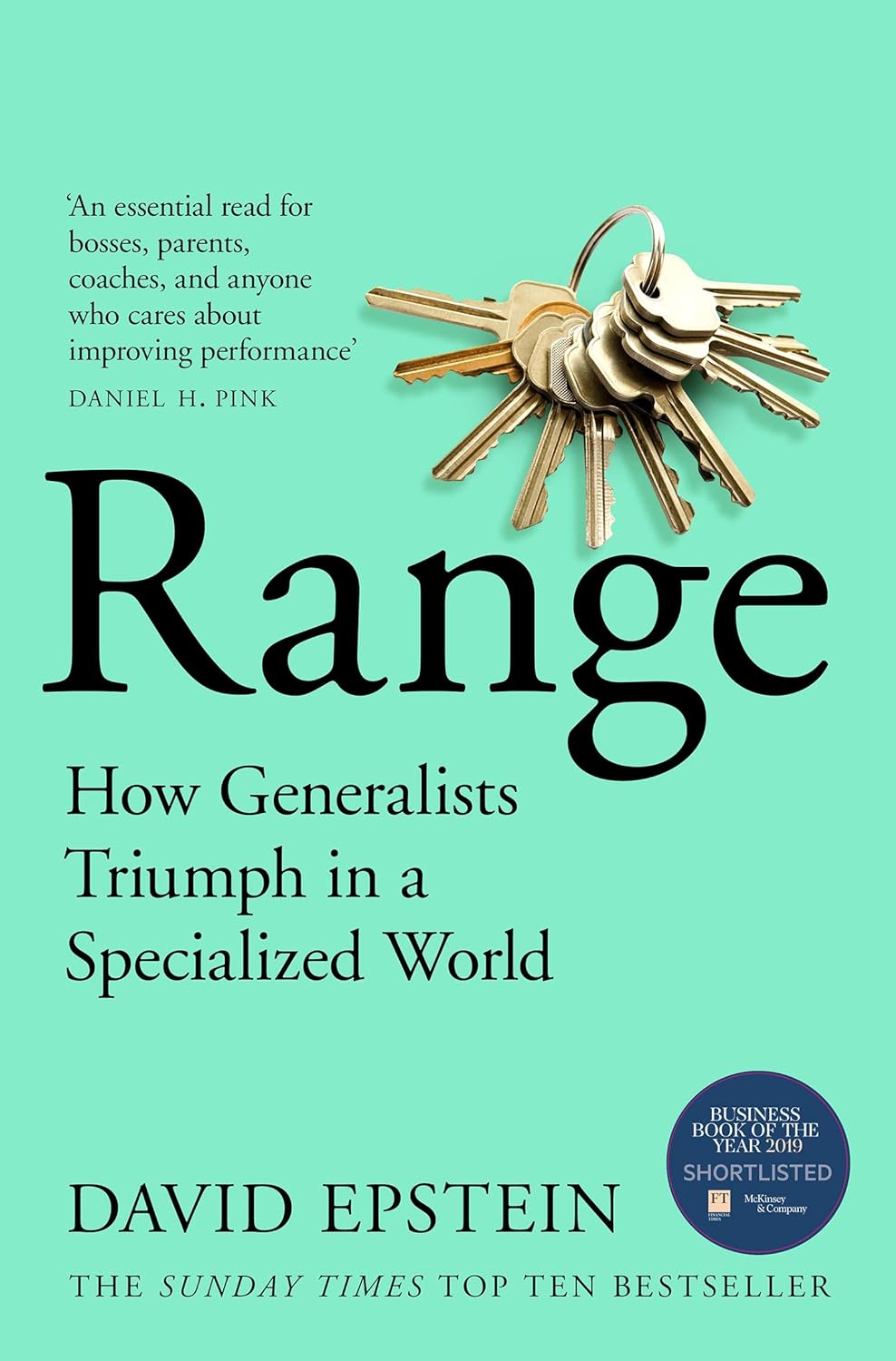
As a society we tell ourselves stories that, while convenient, are not always, or even ever, true. In what is probably Malcom Gladwell’s best book “Outliers” (which I can’t believe I have not reviewed) the author tells of the often decade long stories, and tales of extraordinary advantage, of seemingly overnight successes. David Epstein, in “Range: Why Generalists Triumph in a Specialized World”, is also debunking one of the stories we tell ourselves – that to be really good at something, or to have great success at something, we have to have focused on that thing for a long time – if not forever.
Before I go any further a word to my veterinary and human medicine readers. In this post, and indeed in Mr. Epstein’s book, when we talk about “specialization” we are using it in the general sense as opposed to the legal (small “s” rather than capital “S”). Although, I do believe that there are lessons for students from Mr. Epstein’s excellent book. Don’t be in too much of a hurry to map out your career. It’s a good thing to try out different interests and to change your mind – you’ll be better in the long run for it.
The pressure to focus on one thing, whether it be in sports, music, or entrepreneurship is all pervasive and often has business interests behind the marketing of “hyper specialization.”
It is a good story.
The Tiger Woods story is one that the author highlights. It is a story of the very young Tiger playing golf before he could talk and spending all day at the golf course. It is a story of winning tournament after tournament and having an unflinching goal of winning more titles than anyone else. Mr. Epstein juxtaposes the “Tiger story” with the far less well-known story of Roger Federer. Federer’s mother was a tennis coach but she refused to coach him and actively tried to dissuade him from playing tennis. A young Federer also seemed far more interested in soccer, basketball, skateboarding, handball and skiing. It was not until his teens that Federer started to gravitate towards tennis and then his goals were not lofty, but the rather quaint “meet Borris Becker” and “play at Wimbledon.”
This wide range of experience and lack of focus is the author’s main argument – that, more often than not, it is range that leads to success rather than specialization. That depth of experience of different fields matters more than depth of experience in just one. Interestingly, the evidence that Mr. Epstein quotes, rather persuasively, is that while early hyper specialization can lead to children getting a head start in that chosen area, they tend to fall into line with their peers rather than stay ahead as time goes on.
Where the book misses, for me, is that it seems to continue to fall back to specialization being a worthy goal via a route of different experiences, rather than the range of experiences being a worthy goal in itself. However, this minor quibble aside. The book makes a very strong case for experience in general and for following one’s interests. A great example is the idea to not ask kids what they want to be when they grow up, but rather to ask them what they are interested in. Our education, and in our careers, we often ask others where they are headed and penalize them for not knowing. This may be a mistake.
When I look at my career, I’ve had very specific goals at different times and while I have met some of them, I have taken some spectacular left turns that has led me to areas I would never have even considered just a few years earlier. No one is more surprised than me that I live in Las Vegas, watch a lot of hockey, and write poetry.
This is an important book for those who mentor, or lead, others. How we choose to guide – matters. We are often a deciding factor in whether to specialize in an area or to follow seemingly unconnected interests. There is value in a range of interests and experiences that benefit both the person and the employer.
A more enlightened view of the goals of mentoring will benefit everyone.
Chef 1:- I just… I don’t think it’s fair (talking to Chef 2)
Kiki: Chef!
Kiki: Chef!
Chef 1: Yes, Kiki, what is that?
Kiki: A man on table six wants an eggless omelette. He wants an egg…
Chef 1: Kiki you can’t have an eggless omelette, can you?
Kiki: Why do we not have any?
Chef 1: No, they don’t exist, do they? Because there’s no… Breadsticks, what are they made of?
Kiki: Bread.
Chef 1: Bread, very good. OK, take away the bread, what are you left with?
Kiki: Sticks?
Chef 1: No, Kiki! (Sprinkles a few herbs on an empty plate) There you go, that’s an eggless omelet.
Kiki: Okay (takes plate)
Chef 1: No, don’t take the plate, Kiki, what are you doing? Please!
Chef 2: Kiki, just ask the nice man if he’d like his omelet made with whole eggs or just egg whites. (Kiki smiles and goes to leave)
Chef 2: You can leave the plate.
When I was first shown this scene from the British restaurant-based sitcom “Whites” I found it amusing like I’m sure most of you did. How we can laugh at how silly Kiki is being and how she lacks all common sense. And the scene is funny, but it reflects a real behavior that we see every day, admittedly pushed to extremes.
But this is an attitude that needs to change. Just like to scene where the security guard gets humiliated for not stopping the scruffy young man from entering the fancy building and not recognizing that he in-fact owns the building and is ultimately is the security guard’s employer. The poor guard is just doing his job. Just because you walk around like you own the building does not automatically mean you actually do. We’ve all seen the videos that prove you can get it almost anywhere if you are carrying a ladder. Employees, just like clients, can suffer from being of the loosing end of the curse of knowledge.
The curse of knowledge is where we humans can’t understand that others may not have the same life, education, and training as us and therefore may not know the same things. What is obvious and, in that most awful of phrases, “common sense” may not in fact be widely known or common sense. For more on my hatred of “common sense” you can read this post.
But yet we do this all the time. The client who does not know to vaccinate their new puppy. The coffee drinker who does not know that Starbucks calls its large “Venti” or a regular coffee an “Americano.” There is a whole video just about that too.
With employees a lack of knowledge is a teaching moment. Of course, it can be frustrating and if we find ourselves teaching the same thing over and over again we have a different problem, but we can’t criticize, or worse snap at, for a lack of knowledge – even when we think employees should have this knowledge. In any other environment, we would recognize this behavior for what it is; bullying.
Recognizing that teams need be able to express when they don’t know something helps to create a safe space for learning. Teachable moments should be embraced for what they are – a chance to get better, to improve. Its also just the decent thing do to. There can also be more going on than just not knowing something.
New employees, for example, don’t know the limits of their knowledge yet. So while they may not of heard of something does not mean that it does not exist. We don’t want them to guess – so employees ask. They need to praised for checking and confirming that what we think is obvious is actually not. We all need to be better about this. I for one know that I can be bad at this but, as with most things, recognizing when you have a problem is the first step in fixing it.
Let me tell you a secret about most business books – they are not about business. Oh yes, they claim to be about business, how to work with people, and affect change, but in reality a lot of them are not. They are often about the hard things – finance, cost control, selling, and product development, or the soft things – people management, team dynamics, and marketing. Rarely is a book about how all these things fit together, and how to grow while at the same time dealing with the realities of business day to day.
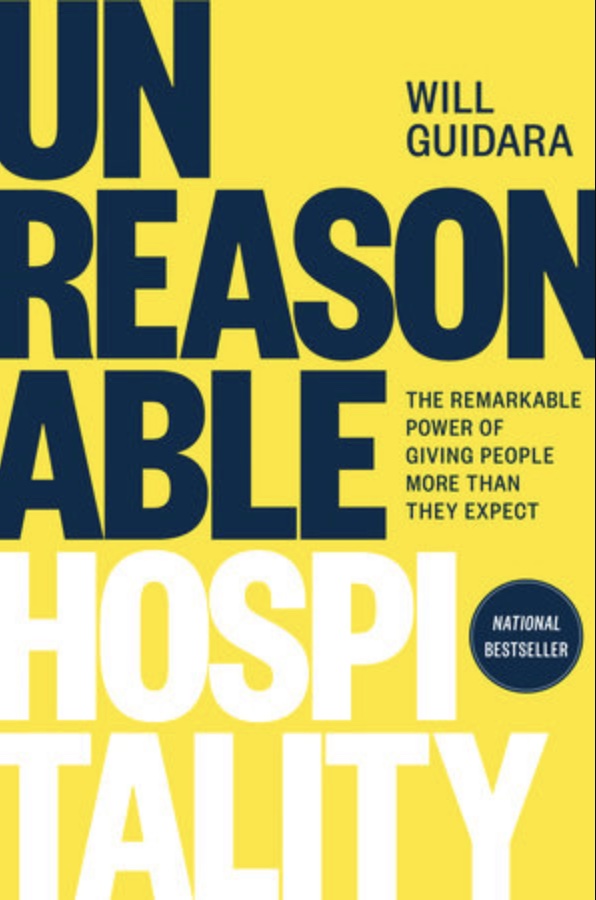
Which is why Will Guidara’s book “Unreasonable Hospitality: The Remarkable Power of Giving People More than They Expect” is so refreshing. This is part memoir of a restauranter and part business manual on blending soft and hard skills that all businesses try to do – with varied levels of success. Mr. Guidara was the general manager of a number of fantastic restaurants, including Eleven Madison Park which became the number one restaurant in the world.
For a book that talks a length about people, values, growth, and mission it is so unusual to hear the real world politick of “I’m also clear about what my job is, which is to do what’s best for the restaurant, not to do what’s best for any of you (the staff). More often than not, what’s best for the restaurant will include doing what’s best for you. But the only way I can take care of all of you as individuals is by always putting the restaurant first.” Just wow!
And that quote really sums up the problems with a lot of books on management and leadership – they are two different things people and not mutually exclusive (I can shout that louder for the hacks with the crappy memes) – we are often being asked to hold ourselves to an impossible standard. People are sometimes not the right fit, sometimes we just have to get through the shift, sometimes we are not going to be perfect. An illuminating passage deals with the idea that while it is often trotted out that employees have a language of appreciation, they may also have a language of criticism – people may need feedback in different ways depending on their personality and work history.
I love the advise to “not let things slide – those small things become personal slights.” This is often ignored because every manager today fears being labeled a micro manager. Just like I also appreciate Mr. Guidara’s works to be maniacal on cost control for 95% of your costs and then to spurge for the last 5% to make a difference to the guest experience.
There are times when this book feels like it is written by the staff from the movie “The Menu,” yet at the same time one has to appreciate what Mr. Guidara was trying to do with his business and why he was doing it. The book says, there is nothing wrong with striving for perfection, as long as perfection is not the standard – little things are always going to go wrong. That does not mean one should not try, but it means managers and leaders have to accept realities.
It may seem extreme and over the top, and it is, but that is the whole point of being “unreasonable.” To give people more than they ever expected in a controlled manner so it can be systemized and scalable. I’ve been banging on about scalability for years, and so to read it in this book was like having to tell the author to get out of my head.
This book should be required reading for managers and leaders of any business who want to deliver a better experience for everyone – including the owner of the business. This is appreciation that businesses are businesses. They must make money and they have to be able to work when you are not there. There has to be systems in place, protocols and procedures, so that everyone knows what to do and new people can be easily trained on what to do.
Unreasonable Hospitality is what business books should be. Simon Sinek, who wrote the introduction and I have been on record for forever as having no time for, could learn a lot from this book for example.
This is where the rubber meets the road. For those who want to add to their passion, or just rekindle it, it is hard to find a better way to do so than to read this wonderful book.
Why on earth am I reviewing a field manual on sabotage by the OSS (the predecessor to the CIA) from World War two?
Well, there are a couple of reasons other than the most obvious one that someone suggested it.
This very short reprinting, which would usually only be of interest to historians or those with underground bunkers and very full larders, is glimpse into the mind of a someone who wants to disrupt or destroy an organization both physically and psychologically.
There is not much that the average person could not have thought of themselves when it comes to physical sabotage, but it is interesting to note how just not doing simple things in the workplace can create serious problems and should therefore be taken seriously by managers. Most disgruntled employees are not quite so literal in showing their displeasure, but one does become aware, through the numerous examples, of just how vulnerable most workplaces and organizations are.
There is an illuminating passage early in the book.
“It should be pointed out to the saboteur where the circumstances are suitable, that he is acting in self-defense against the enemy, or retaliating against the enemy for acts of destruction.”
I, and most modern managers, do not think of employees, even problem employees, as the enemy. However, it is not a far stretch to think that there have been times when an individual employee on a disciplinary path may feel that they are in a battle of wills. This might not lead to outright sabotage, one hopes, but “quiet quitting”? Quiet quitting is the phenomenon of an employee doing just enough not to get fired – but no more. As the book says a couple of sentences on…
“The saboteur may have to reverse his thinking… Where he formerly though of keeping his tools sharp, he should now let them grow dull…”
Where the book really becomes of interest for managers, however, is in the final seven pages where it discusses what steps managers and supervisors can take to disrupt an organization’s psychology. If you recognize your organization within these pages – it is time for change. It is also a great reminder of seemingly well-intentioned actions by leadership teams. Insisting on perfect work where it does not matter, for example. Or “see that three people have to approve everything when one will do.”
There is even guidance for meetings and committees to be found in this later section. Warnings to try and increase the size of meetings or committees to the point where they become unwieldy is reminiscent of the often-told Jeff Bezos, the CEO of Amazon, anecdote that he will not attend meetings that cannot be fed by a single pizza.
A thoughtful reading of this short book by managers should act as a warning and a reminder both to themselves and about others. I think is also a good training tool for new managers to show what not to do and to be aware of the traps of self-sabotage that managers can often fall into. It is also a good reminder of where the line exists between performance problems and being a disruptive influence in the workplace.
Eighty years old it may be, but this short book still has some things to teach us.










 Mike Falconer