Archives for category: Customer Service

Let me tell you a secret about most business books – they are not about business. Oh yes, they claim to be about business, how to work with people, and affect change, but in reality a lot of them are not. They are often about the hard things – finance, cost control, selling, and product development, or the soft things – people management, team dynamics, and marketing. Rarely is a book about how all these things fit together, and how to grow while at the same time dealing with the realities of business day to day.

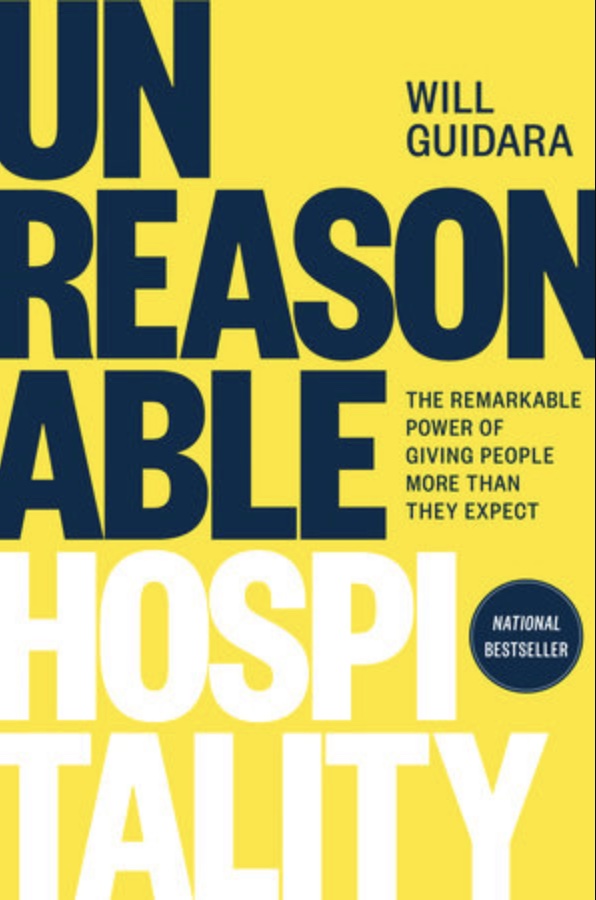
Which is why Will Guidara’s book “Unreasonable Hospitality: The Remarkable Power of Giving People More than They Expect” is so refreshing. This is part memoir of a restauranter and part business manual on blending soft and hard skills that all businesses try to do – with varied levels of success. Mr. Guidara was the general manager of a number of fantastic restaurants, including Eleven Madison Park which became the number one restaurant in the world.

For a book that talks a length about people, values, growth, and mission it is so unusual to hear the real world politick of “I’m also clear about what my job is, which is to do what’s best for the restaurant, not to do what’s best for any of you (the staff). More often than not, what’s best for the restaurant will include doing what’s best for you. But the only way I can take care of all of you as individuals is by always putting the restaurant first.” Just wow!

And that quote really sums up the problems with a lot of books on management and leadership – they are two different things people and not mutually exclusive (I can shout that louder for the hacks with the crappy memes) – we are often being asked to hold ourselves to an impossible standard. People are sometimes not the right fit, sometimes we just have to get through the shift, sometimes we are not going to be perfect. An illuminating passage deals with the idea that while it is often trotted out that employees have a language of appreciation, they may also have a language of criticism – people may need feedback in different ways depending on their personality and work history.

I love the advise to “not let things slide – those small things become personal slights.” This is often ignored because every manager today fears being labeled a micro manager. Just like I also appreciate Mr. Guidara’s works to be maniacal on cost control for 95% of your costs and then to spurge for the last 5% to make a difference to the guest experience.

There are times when this book feels like it is written by the staff from the movie “The Menu,” yet at the same time one has to appreciate what Mr. Guidara was trying to do with his business and why he was doing it. The book says, there is nothing wrong with striving for perfection, as long as perfection is not the standard – little things are always going to go wrong. That does not mean one should not try, but it means managers and leaders have to accept realities.  

It may seem extreme and over the top, and it is, but that is the whole point of being “unreasonable.” To give people more than they ever expected in a controlled manner so it can be systemized and scalable. I’ve been banging on about scalability for years, and so to read it in this book was like having to tell the author to get out of my head.

This book should be required reading for managers and leaders of any business who want to deliver a better experience for everyone – including the owner of the business. This is appreciation that businesses are businesses. They must make money and they have to be able to work when you are not there. There has to be systems in place, protocols and procedures, so that everyone knows what to do and new people can be easily trained on what to do.

Unreasonable Hospitality is what business books should be. Simon Sinek, who wrote the introduction and I have been on record for forever as having no time for, could learn a lot from this book for example.

This is where the rubber meets the road. For those who want to add to their passion, or just rekindle it, it is hard to find a better way to do so than to read this wonderful book.   

Image by Xavier Turpain from Pixabay

Just stop it, okay?

Unless you have been living in an underground bunker for the past three years, not as unlikely as it might have seemed ten years ago, you might have noticed that QR codes are back.

Menus, adverts, buildings, and trade show booths are once again adorned with them.

Other than the pandemic, another reason for their renewal is the imbedding in the camera functions of most smart phones, a QR code reader allowing links to websites be opened by visually scanning the code with your phone.

What is also back; however, is bone headed implementations of QR codes because they are “cool.”

Don’t get me wrong, I’ve seen great implementations of QR codes. I have used them on ads and I used them extensively in the hardcover edition of my book. However, just like the article I wrote in 2012, which in turn was inspired by Scott Stratten’s rants on the subject, QR codes are a simple technology that often gets badly implemented and are used to cover up a multitude of other sins.

Please don’t put QR codes on websites

Mike’s Guide to QR Code Bliss

DO make sure that your website is mobile friendly if you are going to use QR codes. I can’t really believe I have to say this, or that anyone still does not have a mobile friendly website, but they do; and QR codes are a mobile technology. Therefore, as a mobile technology, if you are sending people to a website that is not mobile friendly all you are going to do is frustrate people who know how to use a technology better than you.  

DON’T put QR codes in emails. QR codes need to be scanned by a mobile device. Putting a QR code in a email which is then opened on a desktop requires the user to scan their computer monitor or laptop screen with their smartphone. This is nonsense. It is particularly nonsense because a QR code is just a fancy way of getting someone to click a link and links can be easily embedded directly into emails. Also, an email opened on a mobile device cannot read a QR code in that email. There are a few workarounds for this which I go into below; however, a link is simple straight forward, and we have been using them successfully for decades.  

DO make sure that the site your QR code links to is clear simple and easy to use. Having ambiguity on a target page, after someone has gone to the trouble of scanning your QR code, is just silly. It is snatching defeat from the jaws of victory. Test your QR codes. Make sure your landing pages are simple, easy to use, and above all, working. There is nothing wrong with having multiple QR codes when it comes to directing your target audience.

DON’T put QR codes in Instagram posts. For some phones this actually works – they have a built in QR code scanner for photos and there are also apps users can download to allow for the scanning of codes. However, one of the reasons why QR codes had such problems with adoption in the past was the need to download an app. But for most users, who almost exclusively looking at the platform on their smart phones, QR codes on Instagram are useless as there is no way to directly scan them. “Link in Bio,” which directs users to look at the Instagram bio, and click the link there, is a simple workaround for the Instagram imposed limitation of only allowing a single link in an Instagram users bio. There are also multiple tools, including just a website, which allows users to have that single link lead to a page where there are multiple link options. I should also add that all Instagram users can now just add links in their Stories negating the whole issue.

DO put QR codes on flyers for things that require a sign up. Flyers that get printed out and put on notice boards for meetings etc., that require an RSVP, are a great use of QR codes. Much easier than the target audience having to type in a URL or email address. Just ensure that the landing page is simple and easy to use. However…

DON’T make the QR code on a flyer the only way to RSVP / sign up. Flyers for meetings etc. are often emailed to multiple people. If a QR in a pdf document is the only way to access the link to sign up it is massive over complication for the end user. A link in an email works great. A link in the PDF also works. Hell, you could even make the QR code itself a clickable link (I don’t recommend this). QR codes are supposed to make things easier not harder.

DO make QR codes simple. The more complicated the URL that the QR code is linking to, the more complicated the QR code itself needs to be. URL shorteners can help here; however, one should use these sparingly as security conscious users may be unwilling to got to a site blindly.

DON’T make QR codes too small. The vast majority of sensible QR code implementations are to add links to paper. A user sees something that interests them on a piece of paper, and they can then scan the code for more information, to sign up for something, or even to buy something. However, tiny QR codes can be difficult for some smartphones, or users, to scan. Since QR codes are about reducing barriers to getting users to click on a link, making the link too small is just a case of shooting yourself in the foot.

DO put QR codes in videos and digital signage. But only if you are going to give users enough time to get out their smart phones, open their camera app, focus on the screen, and scan your code. If you are not going to devote enough time to allow the QR code to be scanned, and allow for the QR code to be a sensible size, then what is the point of having the QR code in the first place? Also, if the QR code is being including in content when the user can just pause the video to scan a QR code then the likelihood is that they will find clicking a link much easier. Just put the link in the description.  

DON’T think you must have a computer to display a QR code. I have seen a laptop on a tradeshow booth being used solely to display a QR code. How about a piece of paper? A QR code on a computer screen does not make you look more technically savvy. It makes you look like you forgot the sign, or the piece of paper, with the QR code printed on it.

QR codes can be awesome, particularly with smartphones having the ability to scan them built in. However, like any technology, it is only as good as its implementation. Bad implementations are just bad – they don’t get better because they have a QR code involved. Having a QR code to have a QR code is a prime example of bad implementation. They are a tool – try not to bring back 2012.

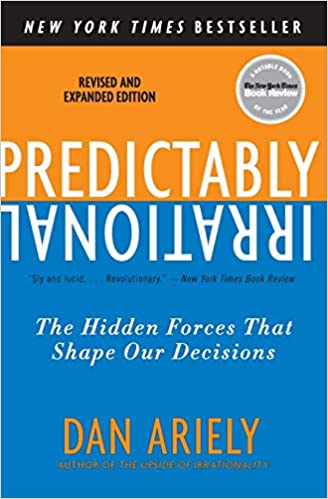
Why would we be offended if someone offered to pay us after we invited them to Thanksgiving dinner? What is the cost of zero, and why is it far more expensive than $0.01? Do we really need to tell our waiter our order in secret if we really want to feel that it is okay for us to have our first choice from the menu?

Subtitled; “The Hidden Forces that shape our Decisions,” Dr. Ariely’s superb book has the potential to change dramatically how we think about business and our personal lives.

With the use of subtle yet easily understood experimental data, Dr. Ariely exposes humans as often acting against our own interests due to societal or market norms and that we just do not understand our own personalities and the role that emotion plays in shaping decision making – spoiler its usually for the worse.

So why would we feel offended if someone offered to pay for Thanksgiving dinner? Dr. Ariely not only explains but also shows with examples and experiment data that we humans have social exchanges and market exchanges of behavior. Social exchanges we use with friends and family. They are the norms that govern daily life and allow us to bond with other humans. Market exchanges are, as they sound, the exchange of money for goods and services and also the money we receive in exchange for our labor in the form of our working lives. When one offers to pay for Thanksgiving dinner were mixing social norms with market norms. We are indicating that we are rejecting the social acceptance of those who may be friends or family in favor of an exchange that we could expect to have with a stranger. A commercial transaction. What becomes interesting in breaking these social norms is that we find it is difficult to go back. Trying to pay for Thanksgiving dinner may never get us invited back because a social exchange has been turned into a market exchange. Employers who do not have social exchanges with their employees may find that employees therefore treat the relationship as a purely market exchange and leave for an employer who offers a better market exchange – usually more money or better benefits.  This also explains why employers who do embrace a social exchange in their workplace culture become frustrated and angry when an employee uses only market norms in their decision-making process to leave.

Likewise, when companies use a social exchange to bond with clients they may find when they resort to a market exchange when it suits them – policy over the relationship with the client – they have unleashed a Pandora’s box of problems with someone they once may have considered a friend of the business. Business can’t have it both ways, and if we try to, we are storing up trouble for ourselves.

Debunking of personality testing, without mentioning personality testing, is in this book with a discussion of priming and setting expectations. There are also volumes of data showing that making something free rather than reducing a price – even if the reductions are the same, can make a dramatic difference in the uptake of an offer. Buy one get one free really does work!

There is also a highly disturbing chapter on the affect of sexual arousal and decision making and morality. While I will spare you the details here it is difficult as a guy to read this chapter without recognizing oneself and feeling ashamed of the implications. This chapter does not give guys and excuse; however, it should make us pause and understand that we have the capability to be highly irrational in the right circumstances.

And that is really the crux of the book.

By recognizing that we can be irrational beings and what triggers that irrationality, we can know ourselves better and make better decisions. It also allows us to spot irrationality in others and how that has come about.

I can’t recommend this book enough.

Does anyone care about reviews anymore?

Well – yes we should, however, even amongst those of us who care about reviews, we quite possibly care a bit less.

Why?

As the always insightful Mike Blumenthal says in this article about the fall in user and review growth on Yelp and this article on the fall in reviews on Google Local, things are not looking great for the review space. It cannot all be blamed on COVID-19. The trends of reduced new user numbers and a significant slowing in the rate of new reviews was well in place before the pandemic.

So, what is going on?

I believe what we are seeing is what I have dubbed “The Karen Effect.” The origins of the term “Karen,” meaning in rough terms a middle-aged white woman demanding to speak to the manager, being overly officious / unreasonable, or just being downright racist, is not exactly known. However, the term Karen exploded in usage during 2020 at the beginning of the COVID-19 pandemic and the summer of the Black Lives Matter protests after the killing of George Floyd. Karen today could mean anyone, of any gender, losing their temper over or generally overreacting to a perceived wrong.  

This rise in petty unreasonableness and overly bad behavior, towards those working in service industries or retail, during the pandemic has in turn given rise to another phenomenon: the sharing of this behavior online. I wrote about my fears about clients trying to leverage live streams and social platforms in an aggressive manner in this 2016 post. While this weaponizing of the documenting of interactions with a business has been successfully attempted, it has also backfired.

The first time I became aware of the potential for this tide to turn was after seeing this 2014 viral video:

This is an all too familiar scene that could have happened yesterday rather than eight years ago. A customer, believing they have been wronged, exacting their revenge on social media and in doing so exposes their own failings and unreasonableness. It also highlights the extremes to which employees will go to try and address customer complaints and keep their cool while doing so.

This is the Karren Effect.

What does this have to do with reviews?

Videos of front-line employees being polite, following their business’s policies, and trying to help a customer are not great social capital. In fact, they are boring. Watching a customer “lose their sh*t” over a perceived wrong is great social capital and in turn adds a measure of retribution for someone being punished for bad behavior. This, of course, is not always the case. Some businesses screw up, act badly, and can be badly represented by employees. But since the rise of the Karen, and the flooding of social media showing just how bad things can be, would you trust a stranger’s opinions about a business? Particularly a negative opinion? The embrace of video on social media, and everyone having a high definition video camera in their pocket, or more likely in their hand, has meant that good content can be generated from bad behavior – although generally not for the person behaving badly.

Likewise, influencer marketing and the dubious reputation that it has in many circles has also not helped the review space. While many social media influencers go to great lengths to inform their followers as to when posts are a paid promotion and thereby stay on the right side of the law, others do not and also try to leverage their “influence” into free products and services.

Influencers who try to abuse their Influence has also fallen foul of “The Karen Effect.” Most social media users have little tolerance for influencers those who abuse their power – a power given to the influencer by those same social media users – and businesses despise them. This leads us back to reviews. If influencers, who by definition are known to their audience, are not be trusted with their opinions due to undisclosed commercial relationships, how can review platform users trust complete strangers – regardless of whether the review is good or bad?

The Karen Effect is the loss of trust in the opinions of strangers.

One can hope that the Karen Effect leads to a resurgence of the Better Business Bureau (BBB) or gives rise to another organization of a similar ilk. I have always bemoaned that most of the complaints about Yelp and Google Local were effectively dealt with by the BBB and that it was businesses, by not supporting them, that led to their diminished standing today and the rise of Yelp and Google Local.

It seems that people are looking for someone to trust online. They are finding other users online lacking. It will be interesting to see what fills the void.

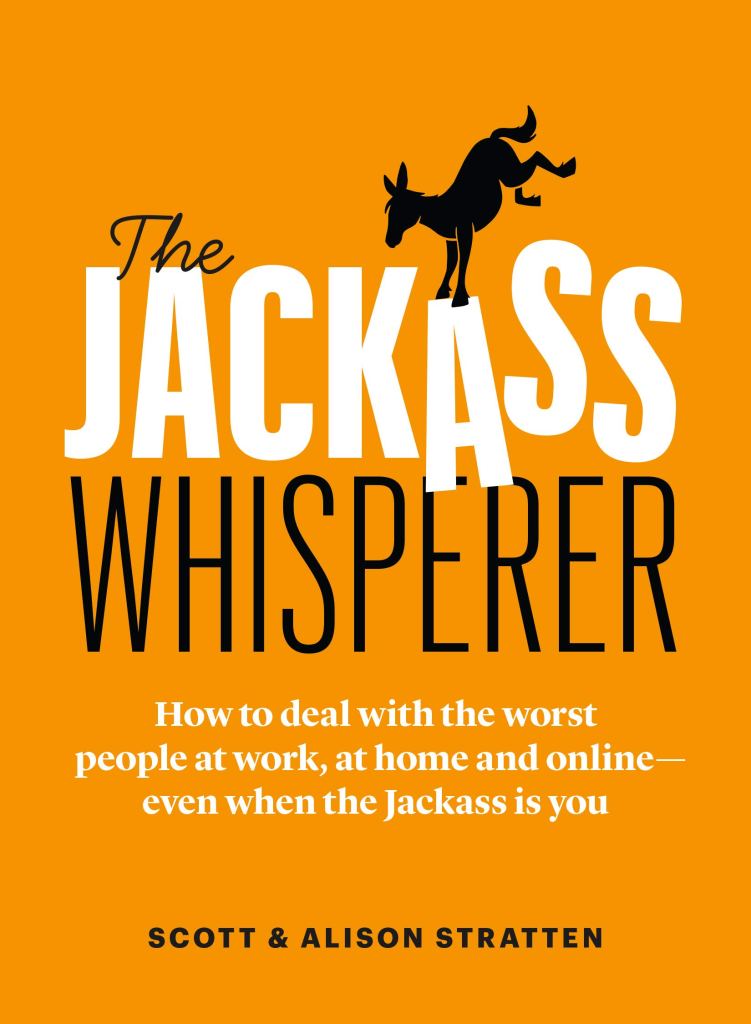
Scott Stratten, and latterly with his wife Alison, have written five other books on the intersection of customer service, social media, and marketing. I have reviewed most of them, which you can find here, routinely listen to their podcast, The Unpodcast, and I have a framed and signed “Don’t try to win over the haters. You are not the Jackass Whisperer” poster in my office. I am an unashamed fan boy.

Their books have swung from deep dives into marketing theory, to jokey and fairly superficial explorations of the absurdities that the marketing, and wider business world, is full of  – always with humor sprinkled throughout.  Although by no means an expert, I am certainly familiar with their work and their thinking on a variety of subjects.

Their latest book, would seem to an addition to their collection of books with a “gimmick.” A 125 question and answer book to see whether when presented with an example of “jackassery” one responds with a “Jackass Reaction” or a “Whisperer Reaction.”

But…

That is not what if going on here at all.

By coming at the subject from an indirect angle, the Stratten’s have laid bare our worst instinctual reactions to other people’s worst behavior. It shows that, in many instances we are just as much the problem rather than the innocent victim that we too often paint ourselves as. The implicit message is that the only way to deal with bad behavior is not to react to it out of outrage, but out of understanding and an attempt to solve the real underlying issue. To be the better person.

Of course, the book, and by assumption the authors, are not suggesting that all behavior is acceptable, but that “pick you battles” is really mantra we should all live by. That we have a responsibility to make the world a better place, and that starts with our interactions with each other. I find this particularly interesting as there was an element of “shame culture” in the earlier Unpodcast episodes. Jon Roson’s excellent “So You’ve Been Publicly Shamed,” which I reviewed here, goes much deeper into the culture of naming and shaming online; and the Jackass Whisperer seems to be a repudiation of that shame culture.

The Jackass Whisper is over the top, although most of the inciting incidents seem to be based on real occurrences (we really are doomed as a species), the reactions, both as a Jackass or as a Whisperer, are so over the top that it becomes useful to use them as a gauge for how you, the reader, would deal with such a thing. If one is being honest it is easy to see where your reaction is really not helpful, although perhaps satisfying at the time in terms of revenge.

It is, or course, easy to read this book superficially – as I did initially if I’m honest. But it subtly asks questions of us that are not easily answered. Is this the person I want to be? Do I really have to react like this to perceived provocations?

I’ll leave you to guess in the comments on my Jackass scale, but really that is not what is important about the Jackass Whisperer. It is the thought, and potential internal discussion, on the nature of reaction that a thoughtful reading of the book provokes, that makes it well worth your time and the purchase price.

andreas-fickl-k-7JT9obpJw-unsplash

Photo by Andreas Fickl on Unsplash

What is common sense?

Is common sense to a manager the same as common sense to a veterinarian? Or to a veterinary technician? Or to a customer service specialist? Or perhaps, most importantly of all, to a client?

Common sense should be knowledge that we all share; however, it is rarely used that way. It is often used as a bludgeon on people for not reading our minds. Common sense is short hand for “you don’t know what I know, and I think you should.” The problem is that we rarely recognize that our own common sense is more often than not a point of view with some additional specialized knowledge.

Chip and Dan Heath in their book Made to Stick, talk about the “curse of knowledge.” They outline a simple experiment conducted at Stanford, where by a number of “tappers” were given 120 well know songs to recite using just knocks on a table. “Listeners” would then have to guess which each song was. The Listeners were right only about three times out of 120. What was extraordinary; however, was that when the Tappers were asked whether the Listeners should be able to pick out the song, they replied that they should be able to 50% of the time! The Tappers felt they were being understood more than 47% more than they actually were. The Tappers were hearing the song play along in their heads while tapping it out on the table. The Tappers had knowledge that the listeners did not, and so dramatically over estimated the Listeners ability to recognize the song.

Common sense is a side effect of the curse of knowledge. A team member who may excel in looking after an unhappy customer, or preventing a customer from becoming upset in the first place, may not automatically understand the seriousness of a cat that is straining to pee. Likewise, a veterinarian may not understand the reason why their client is not being immediately shown to an exam room is because of the 12 other people that just walked through the door that the customer service representative is trying to deal with.

Now in both of the above examples, training, proper protocols and procedures, and a commitment to teamwork should solve all of these issues. But when we fall back on common sense, or a lack of it, we are doing a disservice to our team members and even to ourselves. If we replace “common sense” with the words “knowledge and experience” in the phrase “you have no common sense when it comes to dealing with clients” the person at fault switches from being who the phrase is directed to, to the person saying the phrase.

Give it a try – I’ll wait.

Common sense is an excuse for leaving training and continuing education to osmosis. It has no place in management, and really has no place at work at all. Employees are not going to place themselves in shoes of clients without being trained to do so, and they rarely have the knowledge to place themselves in the shoes of managers or veterinarians. Common sense is lazy, overly broad, and does a disservice to the person using it and the person whom it is directed against.

It is time to recognize it for the dysfunctional symptom that it is.

joyful

Ingrid Fetell Lee is a great writer.

And that’s a good thing. Because in less capable hands; “Joyful: The surprising power of ordinary things to create extraordinary happiness,” could be a ridiculous book that could be dismissed as new age trash. However, Ms. Fetell Lee skillfully navigates these potentially treacherous waters to give us a surprisingly joyful book.

Part memoir, part travel guide, part scientific dissertation, and yes, part new age exploration of what brings joy into our lives and why; Joyful is all this and more. The book leaves the reader with and actual understanding of why some things in the world are more joyful than others and how to differentiate between them. This is not a book that is going to change your life; however, it may change how you approach certain aspects of your life and give you the skills to add joy into the most unlikely of places.

Most the areas that Ms. Fetell Lee addresses are easy to dismiss: the differences in the shape of things, the color of things and the joy in abundance; however, she skillfully addresses her own doubts and takes the reader on a journey of discovery. Laugh out loud funny in places, Joyful is packed with real useable takeaways.

It is fair to say that Joyful was not what I was expecting. However, if a book well worth reading for anyone who works with people (that is probably all of us) or who has to make decisions about the layout and creation of spaces.

Joyful will make you question whether utility is really the goal we should be reaching for when joy is so easy to find, or to add, to the world we inhabit.

rejection proof cover

How do you make yourself immune to rejection?

Can you make yourself immune to rejection?

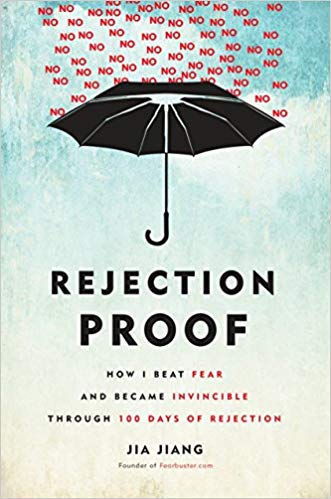
Entrepreneur, Jia Jiang, decided to conduct a personal experiment after being turned down by an investor, and nearly giving up on his dreams. See how he would handle 100 days of rejection!

To hold himself accountable, he documented his rejection experiment on a blog and filmed many of his encounters. What happened next is the stuff of modern fairy tales. One of his early videos went viral (see below) and opportunity after opportunity opened up for Jia Jiang.

Rather than exploit these opportunities, Jia Jiang realized that he had tapped into something extraordinary by his exploration of rejection, and so decided to continue his experiment.

What Jia Jiang discovered was the psychology behind rejection. That a rejection says far more about the person rejecting, and their current circumstances, and what the best ways are to change a rejection into a positive or a compromise.

Perhaps the most insightful thing to come out of Jin’s entire experiment is that it is not rejections that hold most people back, it is the fear of rejection that stops people from even trying in the first place. Jin asks some for some crazy things, and embarrassingly he rarely gets rejected, even when deliberately trying for the purposes of the project.

Rejection proof is a highly entertaining and lighthearted look at one of our deepest fears. It gives good and practical advice about how to ask for even the most outlandish things; but more interestingly it also goes into how to reject something and how reject in a way that still allows for the other party to leave feeling like that got a positive response.
Asking for something does not have to be a zero-sum game, and arguably should never be.

Jin’s experiment led to him reexamining his life and the choices he had made based on rejection and the fear of rejection. It is a fascinating story with a slew of good advice for anyone who has ever felt rejection or feared rejection to the point of inaction. It ultimately says we should embrace rejection as a valuable learning tool about other people and ourselves.
Enjoy watching Jin ask for doughnuts in the shape of the Olympic rings.

moments

Any book by Chip and Dan Heath is worth reading and their latest, The Power of Moments, is no exception. For those who do not know the work of the brothers Heath you can check out my review of their first book “Made to Stick” here, and what I consider one of the best business books ever: “Switch” here.

Interestingly, The Power of Moments is very similar, and treads a lot of the same ground, as Scott Strattan does in his books Unmarketing and Unselling; they even use some of the same examples. What makes the Power of Moments seem new and fresh is that level to which it delves to understand moments, why they work, and how they work; as opposed to just focusing on how to create new moments of your own.

An early example of the Power of Moments is to focus on the lack of attention that companies pay to an employee’s first day. What the Heath Brothers point out is companies have a golden opportunity to create a truly memorable first day for new employees; but that more often than not new employees are treated as an impediment to the day’s business. They rightly point out what would a first date be like if we treated it the same way we treat an employee’s first day? Suffice to say we probably would not get a second.

Creating memorable moments is not about delivering the best of anything, or better value than your competitors. Moments are about when clients have expectations and we do something to exceed them. To create moments, we need to give employees license to break the script. To do something for our clients that is unexpected and that creates a memory for them.

The power of moments, however, is not just about business to clients. Moments also have value when motivating ourselves and our own internal dialogs and bargains when it comes to setting goals. What the Heath Brothers suggest is that rather than using the traditional SMART goals (Specific, Measurable, Attainable, Realistic and Timely), or worse no real goal at all, that we borrow from the gaming world. In computer games, players advance from level to level, and in good games those levels are moments. For example, take the vague goal of wanting to learn play the violin. Even a SMART goal may just be to attend a lesson every week. However, with a level system, things look a little different:

Level 1: commit to one lesson a week
Level 2: Learn to read sheet music.
Level 3: Learn to play a particular song.
… Level 7 / Boss level: Play in a pub in Ireland.

By having an outsized end game, and then having manageable steps to achieving those level with rewards built in creates a sense of purpose. Purpose isn’t discovered, it is cultivated, and purpose trumps passion.

The Power of Moments is not a book about good businesses becoming great, but how to make any business extraordinary. Much like the book.

founder
I have been reviewing books for a number of years now; however, movies have always been my passion and on occasion I have used movies in staff meetings for the accessibility of the message, and for more personal management lessons. I decided that it was time to share some of these. Please note that this review does contain spoilers for the movie and is more of a reference for interesting scenes and themes.

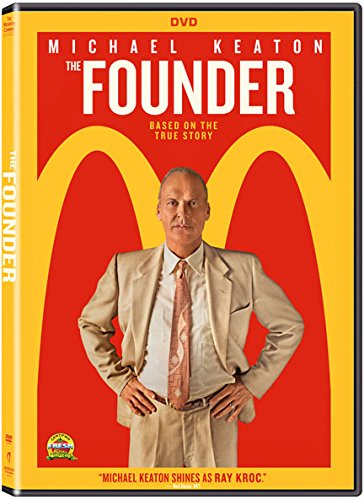
The Founder is the true story of The McDonald Brothers, who created the first McDonald’s Burger Restaurant, and Ray Croc who saw the potential in what the McDonald Brothers had created and turned it into the franchise and behemoth that we know today. Starring Michael Keaton, as Ray Croc, The Founder is certainly a cautionary tail about choosing your business partners, but it is also a story about realizing potential, and understanding your business and your customers.

The movie starts by following Ray Croc as an ice cream mixer sales man to bad drive in restaurants. While it is obvious that he is an archetypal slimy sales man, the patter he uses is surprisingly modern and essentially comes down to “build it and they will come.”
When he comes across the McDonald Brothers’ restaurant, it is different from any that the traveling salesman has come across in the past: Bulk sales of three items, no plates or utensils, and the food is received in 30 seconds rather than 30 minutes.

While the story of how the brothers reached this point is interesting on many levels, the 20-minute mark is of particular note. The McDonald Brothers take their staff to a tennis court, lay out their new kitchen design in chalk, and have the staff act out the “speedy system” that will allow them to make burgers like nobody else. What is most interesting about this sequence is the McDonald Brothers attention to detail and choreography of how their staff moves. They recognize that they are creating a system and that it has to be right or it will not work at all – even if that mean them redesigning the kitchen multiple times.

At the 50-minute mark the discussion of franchising, and the potential for a drop in standards, is examined in detail. This in turn leads to the realization that franchise owners should be sales people who are wholly vested in the venture, and looking for an opportunity, rather than just investors looking to make money anyway they can. Again, this plays into a central theme of the movie – chose who you go into business with wisely.

One hour and 18 minutes marks the real revelation of the McDonald’s story. That the McDonald’s franchise is not in the burger business at all, but actually in the real-estate business. Rent provides steady revenue and it is capital that fuels expansion.
Things start to go seriously wrong for the McDonald Brothers at the one hour and 29-minute mark with the breaking of their contract with Ray Croc and how Ray Croc sees business. A significant take away from the movie is that the McDonald Brothers and the Ray Croc have fundamentally different views on business, what a business should be to the community, and how a business person behaves.

It is certainly a cautionary tale.

While it would be a mistake to paint Ray Croc as a mustache twirling villain, his ethical standards are dubious at best. Re-watching the movie, with the benefit of knowing what happens, it is interesting to note all the places where the McDonald Brothers treat Ray Croc less as a partner and more as an employee. They frustrate his attempts to monetize the franchise, and are unbending in their standards even if that creates a significant impediment to the creation of a viable business. One can certainly see the position that Ray Croc finds himself in, and while his solution is mean and dishonest, it is not one of his making. Unlike most business stories where the good guy visionary’s do battle against the dark hearted managers, “The Founder” is more a tale of restrictive managers with a good idea and a visionary with dubious morals.

A thoughtful viewing of “The Founder” should provide pause for anyone going into a partnership, and it should also serve as a cautionary tale of the value of communication in a business, the miracle of systems, and the power of vision.