Archives for posts with tag: reading

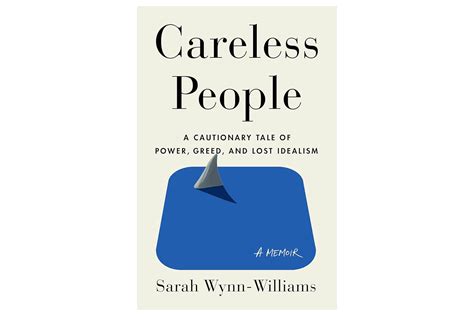
And the winner for most on the nose book title of the year goes to…

Sarah Wynn-Williams’ recounting of her time at Facebook (now Meta) is at times funny, horrific, and plain sad. From true Facebook believer, who pitched her dream role, international governmental policy, to at first disappointed employee trying to change things from inside, to full blown dissenter, and (spoiler) ultimately fired whistleblower.

There are few familiar names that come of well in Ms. Wynn-Williams’ telling. Mark Zuckerberg and Sheryl Sandberg come off particularly badly with their clueless and tone-deaf behavior being only the start. It is also telling that there are currently no slander or defamation suits against the author for the memoir, only an order enforcing her NDA (Non-Disclosure Agreement) signed as part of her separation agreement.

Ignoring for a moment the wider societal issues with Facebook that are the main thrust of the book, what the author shows off is the often-dark side of the Silicon Valley myth. That while the pay and benefits may be great, the workload is deliberately punishing as an instrument of control. That anything outside of work is seen as an almost disloyal distraction. What is often portrayed as quirky, is often just mean behavior and nepotism with a significant dose of classism and well – carelessness. That it is far better to ask for forgiveness than to ask for permission, regardless of the potential consequences.

Where this volume really scores is in exposing just how deliberately powerful and impactful Facebook can be when it comes to manipulation. That Meta just does not care about the consequences of this or the impact around the world. It cares about getting new users to generate more business and that’s it. Whether it be vulnerable teenagers, peoples struggling to wrestle democracy from authoritarian regimes, or actively embedding staff with political campaigns to spread false information at home, Facebook seems to play the worst role possible. It is illuminating how the lessons learned from real world events are the worst lessons possible and that these are the last people we should be letting have oversized roles in our society.

The public face and social engagement of the leaders of Meta is all front. Sheryl Sandberg’s “Lean In” book and subsequent foundation are shown to be shams by people who not only do not practice what they preach, but also would be horrified by the mere temerity of the idea of being called out on this.

This is a book that exposes titans of Silicon Valley as not only shallow and immoral, but without any ethical framework or even basic decency. The very worst of the “let them eat cake mentality.”

While the book has a little of the “this was awful, but I did not say anything” that is often found in whistleblower accounts, this is kept to a bare minimum and while Ms. Wynn-Williams comes out of the account pretty well, she freely admits to her own naivety, and her wide eyed idealism.

This is a book that will make you think long and hard about your own Facebook usage but it really is about just how out of touch tech leaders can be, even with basic HR norms, and just how much the people who unleash technological forces just do not care about anything other than their own interests.

Careless in other words.

unbranding


I have a really bad habit when reading non-fiction books.

When I come across something I find particularly interesting I fold the edge of the page over so that when I am looking for it at some point in the future, or if I just want to remind myself of what I found particularly fascinating, I can go directly to the information. I used to actually read with a stack of post-it notes and a pen, but that becomes tiresome very quickly- and the books don’t stack well on the bookshelf any more with post-it notes sticking out of them.

I tell you all of this to give some background to my experience of reading “UnBranding, 100 Branding Lessons for the age of Disruption,” by Scott Stratten and Alison Stratten. It is no secret that I have been a fan of Scott’s for a while now and that has inevitably caused me to become a fan of Alison’s too. However, I had an issue with “UnBranding,” and it can be summed up by this picture:

unbranding corners.jpg

For reference the book is face up.

Can you guess my problem was?

For some reason, I could not connect with the concept of the book, and therefore the ideas did not resonate with me, until page 99. And while what’s on page 99 is important and worth looking up, what was really brought home to me by the story you will find is that the book is actually 100 branding lessons, and 100 examples that give them context.

Why I did not learn this from the title might say a lot about business books in general, but probably more about myself.

Most marketing and business books, and therefore by definition most marketing and business writers (including myself), use their writing to explain concepts and ideas and then throw in a couple of examples to prove themselves right. The Stratten’s turn this on its head. They fill their work with examples of the good, the bad, and the downright ugly of customer service, marketing, and business in general, and then tie these examples together with workable concepts and ideas.

Unbranding, is exactly what it says on the cover. Some of the examples are personal to Scott and Alison. Some of the examples are national media stories that feature the world’s biggest brands. But each one contains a lesson for how to market and conduct better business (or how to adjust your expectations).

In the past, Scott has been accused of retreading over the same territory again and again particularly when it comes to his books. I think this is unfair and to misunderstand the various works and what makes them unique; however, I did have this feeling when I started UnBranding – until page 99 of course.

Having now gone back and reread pages 1 – 98, I can confirm that it really was my issue. There are great things on those earlier pages and the book did exactly explain what to expect and what I should be learning, but for some reason they washed over me. It may have been because of their previous book: UnSelling, which I feel is a bit if a Rockstar – you can read my review here.

While not the Rockstar that UnSelling was, UnBranding is still a great business book with important lessons. Some of these lessons you will have heard before, particularly if have read the previous books: UnMarketing, The Book of Business Awesome / The Book of Business UnAwesome, QR Codes Kill Kittens, and Unselling, or listen to Scott and Alison’s excellent UnPodcast; however, there are still plenty that you will not have heard. Also, having this many great concepts on 21st century branding in one place is useful all on its own.

What makes this book special is not the branding lessons themselves, but the context to understand why they are important. Simple, readable, and relatable, UnBranding is a more mature than some of their other work, but is worth your time now and very much worthy of pulling off the bookshelf in the future reviewing when you think you may have forgotten its lessons.