I left my veterinary practice, and the associated other ventures, after 13 years as Hospital Administrator, three weeks ago as of this writing.
I have left jobs before, I’ve even left vet practices before, but nothing came close to this. Thirteen years is a long time.
When you manage people for a living you hope that you make a difference in people’s jobs and by extension their lives. At the same time, you have your doubts…
“Did I really make any difference at all?”
Sure, there are people who say you’ve made a difference. People who you grow to care for – maybe even think of as friends. At the same time, one can never be unaware of the inequality of those relationships. Managers, by definition, are not on an equal footing with the people they manage.
“Are they saying that nice thing because they mean it or because I’m their manager and they know it’s what I want to hear?”
Leaving changes all that.
Who signs your card and who does not. Who finds the time for a quiet conversation – a mentorship confessional. Those who reach out over social media, knowing your aversion to mixing your personal life and work, is now no longer such an issue. The moving of people from the thought bucket of colleague to the one marked friendship. These are the subtle reminders that you matter. That despite all the challenges, you did good work.
The jaded manager in me, the one who regularly has to be beaten down less he rears his head with his negativity, would always whisper the word “fraud.” That making a difference had failed. That you were not the manager you aspired to be, that indeed you were not the manager you thought you were, that you were the manager you feared being. Many sarcastic thanks to the makers of The Office (either one) for adding to the management second guessing in case we inadvertently and momentarily became David Brent / Michael Scott. Although truthfully there are far worse managers out there, both on Television or Film and in the real world, than David Brent or Michael Scott.
But in leaving one can leave those thoughts behind. These are not the rose-tinted memories of times gone by – although I’m sure those are to come. These are the genuine thing. Reactions from people who care. Who recognize the role you have played. Whether it was a timely job offer, a suggestion of a new role or promotion, advice about how to deal with a colleague, or for faith and belief in another when everyone else has none. This is what work is supposed to be. The collaboration between people in pursuit of a shared goal.
Leaving makes you realize your value. That your value is that things will carry on. That you are not indispensable because you have dedicated your management career to ensuring that others thrive and have the skills they need to grow.
Veterinary Medicine is about communication. Our patients don’t speak. They can’t advocate for themselves so pet owners, doctors, and team members must communicate with each other on their behalf and as clearly as possible.
However, there is a relationship within the practice which is even more important. It is that of practice owner (PO), usually a DVM although the same applies to corporate practices with a medical director, and the hospital administrator / practice Manager / office Manager (OM).
If these two people cannot agree, or agree to disagree, all the other great things that can happen within the practice are subject to failure on a monumental level.
Everything flows from this relationship.
Protocols and standards of care can’t exist if the two people responsible for implementing them can’t agree on what they are and how they should be applied. How can equitable and fair human resource decisions be made if one of these two people plays favorites and overrides the other when it suits them? They must be able to have difficult conversations, where they both will have strong feelings about the results, and must be able to come out of that conversation without hard or hurt feelings that get in the way of their continued relationship.
Vision, Mission, and Core Values statements can go a long way to resolving these issues – but only if they are the living breathing guidelines of the practice. More fundamental is that there is mutual respect between PO and OM for both their respective roles and their responsibilities. They also need to present a united front on matters of change.
Unfortunately, this relationship is often unequal. Practice Owners, by definition call the shots and have the last word. Ideally, they empower their OM as their representative to make decisions and implement policy. However, if there is no trust, no respect, there is no way that is going to happen and no way for the OM to do their job. Likewise, if the OM is constantly aligning themselves as an employee rather than as a member of senior management / ownership they are unlikely to receive the trust from a PO that they would want and rightly so.
There is a balance to be reached and that’s why I advocate that the relationship between PO and OM has to work for anything else in the practice to work. This is also the reason why I am always against PO and OM being married or related in other ways – other parts of their relationship creep into the PO and OM dynamic. PO and OM should not be best friends – there are times they are going to disagree and that’s fine – that’s how it is supposed to be. They represent different interests of the business.
So what if that relationship is not there or there has been a breakdown?
Communication.
Communication.
Communication.
Fundamentally if PO and OM can’t communicate then the relationship is dead. Unfortunately, that probably means the OM needs to leave either by resigning or being let go. It does no good to anyone for there to be infighting between the leaders of the practice. It certainly does not help the practice.
What sucks for the OM in this situation is that jobs of that type in the veterinary industry are usually one per practice. That means if there are ten practices in your town then there are only nine possible jobs for the OM and there are no guarantees that any of them are looking. There are, of course, opportunities in other industries; good leaders and managers are always in demand; however, that means learning another industry.
If the relationship between PO and OM is broken something must change because this is the relationship that can’t be broken for the practice to function. Take care of your own mental health and that of your team.
Be honest about this relationship and either fix it or move on.
Feature image courtesy of Zahid H Javali & Dmitry Abramov from Pixabay
It seems that everywhere one turns today artificial intelligence (AI) is being added to every aspect of daily life. Whether it be the arts, education, entertainment, search, or the workplace – AI is everywhere.
Often, those of us who are distinctly dubious about the claims that are being made about the current generation of AI, more appropriately labeled machine learning, can often feel like Cassandra of myth – fated never to be believed. At worst we are labeled as luddites, rather than as people who believe that technologies should earn their places in our lives and societies rather than being instantly adopted after being told by people hoping to get rich that they work great and everything will be fine.
Ms. Schellmann’s exhaustive exploration of AI in the workplace is pretty damning.
It catalogs how Human Resource (HR) departments have been adopting technologies that are often little understood by their users and are often working under misapprehensions as to the scientific backing of the ideas behind these tools. The fundamental problem is often one of garbage in – garbage out; a phrase that has been with us from the dawn of the computer age. For more on this I recommend the excellent “Weapons of Math Deception” by Cathy O’Neil which I reviewed here. The majority of AI tools are black boxes that we can’t look inside to see how they work. The manufacturers consider the algorithm’s inside these black boxes proprietary intellectual property. Without being able to look inside the magic black box, it is often impossible to know whether an algorithm is biased inherently, whether it is being trained on biased data, or just plain wrong.
One of the things that comes up again and again in “The Algorithm” is AI’s, or the people that program it, inability to know the difference between correlation and causation. Just because a company’s best managers all played baseball, does not mean that baseball should be a prerequisite for being a manager – particularly if it means that an AI would overlook someone who played softball – which is essentially the same sport. When one considers the fact that men tend to play baseball, and woman tend to play softball, it is easy to see just how problematic these correlations can be.
The problems with correlation and causation are of course magnified when junk science are involved. Tones of voice, language usage, and facial expressions, are being used in virtual one-way interviews for hiring and have little to no science behind them. In one highly memorable section of the book, Ms. Schellmann speaks German to an AI tool, reading from a Wikipedia entry, which is assessing her customer service skills and quality of English. The tool rates her highly in customer service and English even though she is speaking a different language and does not even try to answer the questions being asked.
Where the book falls down a little, but probably says more about the sad state of business thinking, is on personality testing. The author seems to accept as scientifically valid that employees can be categorized as one of a few simple types. You can read my review of “The Personality Brokers” by Merve Emre here for more on this nonsense and dangerous business tool. As Ms. Schellmann rightly states in her take down of how AI handles personality testing, but could actually just apply to all personality testing; “we’d be better off categorizing by star sign.”
It is disturbing just how much AI has already invaded the hiring space in the HR offices at large companies and gives one pause as these tools become more mainstream. While it is true that it is often not the AI software itself that is the problem, but how the humans that wield such technologies choose to use them. There is also the problem of how hard it is for a human employee to challenge a decision that is made by an algorithm – which by its very nature is a secret. The developers will often say that these tools should not be the final word in hiring or firing; but the knowing wink and smile behind these statements tells us everything we need to know.
Ms. Schellmann’s work is laser focused on human resources, an area where bias has been and often is a significant problem. The idea of a tool that can be used to eliminate bias, and that companies want to use tools like this, is not inherently a bad idea – in fact it is admirable. The problem is that bias in hiring is often unconscious bias and tools that are wielded by those who are not aware of their own biases are most likely fated to continue to have these biases and therefore affect the process. In addition, it is often difficult to impossible for candidates or employees to challenge decisions by managers which they may feel have been affected by bias. How much more difficult is it when it is not a human making the decision or recommendation? A tool of which we cannot ask the most basic of questions: what were you thinking?
This is an important work for our time – hopefully one not fated to be a Cassandra.
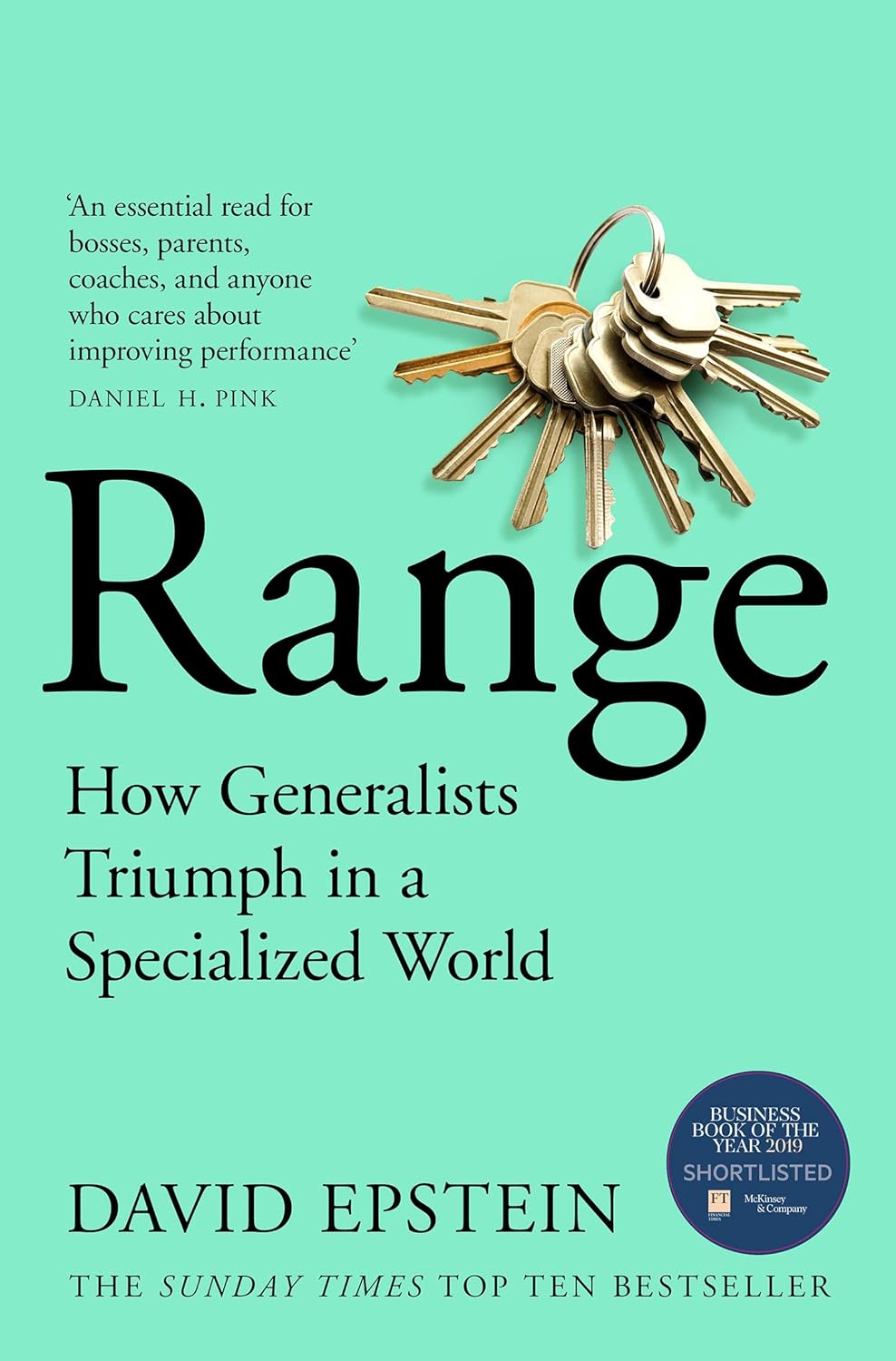
As a society we tell ourselves stories that, while convenient, are not always, or even ever, true. In what is probably Malcom Gladwell’s best book “Outliers” (which I can’t believe I have not reviewed) the author tells of the often decade long stories, and tales of extraordinary advantage, of seemingly overnight successes. David Epstein, in “Range: Why Generalists Triumph in a Specialized World”, is also debunking one of the stories we tell ourselves – that to be really good at something, or to have great success at something, we have to have focused on that thing for a long time – if not forever.
Before I go any further a word to my veterinary and human medicine readers. In this post, and indeed in Mr. Epstein’s book, when we talk about “specialization” we are using it in the general sense as opposed to the legal (small “s” rather than capital “S”). Although, I do believe that there are lessons for students from Mr. Epstein’s excellent book. Don’t be in too much of a hurry to map out your career. It’s a good thing to try out different interests and to change your mind – you’ll be better in the long run for it.
The pressure to focus on one thing, whether it be in sports, music, or entrepreneurship is all pervasive and often has business interests behind the marketing of “hyper specialization.”
It is a good story.
The Tiger Woods story is one that the author highlights. It is a story of the very young Tiger playing golf before he could talk and spending all day at the golf course. It is a story of winning tournament after tournament and having an unflinching goal of winning more titles than anyone else. Mr. Epstein juxtaposes the “Tiger story” with the far less well-known story of Roger Federer. Federer’s mother was a tennis coach but she refused to coach him and actively tried to dissuade him from playing tennis. A young Federer also seemed far more interested in soccer, basketball, skateboarding, handball and skiing. It was not until his teens that Federer started to gravitate towards tennis and then his goals were not lofty, but the rather quaint “meet Borris Becker” and “play at Wimbledon.”
This wide range of experience and lack of focus is the author’s main argument – that, more often than not, it is range that leads to success rather than specialization. That depth of experience of different fields matters more than depth of experience in just one. Interestingly, the evidence that Mr. Epstein quotes, rather persuasively, is that while early hyper specialization can lead to children getting a head start in that chosen area, they tend to fall into line with their peers rather than stay ahead as time goes on.
Where the book misses, for me, is that it seems to continue to fall back to specialization being a worthy goal via a route of different experiences, rather than the range of experiences being a worthy goal in itself. However, this minor quibble aside. The book makes a very strong case for experience in general and for following one’s interests. A great example is the idea to not ask kids what they want to be when they grow up, but rather to ask them what they are interested in. Our education, and in our careers, we often ask others where they are headed and penalize them for not knowing. This may be a mistake.
When I look at my career, I’ve had very specific goals at different times and while I have met some of them, I have taken some spectacular left turns that has led me to areas I would never have even considered just a few years earlier. No one is more surprised than me that I live in Las Vegas, watch a lot of hockey, and write poetry.
This is an important book for those who mentor, or lead, others. How we choose to guide – matters. We are often a deciding factor in whether to specialize in an area or to follow seemingly unconnected interests. There is value in a range of interests and experiences that benefit both the person and the employer.
A more enlightened view of the goals of mentoring will benefit everyone.
I rarely write book reviews about books I don’t like.
I don’t believe I’ve ever written about a book I despise.
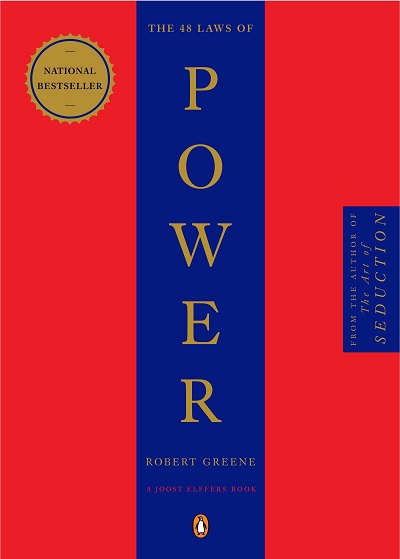
I have never read a more immoral and unethical book than Robert Greene’s “The 48 Laws of Power.” It does not have a luxury of the possible satirical nature of Machiavelli’s “The Prince;” a book that Mr. Greene quotes extensively. It also has no excuse of being from a different age given its original publication date of 1998.
The 48 Laws of Power is a book that argues that we all should lie, cheat, and steal to get what we want and hold on to what we have. It argues that customers and colleagues are marks to be taken advantage of. Friends are to be feared and loyalty is valueless; other than as something to exploit. The book seems to be saying that everyone is out for themselves, and so to do anything other than to be looking out for one’s self makes you a fool.
This outlook, of course, flies in the face of pretty much all current management theory and treats all interactions as a zero-sum game: there must be a winner and a loser in everything. It ignores the work of mathematician John Nash Jr. and the prisoner’s dilemma. In fact, it is interesting that the book does not mention the prisoner’s dilemma and the bias that groups have towards cooperation.
The book is filled with historical examples and examples from myth. However, these examples are cherry picked and contain little historical context and no moral framework. An advisor keeps quiet about their fears of following Napoleon into war, because they ultimately feel they will fail and therefore cause their own downfall – never mind all the people who died at the battle of Waterloo, so long as the advisor keeps their “power.” The book fundamentally misinterprets the failures of the Treaty of Versailles, and by way of repudiation, the success of the Marshall Plan. It claims Claudius pretended to be a fool to seize power, rather than someone who by happenstance became emperor and, by being highly educated, a highly effective administrator.
This book endorses the worst fears about politicians and managers that are held by those who elect them or follow them. A reading of this book, taking as fact that this is how all those in power do, or should, behave essentially makes the case for revolution and collectivism. If everyone is only out for themselves, and you can’t trust anything anyone says, then what use are leaders? People infected (and I use those words with great care) by the thought processes in this book have no place in the modern workplace.
This book also provides instructions on conning people, in creating a cult (not kidding), and scapegoating the innocent to protect one’s own position. The book endorses narcissistic behavior and manipulation to seduce people and is generally sociopathic.
And it’s a shame.
For this book does contain a lot of good information. Its problems lie in its total lack of a moral framework. The book also has merit for anyone who feels they may be being manipulated, to understand the mindset and tools of the manipulator. But these arguments are a stretch for a book of this length and depth. I think a good barometer for organizations, is upon seeing this book on a bookshelf, to ask those around you what they thought of it. Those that embrace it, rather than act with revulsion at its amorality, should be treated as this book itself would recommend treating them – with distrust and suspicion.
This is not a good book. It puts forward a dangerous point of view because there are people who will, and I’m sure do, use this as a manual to scheme and manipulate those around them – and think that it is okay to do so. This book is almost everything that is wrong with the world today, and everything that is wrong with business – ever.
There way are better explanations of how to view the world and the behaviors of others, and even on how to get ahead in the workplace. It is hard to find one that has such an ugly view of people, society, and history.
“A Friend of a Friend…” by David Burkus makes the case that we are doing networking all wrong, or not at all, and that there is a better way of thinking about personal networks. With a few caveats, I think there is a lot to learn from Mr. Burkus.
To most people, the purpose of networking is to be able to leverage your network for professional ends. That means reaching out to those people with whom you have “close ties” and seeing what they can do for you or who they can introduce you to. The author suggests, however, that “loose ties,” those that you have fallen out of touch with or never had a terribly close connection with in the first place, are a better way of leveraging your network connections. It is these loose ties that are more likely to bring a diversity of thought to your circle. With some intriguing data, the book put forward the idea that people who have similar thinking, and world view, tend to cluster together. As an example of this clustering of similar thinking patterns, Mr. Burkus uses the example of voting patterns, because voting districts tend to increase in their preference for a particular party over time – even when allowing for jerrymandering!
Trying to increase the diversity of thought to improve your exposure to ideas is not without risks. While most people would agree that they and others are subtly influenced by those around them, what is less well realized is that even the behavior and habits of friends of friends can influence our rates of obesity, smoking and stopping smoking to give just a few examples. Influence is contagious.
While for some it might seem that social media could be an ideal solution to these networking issues, the author urges us to use caution and to treat social media as a potential tool rather than as a panacea. Social Media can exacerbate the very issues highlighted above – a lack of diversity of thought, through the contagious nature of influence.
What has been known in some entrepreneurial circles and at some high-end retreats is that one of the best ways to get to know someone, without all the baggage of status and perceived worth, is to actually complete a task with a stranger – helping to prepare a meal is the most focused on example, but taking a class on almost any subject when collaboration is required works just as well.
In a refreshing change from most personal development and business books is to find the resources that accompany the book freely available from the authors website, with a commitment to keep them there. https://davidburkus.com/resources/
Where the book is lacking is in the assertion that personal friends and connections can also turn into good and productive business connections or partners and vise versa. While this is undoubtedly true, and the book serves up many examples of it working in the real world, it does not explore or even caution of the HR issues and general pitfalls of not having clear boundaries in the workplace for both those involved and those around them. While it is a relatively minor quibble, it does seem to be strange oversight given the book’s otherwise excellent attention to detail and research.
“A Friend of a Friend” is an excellent resource for those who find networking unnatural. It also explains why it looks so easy for some and borderline impossible for others. The success of its promise, and premise, still has a lot to do with personal motivation, but these tools are that are relatable and accessible for all. This book is for the introverted, extroverted, and the closet introverted alike.
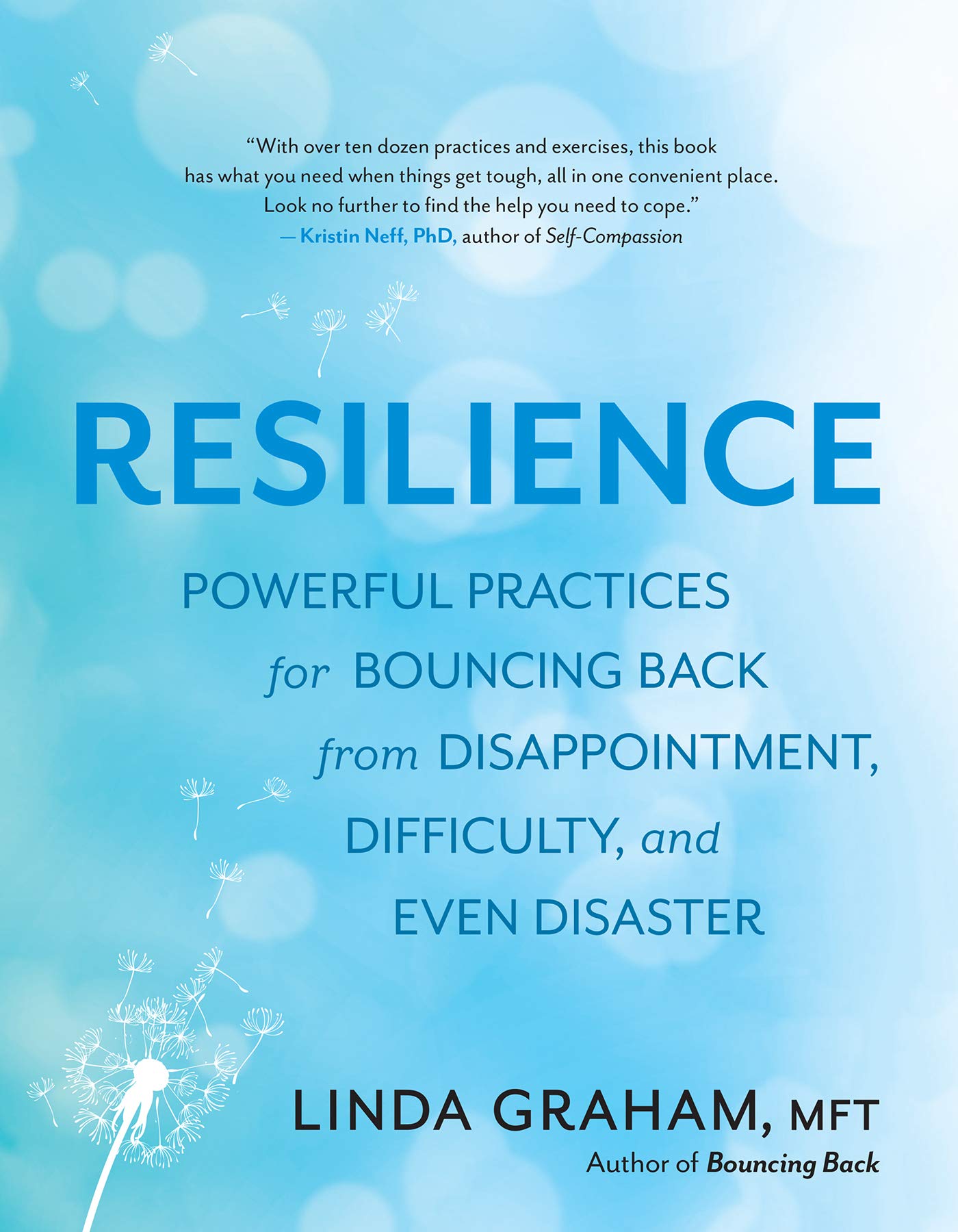
Self-Help books, of which Resilience: Powerful Practices for Bouncing Back from Disappointment, Difficulty, and Even Disaster, undoubtedly is; seem to fall into the two categories. The overly new age, “everything will be alright as long as you are positive” and the so grounded in psychology and psychiatry that you need a degree in medicine to even begin. Resilience is neither of these; yet bridges both worlds and in such a way as to take value in both approaches.
It is telling the Ms. Graham is a marriage and family therapist. Her ability to speak in plan language but also to explain the scientific underpinnings to what can sound, and I am sure does, sound like hogwash to a lot of people, if it were not for these explanations. This is a book for rational people, willing to embrace change – even of they are a little reluctant. It is worth noting that this book was given to me to read by a colleague who recognized how useful it could be for the workplace – particularly in a profession dogged by mental health issues and suicide; but was unwilling to embrace even the small leap of faith that the book asks.
Resilience is a book of exercises – 133 in all. Some will not be right for you, and undoubtedly, some will. Each chapter deals with a different type of intelligence and general resilience. Each chapter is broken down into different mode of how the brain processes; conditioning, new conditioning, reconditioning, and deconditioning. These modes are then in turn broken down into three levels of need; “barely a wobble,” “glitches and heartaches, sorrows and struggles,” and “too much.”
This is a book to refer to and reference as the reader grows and their needs change. One of the most exciting chapters for managers is on “Practices of Relational Intelligence with Others.” The tools and exercises which are explained in detail, have significant uses in getting third parties to communicate with each other, and for improving with interpersonal communication. I am often someone who talks to others about whatever I am currently reading. Resilience, however, has had me proselytizing to co-workers significantly more than normal.
Its use as a tool to help train our brains, something we often pay scant attention to, cannot be disputed. It is a little long and dense, but as mentioned earlier this is a book to refer back to – not to ingest over a few days like I did. That the book strays into areas more normally associated with meditation and yoga is not says a lot more about the positive nature of those practices, than it does as a criticism of the book. This is a book for cynics, and self-help believers alike. We all struggle from time to time and as this book’s title suggests, Resilience is about making us better and more adaptable. Being able to adjust and influence our thinking and emotions, rather than allowing them to influence and dominate our lives.
This should be required reading for the veterinary profession, and for anyone who wants to improve how the inside of their head works. I can’t recommend it enough, and it is not hyperbole to suggest that it could save your life.
I am keeping this copy of Resilience; it is on my nightstand.
How do we harness belonging to create buy-in for our teams and how do outside influences affect our own sense of belonging in the world? What can damage that sense of belonging? How do we avoid destroying what we seek to create?
In Daniel Coyle’s book , The Culture Code – which I reviewed here, he puts forth the idea that the things that create great culture in groups and teams do so by triggering a sense of belonging. These are things such as uniforms, special phrases or codes, and a shared vision of purpose. By triggering these ‘belonging cues’ we feel safe and part of a collective. We have shared values and a shared identity. This feeling of belonging is even more strongly triggered when there is an outside enemy or outside set of circumstances.
The fear of the outsider being used as a rallying cry for uniting a people has a dark reputation in history, but also has its more positive outcomes as well. The dramatic drop in crime in New York city in the weeks following the 9/11 terrorist attacks being an obvious example.
My own personal sense of belonging was also triggered in the shadow of tragedy.
When the 10/1/17 mass shooting happened at the Route 91 Festival in my adoptive hometown of Las Vegas, which killed 58 people (60 at the time of this writing), there was obviously shock and horror from not just people in Las Vegas, but also around the country. People who live in Las Vegas have an odd relationship with its tourist nature, in as much as there is great respect for the people who visit and for the things that draw them to our town, but that does not necessarily mean that we want much do with those people or those parts of the town. However, to attack those things, and those people is very much seen as an attack on the entire city. A city based on welcoming strangers to our town, and hoping that they have a good time during their visit.
The reaction of the city, with people lining up around the block to donate blood, the general feeling of outrage that this could happen, and that someone could abuse our hospitality in such a hideous manner, created a greater sense of ownership of this odd place in the desert where I live than at any other time in previous five years of my residency.
But something else happened at the same time in Las Vegas.
The city got its first professional sports team in the Vegas Golden Knights (VGK).
To the hockey world and the sports pundits, this was less than a joke. A city which had no history of support for major league sports, that has shown little interest in hockey, and where it was 115 degrees in the summer. It seemed like a terrible idea from just about every corner. However, at its darkest hour – or what certainly felt like its darkest hour at the time, the Vegas Golden Knights showed that they wanted to be part of the community, which let’s face it – they were not.
What happened next is the stuff of fairy tales. An unprecedented run for the Stanley Cup, and a city adopting a sport and a team as their own – making Las Vegas one of the best places to experience a hockey game in the country. For the whole story of that first year, I cannot recommend enough the documentary “Valiant” the trailer for which you will find below.
I should explain at this point explain that I have no time for sports. Apart from the odd summer evening watching baseball, more for the company and enjoying the summer evening in a crowd, than for anything happening on the field, sports was something that other people did. So, the question becomes, how did I become the owner of three hockey jerseys? What happened that first year of the Vegas Golden Knights, and in successive years, to make mee feel like they were my team, but also to become proud and emotional about my adoptive hometown? How did I come to believe that I belonged as a Vegas Golden Knights fan and that by extension that I felt ownership of a city that is, by definition, a place to be visited?
The Route 91 tragedy was obviously a horrible event for all concerned, but it was also a serious blow to the city and to its self-image. Las Vegas – America’s playground to quote the movie Ocean’s Eleven – a safe place for people to go a little wild. To shatter that image in the eyes of the wider world, also damaged that image in the eyes of the people who live and work here. The Vegas Golden Knights were also a team with an image problem. The players were all cast offs from other teams, and they were expected to be the worst team in the league that year – and possibly for years to come. That alignment of adversity created shared purpose.
And then against all odds the Golden Knights started, and kept, winning. A city which needed something to cheer and be happy about – got it in spades. The Vegas Golden Knights belonged to Las Vegas and Las Vegas belonged to the Vegas Golden Knights.
But there was more than fate at work in this bonding. The Vegas Golden Knights created their own medieval pantomime as a branding exercise; however, they also adopted the symbols and sounds that have come to epitomize Las Vegas. The sounds of coins, the roll of a dice, a mascot named “Chance,” “Viva Las Vegas”, and just the very golden coloring of anything and everything in sight made the Golden Knights feel like Las Vegas, but also to feel that it was okay to embrace the visitor tropes of Las Vegas.
People like to take pride in things, and it was easy to take pride in the Vegas Golden Knights. The fan experience was considered the best in the league, they continued to play well, cleanly, and get involved in the community. It also brought pride to the city because the Golden Knights did not exist for visitors – although all are welcome. They existed for the residents of Las Vegas.
The symbols of Golden Knights became synonymous with the city of Las Vegas, and with #VegasStrong. The uniforms, symbols, the shared experience of adversity, and the games created a whole new culture. A culture that the people of Las Vegas could belong to.
For that first Vegas Golden Knights season in 2017 / 2018 I was not a fan or even really bought into the culture. I was aware of it building all around me; but being aware of how the triggering of belonging cues can feel like manipulation I tried to stay aloof. It was not until the beginning of the 2018 / 2019 season, and going to my first game, that I finally succumbed, and ultimately embraced the sport and the team.
Fast forward to the 2021 Stanley Cup Playoffs. The first game of the second round. The Vegas Golden Knights vs. the Colorado Avalanche. Colorado were considered the favorites, of not just the series, but of the entire playoffs. Game one is a disaster for the Golden Knights. A 7-1 loss. Not only do they look out classed on the ice, but they show their frustration by getting into fights and giving up penalties. This culminates in Vegas enforcer Ryan Reeves kneeing on the head of Colorado Avalanche defenseman Ryan Graves in apparent retaliation for an earlier hit by Graves on Vegas player Janmark. Reeves was tossed from the game and received a two-game suspension. The VGK receive an extraordinary nine-minute penalty, and arguably play their best hocky of the game for the first seven minutes of that penalty, until two Vegas players decide they would rather hit a Colorado player rather than defend, and Colorado scores yet again.
This game caused a great crisis of faith for me. In the game and in the team I had come to love. Vegas is known as a team that plays “heavy, but clean.” Reeves actions, seemed dangerous, petty, and revengeful. In addition, the entire team seemed petulant at the resounding loss. To add to the disappointment, Reeves had been an outspoken advocate for police reform in the light of the George Floyd murder, and yet here he was kneeling on the head of another player. A professional, using excessive force because he could.
Chuck Klosterman in his book “But What If We Are Wrong?,” which I reviewed here, talks about the fall in popularity of boxing, and the potential for the fall of professional football, due to mainstream occasional fans, as opposed to dedicated “my team can do no wrong” kind of fans, being turned off by the serious life threatening injuries than can occur in those sports.
At the end of that game against Colorado, I was ashamed to be a Golden Knights fan. I believed that they had betrayed what they stood for. Other fans had a problem with them losing in such spectacular form – I didn’t. My problem was with them seeming to being petty and vengeful.
Game two of the series, while still a loss for Vegas, began to restore my faith in the team as they acquitted themselves as professionals.
However, just nine games later again my faith would be shaken. Testing my commitment to this sport and to being a fan. This time due to the behavior of the fans themselves.
Round Three, Game four, was not a good game for Vegas. Ultimately a 4-1 loss for the VGK at home. However, seeing your team booed off the ice at the end of the second period and at the end of a power play but their own fans was more than a little disquieting. As was the failure of the two people next to me and the eight people in front of me not returning to their seats for the 3rd period. I did not want to belong to a fan base that only supported a team when they were winning. Near the end of the game, Montreal scored an empty net gold making the score 4-1. There has always been fans who leave near the end of a game when it is obvious that their team is going to lose. This, however, was not a few fans.
This was an exodos.
I estimated 2/3s to 3/4s of the auditorium.
It was heartbreaking for the players I’m sure. Yes, they did not play well, or it would seem with much heart, but they did not deserve to be treated that way. Vegas has always seemed to have a hospitable fan base. Welcoming opposing fan bases into T-Mobile Arena, making sure they felt welcome in our barn and in our city. It has also forgiven its team for its losses and supported them as they once supported us. Its one of the things that I love about supporting the team – everyone was generally ways positive, friendly to all, and just wanting to have a good time. It the light of this game some fans expressed that the team deserved it as they had not shown up to play, and that far worse happened at other areas with other teams.
But that misses the point. Vegas was supposed to be different.
Cultures are made up of shared beliefs, shared values, and a shared sense of identity. This is reenforced by the sharing of uniforms, language, and customs. Damage to the sense of belonging by upending any of these threatens that fragile culture.
I myself have found myself feeling like an outsider in a culture I helped create in an online community, due to the shifting priorities of those in charge, a lack of inclusiveness, and a feeling that my sense of wanting to contribute was devalued and unappreciated. The feeling that I’m getting far less out than I’m putting in is often why people leave companies.
We mess with shared values and culture at our peril. These are fragile things. Belonging allows us to feel safe. It flips a switch in our cave-person brain and tells us “it’s ok,” “you are among friends,” “the saber tooth tigers are not going to get you today.”
But belonging goes further. Belonging allows us to feel. To connect. To bond. To Think.
All we do as humans is think, feel, and run around.
Cultures have to be fought for, to champion for, but they are not a bottomless well. When that sense of belonging is gone, it is gone for good.
I am still a Golden Knights fan, but there were some ugly moments for our team and the fan base during these playoffs.
Our teams that we lead and belong to, if we are lucky, have the same sense of belonging that fans feel for sports teams. But we can damage them just as easily as sports teams can by our actions and inactions.
Belonging is what we all want. But it can never be taken for granted.
This blog has now been running in its present form for 10 years. Its previous iteration ran for a couple of years and then there was a six-year gap. All of the old content, such as it was, is archived somewhere, but for now the past ten years is it.
What does ten years of writing a blog post every few weeks get you? Well, it is certainly not fame and riches. I’ve definitely grown as a writer. Grown to become a better writer – whether I’m a good writer is up for debate. My own self-copy-editing skills have most definitely improved.
Having a body of work, even one as unfocused as mine, I have found useful over the past 10 years. After finding myself answering the same questions online a lot, I wrote a number of posts to definitively answer those questions from my point of view. That’s has been a useful practice for me. It has also been a great way to harvest content ideas when I am in the mood to write, but don’t have a topic.
Blogging has also taught me a number of things:
1: Practice makes better, never perfect.
I certainly always feel I am growing as a writer. My punctuation gets better, for example, a bit like my vocabulary. I’m overly fond of complicated sentences; but I’m getting better at spotting them. For example, the last one very nearly turned into a monster in a fit of irony.
2: Consistency is great, but its either a job or a hobby.
There is nothing worse than the feeling of having to write creatively, but not being in the mood to do so. I found that out the hard way when I was a writer full time. To paraphrase the great Scott Stratten; Write when you have something to say. That’s a lesson I have really taken to heart and if you follow my blog, dear long-suffering reader, that is why I am so inconsistent.
3: Don’t be afraid to revisit topics.
Retreading over the same territory is boring if you have nothing new to say. However, I have found that I often have a lot more to say, and I sometimes contradict what I have said in the past about topics – particularly reviews and specifically Yelp.
4: What you think will be great is often ignored.
I think all writers think this way. You have your pet pieces. Perhaps the ones that stretch you with their subject matter or your approach. They may work out pretty well from your perspective, but not always for the reader. I also have a weakness for gimmicks, which readers, well my readers anyway, do not.
5: The great discoveries will surprise you.
For me its poetry. In the last 15 months or so I’ve found that while I enjoy writing, and get a lot of personal satisfaction from it, I love writing poetry. Whether I am any good at it is not for me to say. But while I find that Mikefalconer.net is a way for me to process my thoughts and ideas about work and books, I find that wordoutlet.net is a way for me to process emotions. I’ve never been a particularly emotional person, but they are still there. I also find the process on concentrating on a few lines, or even just a few words, unlike an article like this which is 548 words and counting, is much more satisfying to the creative side of me. This side of me loves the language of writing, but can get bored by facts, figures, and descriptions.
The bottom line (see, still not above using clichés!) for me is that writing a blog has been a voyage of self-discovery and improvement. It has become part of who I am. I’ve been writing on mikefalconer.net longer than I have ever held a job for. The site has become an extension of my personality; for good and bad. I’m proud of having the body of work. I think it says a lot about who I am by how diverse the topics I deal with on here have been.
I have no intention of stopping, and I don’t know if I could if I tried.
There are books that influence other books, and ideas that multiple authors undertake sometimes with wildly different results.
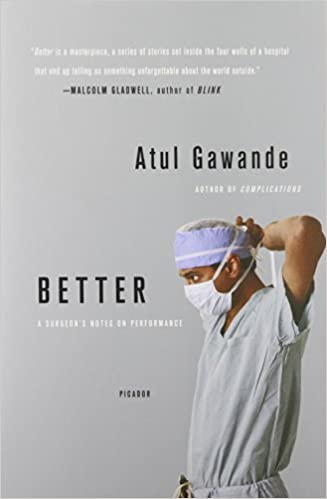
Better is a book that is accompanied with a healthy dose of Deju Vu. I have previously read Dr. Gawande’s “Being Mortal”, written years after Better – which was published in 2007, which had rocked my world and changed my perceptions on life, death, and above all quality of life. Better, therefore was a bit of a letdown. A lot of the stories, Better is essentially a collection of anecdotes, were familiar and there was no real great insight or overarching theme other than just to be “better.”
Perhaps because I am not a doctor, and yet know enough about how medicine and hospitals work from the fringes where veterinary medicine resides, that Better did not bowl me over as I was expecting. It is in fact telling, that Veterinary Medicine is not mentioned once in Dr. Gawande’s Better given that a lot of the issues he seeks to shed light on; medical costs, liability, and vaccinations are handled wildly differently by veterinarians than human doctors. There is a feeling that even though this is a book about looking at problems differently, the research has been performed on an ad hoc basis rather than in any systematic fashion.
This is a book about out of the box thinking and overcoming inertia. Human medicine has become so specialized and therefore a victim of institutional dogma that change can easily been seen as heresy. Better suggests that it is often not the ideas that matter, particularly when those ideas fail create passion in others, so much as the people who champion those ideas.
It is not a book full of great revelations, it is a book that shows excellence and failure, and what those stories look like. The hope, upon reading such a work, is that others are inspired to replicate some of the ideas, or at least try not to stand in the way of those ideas when they are presented by others. And it is hard to argue the point that we can all do better, by being passionate and by not settling for the status quo.
All of this is not to say that Better is not enjoyable. These are interesting, and at times inspiring, tales that are worth reading. This is not a book to change your view of the world, I suspect not even in human medicine, but it is possible at this is too high a standard to hold any book to.
Dr. Gawande’s other books do have the reputation for this incredible high standard, but is it ok the settle for just being entertained and to find something interesting.






 Mike Falconer