Archives for category: Veterinary

I should preface this review that I found The Pitt riveting television. I’ve always liked Noah Wyle as an actor and ER was always a favorite show of mine. This review will have some minor spoilers for the show so if you have not watched it – go watch it! Then come back and see whether the same things struck you as they struck me. The Pitt has a couple of problems, and they not only take me out of the show when they occur, they also perpetuate the myths that surround human and veterinary medicine (my world).

Administration is the Bad Guy

The character of Gloria Underwood, played by Michael Hyatt, who is credited as the Chief Medical Officer but acts as more of a non-medical Hospital Administrator, is portrayed, except for one scene (more on that later) as the bad guy throughout. This is not because they do anything particularly bad, but because they care about how long patients have been waiting and how they are treated by the doctors and nurses. The show treats this push back against the tyranny of customer service as a noble endeavor, as our hero character championing medicine over business.

The big problem with this mindset that can often be found in both human medicine and veterinary medicine is that “my time (the doctor) is more important than your time (the patient). There will always be wait times in medicine, but that does not mean they are a badge of honor that shows how much more important the medicine is from treating patients respectfully. Patients who leave because they won’t or can’t have an extended wait time are punished with worse outcomes. If we want what’s best for our patients we have to care about wait times.

The Pitt then seemingly redeems its portrayal of Gloria by showing just how good she is at her job. When the staff are informed of a mass casualty event, Gloria shows that she is three steps ahead of our hero Robbie, played by Noah Wyle, in having emergency supplies of all kinds already on the way. It’s a great moment and the disconnect between the doctors and nurses as they realize that this person who they consider the enemy is just someone who sees the wood for the trees.

…And then they go and spoil it by having Robbie curse Gloria out and call her a micromanager because she questions their use of unscreened blood from team members in patients.

The fact that Robbie is shown on multiple occasions to be struggling with his own mental health, and that while often right, he prefers to use his own intuition rather than facts or rules is shown as an honorable sacrifice. I hope that in season two we get to see Robbie be wrong because to do otherwise is disingenuous to the professions involved.

Likewise; Dr. Gregory House, from TV’s House, is a great and fun character to watch but nobody wants him as their doctor. When you are purporting to show a hyper realistic medical drama, falling into using these well-worn tropes does the show and its audience a disservice.

Poor Doctors

I have the upmost respect for human doctors and nurses, just as I do for veterinarians and veterinary nurses. I believe they all deserve to be paid well. However, The Pitt plays fast and loose with the socioeconomic realities of the ER and human medicine as a whole.

Dr. Michael “Robby” Robinavitch  is a Senior Attending Physician and probably earns in the region of $361,072 per annum.

 All of the other doctors of The Pitt are residents who are likely to be earning $75,000 per annum although it seems this could increase to almost $100,000. The medical students shown in the show would not be paid.

Robbie is unlikely to walk to work, or take the train, as is implied by his backpack as he walks through the park late at night, after his shift, where he can share a beer with other members of his team. Many of his team will have to use public transportation because they won’t be able to afford not to. Robbie will drive his BMW, which is parked in the hospital parking garage, he may even have his own parking spot, to his home in the suburbs.

Just when you think I might be being unfair about Robbie, I should mention that Pittsburg’s cost of living is about 2% below the national average.

If Gloria is a Hospital Administrator, her salary would be in the range of $223,561

If the job title of chief medical officer is correct we are looking at a salary of $462,913

By making Robbie seem like just one of the team rather than a member of senior leadership it frames Gloria, and therefore by example all Hospital Administrators / Chief Medical Officers, as only interested in money – rather than the health of the hospital and the team as a whole. Whereas in truth, Robbie is much closer or even exceeds Gloria in compensation than to the doctors and students he works side by side with. By framing him as “one of the boys” and therefore the hero it paints Gloria as the villain.

When Robbie complains about the lack of nurses and Gloria points out that there is a national nursing shortage. His response is to say “pay them a living wage and they will be lining up to work here.”

The average wage for a registered nurse in Pittsburgh is $82,458.

As Gloria points out “other hospitals are managing” but Robbie dismisses this and  because he is our hero we are encouraged to dismiss this too – rather than see it as a failure of his management of the ER. I’m all in favor of paying nurses more, just as I am in favor of paying veterinary nurses more, but dismissing $82,000 as less than a living wage is ridiculous and manipulative.

You can do so much better “The Pitt.” These are real issues the divide the treatment of patients and the management of hospitals both in the human world and the veterinary world.

Buying into lazy tropes does not help.

This article is going to use the term AI, even though the more accurate and less marketing friendly term “machine learning” is the term I much prefer. But this article is about you, dear reader, not me.

Reason to Worry #1: Mid-Level Practitioners

I should preface this section by stating that in theory I have no issues with the idea of the creation of a midlevel practitioner in the vein of Nurse Practitioners in the human world. My main concerns are with the fact that the veterinary profession has decidedly steered away from this kind of thing in the past; I’m looking at you Veterinary Technician Specialists (VTS). Show me an LVT / RVT / CVT with a VTS in dentistry who can’t extract any teeth and I’ll show you a missed opportunity.

Colorado State University (CSU) has become ground zero in the midlevel practitioner debate. The idea of a Veterinary Professional Associate (VPA) was proposed as early as 2009 by a member of CSU and an alliance of multiple non-profit animal welfare / rescue groups. This alliance gathered enough signatures for a proposition which was passed despite significant opposition from just about every veterinary professional body. A more in-depth retelling and an examination of the issues can be found here: https://www.avma.org/news/veterinary-professional-associate-role-moves-ahead

My other concern is that there is so little appetite for a midlevel practitioner in the profession that my “spiddy sense” starts to tingle as to what else might come of this VPA.

More on this later…

Reason to Worry #2: The Erosion of the VCPR

Across the country, before, during, and after the pandemic, moves were made to reduce the needs and requirements of the Veterinary Client Patient Relationship (VCPR).

Ostensively, to allow the use of telemedicine to initiate treatment without the need for a physical exam of the patient. While there are some champions of telemedicine from within the profession, clients only seem to have a stomach for it if it does not cost anything or if it allows them to buy medications online.

If the pandemic taught us anything it was that Zoom is a poor substitute for meeting in person.  Meanwhile, the push to allow telemedicine to replace an exam continues..

Reason to Worry #3: AI medical record writing is not what you think.

It seems like every cloud-based PMS software and every veterinary startup is selling a service that takes the conversation from the exam room and writes up medical records in a format that every vet board will love. Sounds like the perfect product: cheap, quick, and removes the drudgery of a task that just about every veterinarian hates – a task that takes time away from patients and clients.

Ignoring the inevitable veterinary board cases where the AI service just gets things wrong and the DVM did not double check – there is where these services are going and what they will turn into.

Machine Learning requires data to learn from. It takes large data sets and as AI commentator Subhasish Baidya states that AI currently is “decent summarization engines and lukewarm guessing machines.”

As Apple recently stated we are a long way off from “Thinking Machines” and the hype about Artificial General Intelligence is misplaced.

So if AI needs large data sets in order to work, so what? It just makes the product better right?

But what if the end product is actually something else entirely?

What else could a machine that learns what is talked about in an exam room do? If the medical record is meant to reflect the diagnostic process, and we are even very nice as to correct AI tools for writing the record when they get things wrong, how long before they starts suggesting the diagnosis for us?

At this year’s WVC conference I was told that it would launch this year.

A Problematic Veterinary Triad

Suggesting a diagnosis based on existing data is not particularly new. The issue is, and I know I start to sound like a conspiracy theorist here, the other two reasons to worry. Because if I can have a midlevel practitioner or even a credentialed veterinary technician perform the exam and talk to the client, and have the results reviewed by an AI that’s reasonably good at coming up with what might be wrong, why do I need a DVM?

Well the practice acts for one I hear you say! Well, my response is to remember about all that weakening of the VCPR? Why does the vet have to be on site? They could be in a different state or even a different country.

We are devaluing what it means to be a veterinarian and the role that they have to play in the care of pets.

I wish that I was super smart and that I could say that nobody else was thinking in these terms and I could claim my tech bro title. That way I could make my AI startup and combine it with my chain of low-cost veterinary clinics bankrolled by venture capitalists which I could then turn around and sell for billions. If I am… well then tech bro’s you’re welcome to my idea – my ethics can’t stomach it.

When I talk to vet students about this problematic triad they are horrified – literally horrified. When I talk to people who think about the future of veterinary medicine, they say “of course” and then tell me how they are planning to leverage these things.

When I talk to practice owners, they either reject the premise or shrug their shoulders and say “so what.” Nobody is looking to make AI models that replace upper management at the moment. We are the ones who buy those tools – tech bros are not stupid in that way.

When I talk to AI companies at trade shows (one of my favorite pastimes these days) and ask where they got their modeling data they are surprisingly evasive – particularly when you bring up the ownership of records and privacy.

The fundamental issue is that using machine learning to reduce the need for a DVM onsite, or the number of DVMs will come down to how much money is saves / generates. It’s a rare company that puts anything ahead of the bottom line. Particularly as those companies get larger.

A common saying from the AI world is that AI will not replace you but that a human using AI will. I hate this saying because it is so disingenuous. If I employ 10 technicians with AI tools and a DVM in another state to review everything, to replace 10 DVMs I am technically in line with this quote. But nobody would agree that AI has not replaced the 10 DVMs. Even if I just gave those same 10 DVMs those same AI tools their productivity is not going to increase to the level where the technicians and AI don’t make more sense from a purely economic standpoint.

Reason Not to Worry #1: AI is Self-Limiting

Ignoring the lawsuits about copyright infringement in the training of machine learning models for the time being, AI always needs new data to “learn” new things. Who is going to provide this new data for the diagnoses of new conditions or new treatments if we are just relying on an AI to make the diagnosis in the first place?

I also feel that the reliance on AI to write records will increase the reliance on AI tools that will summarize records into a few simple sentences. I have enough faith in my fellow humans to hope that the result of this will just be recognition that simple records are just better in the first place and why don’t we just write them that way. The alternative is complete madness when data is kept in some arcane format that no one actually reads.

In addition, the “hallucination problem” with AI does not seem to be anywhere close to being solved. For those who are unaware, AI’s “hallucinate” wrong data all the time. In technical circles we call this “getting things wrong.” Yes, you heard right; AI’s get things wrong all the time. There are numerous lawyers who have been cited by judges for submitting AI briefs that contain references to cases that just don’t exist.

The AI world calls these missteps “hallucinations” to make their products seem better than they are. More complex and “thoughtful.” What they actually mean by hallucination is that the AI got things wrong and they don’t know why.

Reason Not to Worry #2: Human Interactions Matter

There will be value in not using AI. Just like there is value in not allowing your work to be scraped by AI. Just like in film, music, and art, the use of AI is distinctly frowned upon because the consequences of doing so are so harmful for everyone involved. Why pay to use a tool, made by someone in Silicon Valley, that would not exist without the theft of material that the tool must have used in order to work?

Likewise some clients, admittedly not all, will value face-to-face interactions with their veterinarians as long as we make it worth what we are charging. If COVID taught us nothing else it is that a virtual appointment, like a virtual meeting, is a sorry excuse for the real thing. Why would veterinary medicine be any different? Medical records that read like they were written by a human and are understandable will have far more value than those that might be more technically proficient but don’t reflect the personality of the DVM.

In fact, humans are so much better at these interactions than AI that a surprising number of AI startups and tools are actually just low wage humans working in other countries remotely.

Reason Not to Worry #3: The Power of Community

While the midlevel practitioner for veterinary medicine bill was passed in Colorado, nobody seemed particularly happy about it. An alphabet soup of state and national organizations came out against the idea of midlevel practitioners and this bill in particular. Even the vet school at Colorado State, from what I can tell, was not enthused about being connected to this new position.

If the profession can fight back against the midlevel practitioner it can fight back against other things such as remote DVMs and hospitals just staffed by technicians all the way through to AI’s role in the diagnostic process. It might even win some of these fights and we will be stronger as a profession if we get used to fighting for what we believe in.

I do actually think machine learning does have a role in veterinary medicine – just like I think it has a role in business in general. My issue is that we are giving little to no thought to the consequences of using these tools wherever we can squeeze them into.

Part of the thought behind these six points is that I do believe that it will probably all work out in the end. It is the damage done to the profession in the meantime that concerns me most. That it might be too difficult to undo that damage and far too late to avoid the suffering caused – whether its lower wages, missed diagnosis, or a radically changed business model for the average veterinary practice which will now lack the skills needed to reject using AI even if it wanted to.

I’ll leave you with a final thought. If AI is writing all your emails so that you don’t have to write them and summarizing all your emails so that you don’t have to read them, would you then have the critical thinking skills to know when the AI had made a mistake? Why would we think veterinary medicine would be any different? I’m not suggesting that all technology is bad, but I think this quote, often attributed to folklore hero John Henry, says it best;

“When a machine does the work of a man, it takes something away from the man.”

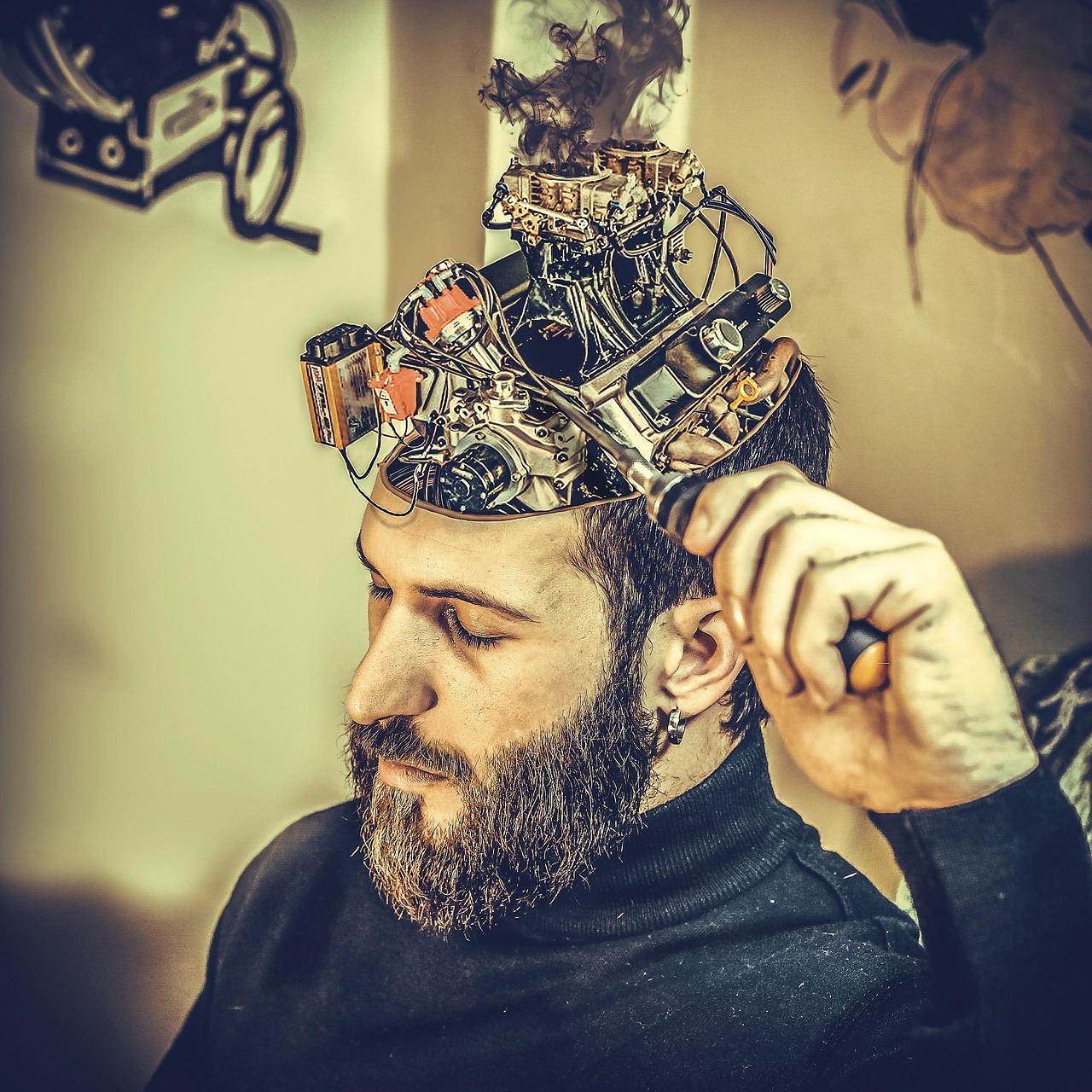
Image by aytuguluturk from Pixabay

Veterinary Medicine is about communication. Our patients don’t speak. They can’t advocate for themselves so pet owners, doctors, and team members must communicate with each other on their behalf and as clearly as possible.

However, there is a relationship within the practice which is even more important. It is that of practice owner (PO), usually a DVM although the same applies to corporate practices with a medical director, and the hospital administrator / practice Manager / office Manager (OM).

If these two people cannot agree, or agree to disagree, all the other great things that can happen within the practice are subject to failure on a monumental level.

Everything flows from this relationship.

Protocols and standards of care can’t exist if the two people responsible for implementing them can’t agree on what they are and how they should be applied. How can equitable and fair human resource decisions be made if one of these two people plays favorites and overrides the other when it suits them? They must be able to have difficult conversations, where they both will have strong feelings about the results, and must be able to come out of that conversation without hard or hurt feelings that get in the way of their continued relationship.

Vision, Mission, and Core Values statements can go a long way to resolving these issues – but only if they are the living breathing guidelines of the practice. More fundamental is that there is mutual respect between PO and OM for both their respective roles and their responsibilities. They also need to present a united front on matters of change.

Unfortunately, this relationship is often unequal. Practice Owners, by definition call the shots and have the last word. Ideally, they empower their OM as their representative to make decisions and implement policy. However, if there is no trust, no respect, there is no way that is going to happen and no way for the OM to do their job. Likewise, if the OM is constantly aligning themselves as an employee rather than as a member of senior management / ownership they are unlikely to receive the trust from a PO that they would want and rightly so.

There is a balance to be reached and that’s why I advocate that the relationship between PO and OM has to work for anything else in the practice to work. This is also the reason why I am always against PO and OM being married or related in other ways – other parts of their relationship creep into the PO and OM dynamic. PO and OM should not be best friends – there are times they are going to disagree and that’s fine – that’s how it is supposed to be. They represent different interests of the business.  

So what if that relationship is not there or there has been a breakdown?

Communication.

Communication.

Communication.

Fundamentally if PO and OM can’t communicate then the relationship is dead. Unfortunately, that probably means the OM needs to leave either by resigning or being let go. It does no good to anyone for there to be infighting between the leaders of the practice. It certainly does not help the practice.

What sucks for the OM in this situation is that jobs of that type in the veterinary industry are usually one per practice. That means if there are ten practices in your town then there are only nine possible jobs for the OM and there are no guarantees that any of them are looking. There are, of course, opportunities in other industries; good leaders and managers are always in demand; however, that means learning another industry.  

If the relationship between PO and OM is broken something must change because this is the relationship that can’t be broken for the practice to function. Take care of your own mental health and that of your team.

Be honest about this relationship and either fix it or move on.

Feature image courtesy of Zahid H Javali & Dmitry Abramov from Pixabay

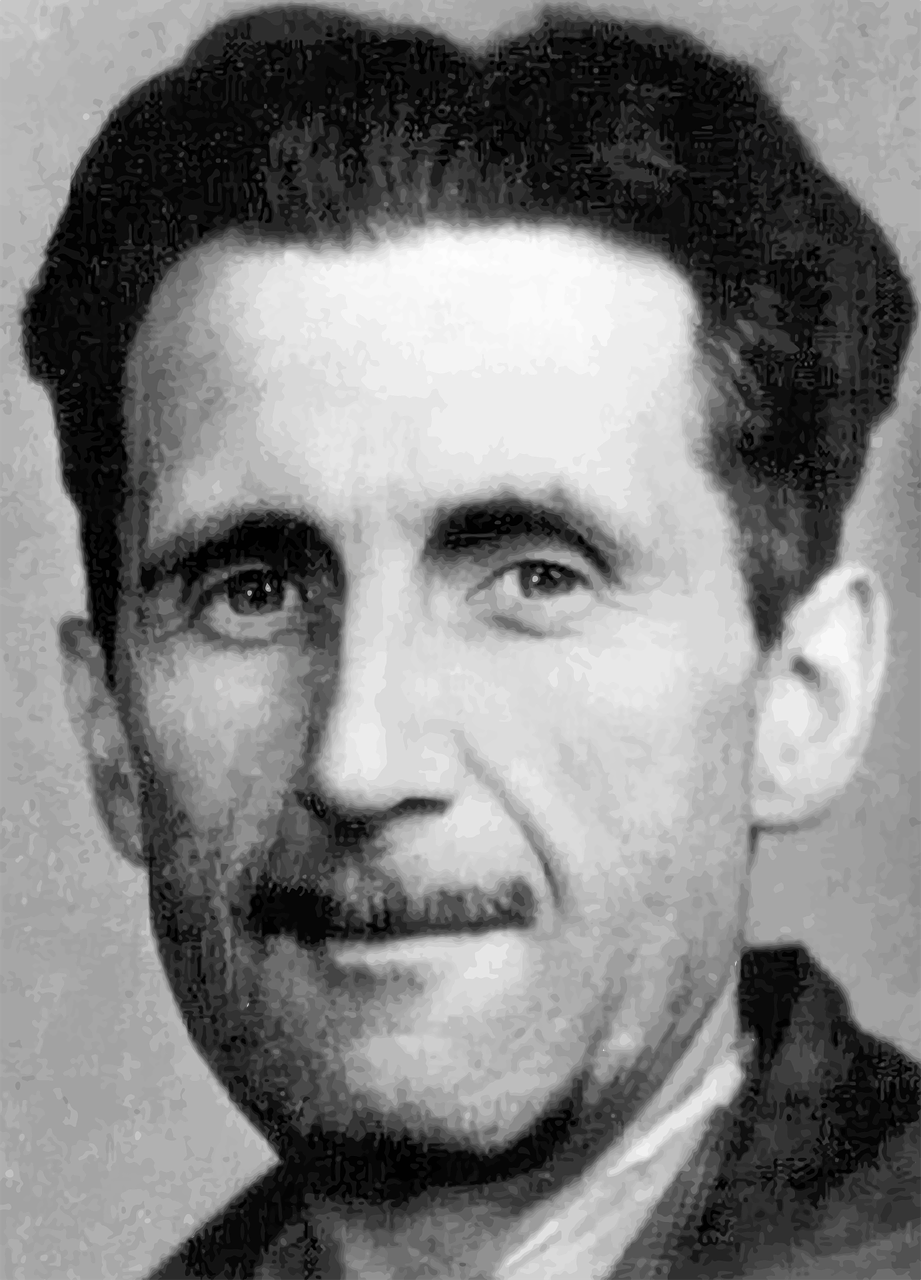
Image of George Orwell by Gordon Johnson from Pixabay

“Any sufficiently advanced technology is indistinguishable from magic” – Arthur C. Clarke.

In a remarkable about face for a technology company, Amazon has confirmed that it is moving away from its “just walk out” technology at its Amazon Fresh stores. The technology boasted that it used a mixture of cameras, sensors, and artificial intelligence (A.I.) to know what consumers had put in their baskets and to accurately bill its customers without all that tedious checking out and interacting with another human being at the grocery store.

Image Copyright Amazon.com used under fair use for criticism, comment, or news reporting.

What was actually happening was that up to 1,000 people in India were watching and tagging videos to ensure that customers were billed correctly. Amazon has apparently laid off almost its entire development team of this “technology” and will start to phase out this service from its existing Amazon Fresh stores. This is all the more surprising after Amazon’s experience with A.I. recruitment. In 2015 Amazon had to abandon an A.I. résumé reading project due to being unable to stop it from discriminating against women. It was seen by many as a humiliating comedown for the tech giant.

Image Copyright Amazon.com used under fair use for criticism, comment, or news reporting.

“Pay no attention to that man behind the curtain!” — The Wonderful Wizard of Oz, L.Frank Baum.

While many will smirk at Amazon’s second major public A.I. failure, and I have to admit to being one of those people, there is a bigger issue here which Amazon should be commended for. It is the lifting the vail on A.I. tools that are not some magic that comes out of the ether. They often require human intervention to be usable- both in front and behind the keyboard. In addition A.I., or more accurately Machine Learning , need examples of human labor in the thousands, if not millions, to be trained. The training of these A.I. “models” has become a contentious subject for those with an interest in A.I. both as supporters and critics.   

“Any technology distinguishable from magic is insufficiently advanced” – Barry Gehm’s corollary to Arthur C. Clarke’s original quote.

The main issue with machine learning is that the A.I. industry, almost without exception, sees art, music, writing, film, and pretty much the entire internet as fair game for training A.I. models, which they in turn sell to us in the guise of generative A.I. Those of us on the other side (waves hand in air to indicate exactly where I stand on this subject in case you had not already guessed) say that copyright does not work that way. Derivative works are still derivative.

 It is indeed hilarious to watch companies such as Disney try to navigate this brave new world. On the one hand, Disney has tried to argue that generative A.I. is fine for them to use to create new works based on the work of artists they have employed in the past. But Disney has then complained about possible copyright infringement when someone else has tried the same trick with copyrighted works they own.

Image Copyright Walt Disney Company used under fair use for criticism, comment, or news reporting.

The lawyer who used ChatGPT to write a legal brief might want the machines to infringe a bit more. To his cost, literally, the lawyer found out that the pesky machine had just made up all the cases that it sited in its argument which he signed his name to. He was sanctioned and fined after he was found out. I just love that generative A.I. tools hallucinate (the developers term, not mine).

One of my favorite activities these days is to ask A.I. peddlers what they use to train their models. Indeed, I had a most entertaining afternoon doing just that at this year’s Western Veterinary Conference. Amongst the answers I received were “none of your business – who are you” (my favorite), “medical records from a university,” and “the internet.” None of the vendors I spoke to were willing to discuss privacy, copyright, or what happens if they are no longer allowed to train their models that way. One gets the distinct impression of building on borrowed land.

The latest darling of the A.I. generation tools is Sora, which creates beautiful full motion video from text prompts and is from the OpenAI stable. However, in a recent interview with the Wallstreet Journal, Mira Murati, OpenAI’s Chief Technology Officer, refused to answer questions about where Sora’s data set for modeling came from. Murati also refused to say whether the data set that Sora used included YouTube and Instagram videos – stating that she “did not know.” That in turn has led to some serious questions about licensing, as YouTube’s CEO Neal Mohan, confirmed that OpenAI using YouTube content for modeling purposes would be a violation of YouTube’s terms of service.  

“Thou shall not make a machine in the likeness of a human mind” – Dune, Frank Herbert

There is a temptation to label those who speak out about our current infatuation with A.I. tools and criticize the foundations those tools are built on as luddites. While our current use of the word brings to mind hoards of unemployed mill workers bent on smashing “the spinning jenny,” the truth about the Luddites is actually far more nuanced and carries a message for today.  The Luddites did not hate all machines, they in fact were fine with most and just wanted them run by workers who had gone through apprenticeships and were paid decent wages. The Luddites main concern were manufacturers who used machines in “a fraudulent and deceitful manner” notes Kevin Binfield in his book “Writings of the Luddites.” Outsourcing the cashing out of grocery shopping to a developing country, and labeling it as new technology, is a tactic the Luddites would have been all too familiar with and would have been happy to march against.

While I am not advocating for a Butlerian Jihad as Herbert described as the backdrop for Dune, there is merit in the context he provides to the proscription on thinking machines.

“Once men turned their thinking over to machines in the hope that this would set them free. But that only permitted other men with machines to enslave them.” – Dune, Frank Herbert.

As author SJ Sindu wrote on Twitter (I refuse to call it X on general principles); “We don’t need AI to make art. We need AI to write emails and clean the house and deliver the groceries so humans can make more art.”

A.I. art needs human art to model itself on and the pushback from artists and consumers is already significant. When the argument over modeling reaches the courts, the damage may already be done. Only then will we see the parallels between the creative arts and A.I. that we saw in the 2000s with Napster / Pirate Bay and music. Will it be too late to put this tool back in its box?

A healthy skepticism when it comes to A.I., I think is all important. And not just a skepticism for what A.I. can do but for the intentions of those that wield it.

A.I. will need to be “open” and not just open as in the name of a for profit corporation. Its models will need to be transparent and be able to be questioned. As I wrote about in my review of Hilke Schellmann’s book on A.I. in hiring and Human Resources “The Algorithm”; …it is often difficult to impossible for candidates or employees to challenge decisions by managers which they may feel have been affected by bias. How much more difficult is it when it is not a human making the decision or recommendation? A tool of which we cannot ask the most basic of questions: what were you thinking?

Footnotes and links would be a great start. But most generative A.I. companies consider this proprietary information and therefore refuse to provide what would seem a most obvious step when it comes to trust. That, in fact, is exactly why authors use footnotes and links, to allow others to follow their thinking on how they reached their conclusions. I’ve tried to add as many links and footnotes as I can to this article without becoming burdensome.

I am not a Luddite in the modern sense, but I do share a lot of the same concerns of the Luddites of old. We only need to look at our world to see why we should be concerned. It is a world where poor people in the developing world watch us shop so that we can pretend we are living in a magic future where machines do all the work. Where the drudgery of making art has been taken away from us so it can be sold back to us by corporations owned by billionaires.

I’m not sure I want A.I. to write my emails, but I can think of plenty of things that I’d like it to undertake. I already use it in a number of ways. I’ve used A.I. images in my books (although I probably will not do so in the future). I currently feel that A.I. has to earn its place in my world by proving its benefits not just to me, but the world as a whole. Will the undertakings of A.I. be for the benefit of people? Currently, that seems to be the last thing on the developers’ minds.

“The tune had been haunting London for weeks past. It was one of countless similar songs published for the benefit of the proles by a sub-section of the Music Department. The words of these songs were composed without any human intervention whatever on an instrument known as a versificator. But the woman sang so tunefully as to turn the dreadful rubbish into an almost pleasant sound.” – 1984, George Orwell

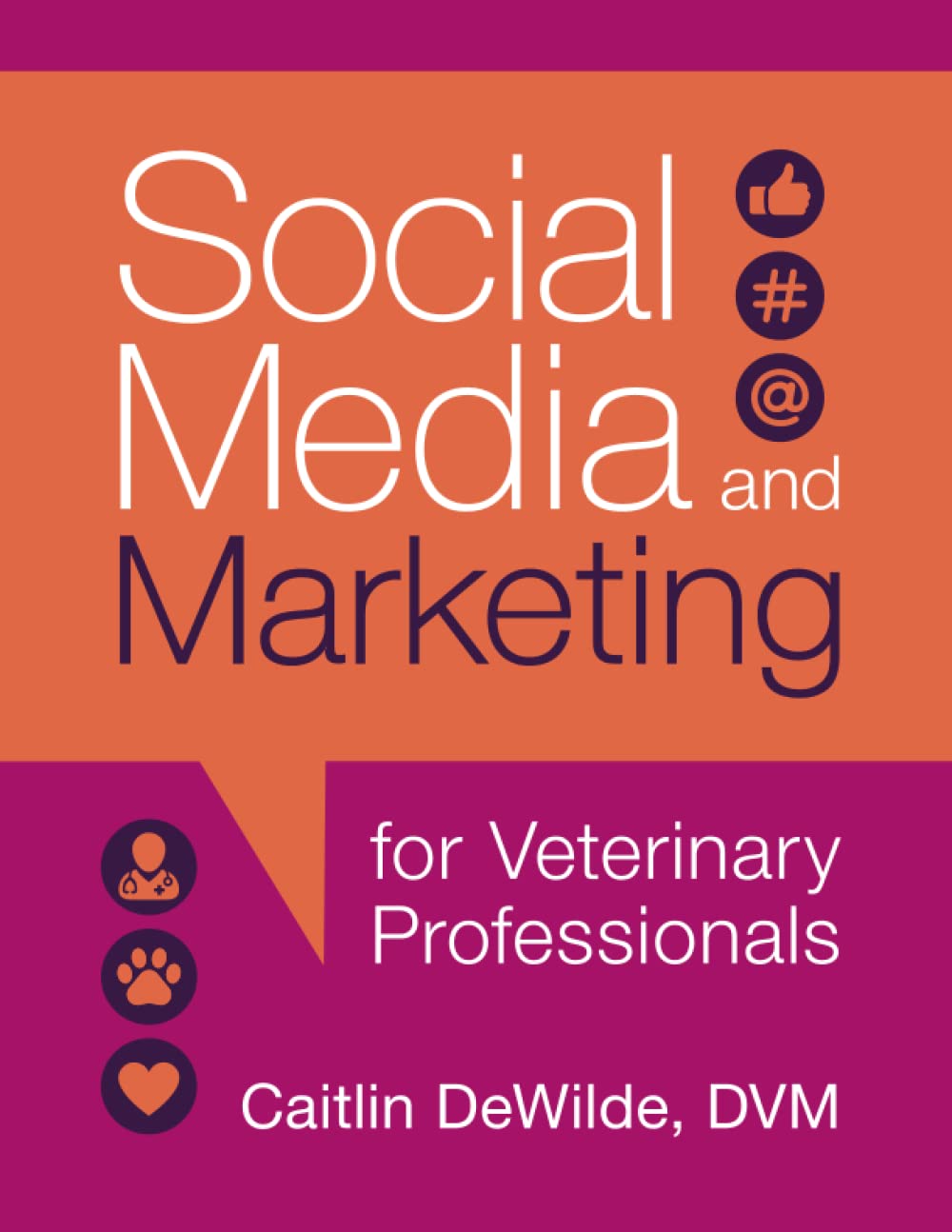
Writing an accessible and thorough book about a complex and everchanging subject, such as social media, is a daunting prospect – particularly when your audience is a niche one such as veterinary medicine. Dr. Caitlin DeWilde; however, has done just that.

With the look and feel of a textbook, but the format a “Dummies” or “Idiots how to” book, Social Media and Marketing for Veterinary Professionals is a how to guide to all the major Social Media platforms and to all the tasks needing to be understood for someone who is not a marketing professional or even someone that interested in social media or reviews.

With chapters dedicated to each of the major platforms making up the first half of the book this can at times feel redundant; however, the thoroughness will be welcomed by those feeling out of their depth in a brand-new field and the dedication to not making assumptions is more than admirable. The second half of the book is a much more interesting read for the existing user, touching on issues such as retargeting (when online ads seem to follow you around the internet), review bombing, return on investment (ROI), and general advertising strategies both online and in print ads.

Filled with footnotes, the book is impeccably researched as would expect from someone with Dr. DeWilde’s reputation as “The Social DVM.” The index is a little thin, but it at least has one and it covers most of the things that one is likely to need to find in a hurry. What is a surprising addition is the over 80 QR Codes that link directly to an online resource for forms and other digital content. It is a little disappointing that the QR codes only take the user to a menu structure that the reader then must navigate through to get the required content. But this is a minor quibble and is a great use of a technology that is often used and abused. The fact that these online resources exist at all, and are included in the price of this volume, more than makes up for any navigation quibbles.

While I waded through all 200 odd and large format pages in three or four sittings, this is actually a book to tackle one chapter at a time, or to dip into as required. Growing your knowledge with your own experimentation and reading. While there is some building on what has come before, the chapters generally stand on their own and therefore can be used as a reference book if so desired.

Whether it be new managers suddenly saddled with a topic they know nothing about, staff members who have only ever used social media for their own personal networks, or those looking to build their own personal brands online there is now a guide for you with no translations from other industries required. To the vast majority of its readers, the subject of this book will always be a side interest to their main passion – whether it be veterinary management or veterinary medicine. We don’t often get resources geared towards niche areas within other niche areas. It is great to see this one.

Dr. DeWilde has literally written the book on using social media as a veterinary professional.

And it’s a good one.

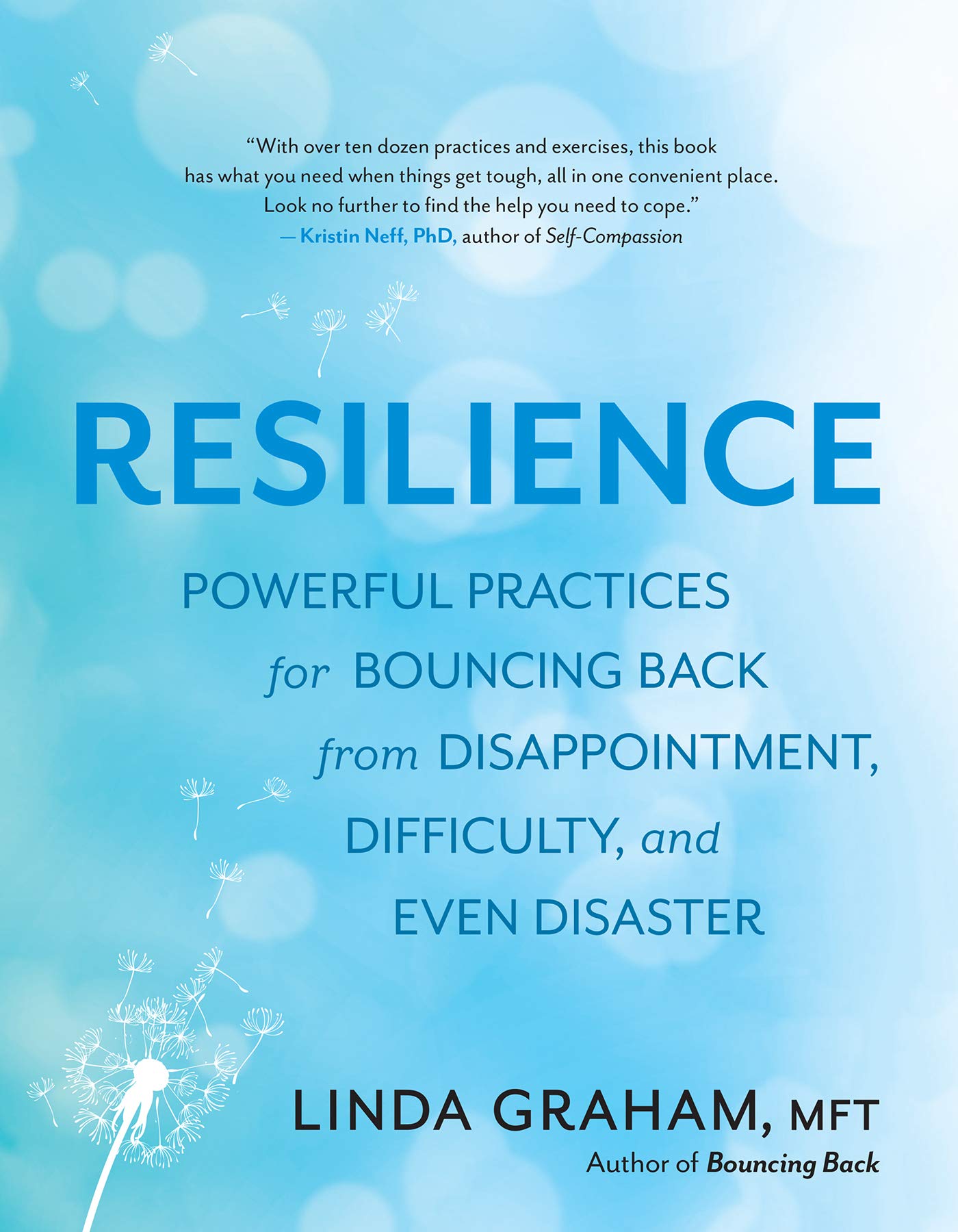
Self-Help books, of which Resilience: Powerful Practices for Bouncing Back from Disappointment, Difficulty, and Even Disaster, undoubtedly is; seem to fall into the two categories. The overly new age, “everything will be alright as long as you are positive” and the so grounded in psychology and psychiatry that you need a degree in medicine to even begin. Resilience is neither of these; yet bridges both worlds and in such a way as to take value in both approaches.


It is telling the Ms. Graham is a marriage and family therapist. Her ability to speak in plan language but also to explain the scientific underpinnings to what can sound, and I am sure does, sound like hogwash to a lot of people, if it were not for these explanations. This is a book for rational people, willing to embrace change – even of they are a little reluctant. It is worth noting that this book was given to me to read by a colleague who recognized how useful it could be for the workplace – particularly in a profession dogged by mental health issues and suicide; but was unwilling to embrace even the small leap of faith that the book asks.


Resilience is a book of exercises – 133 in all. Some will not be right for you, and undoubtedly, some will. Each chapter deals with a different type of intelligence and general resilience. Each chapter is broken down into different mode of how the brain processes; conditioning, new conditioning, reconditioning, and deconditioning. These modes are then in turn broken down into three levels of need; “barely a wobble,” “glitches and heartaches, sorrows and struggles,” and “too much.”


This is a book to refer to and reference as the reader grows and their needs change. One of the most exciting chapters for managers is on “Practices of Relational Intelligence with Others.” The tools and exercises which are explained in detail, have significant uses in getting third parties to communicate with each other, and for improving with interpersonal communication. I am often someone who talks to others about whatever I am currently reading. Resilience, however, has had me proselytizing to co-workers significantly more than normal.


Its use as a tool to help train our brains, something we often pay scant attention to, cannot be disputed. It is a little long and dense, but as mentioned earlier this is a book to refer back to – not to ingest over a few days like I did. That the book strays into areas more normally associated with meditation and yoga is not says a lot more about the positive nature of those practices, than it does as a criticism of the book. This is a book for cynics, and self-help believers alike.
We all struggle from time to time and as this book’s title suggests, Resilience is about making us better and more adaptable. Being able to adjust and influence our thinking and emotions, rather than allowing them to influence and dominate our lives.


This should be required reading for the veterinary profession, and for anyone who wants to improve how the inside of their head works. I can’t recommend it enough, and it is not hyperbole to suggest that it could save your life.


I am keeping this copy of Resilience; it is on my nightstand.


I will have to buy my colleague another copy.

How does one review an iconic work of one’s chosen profession? A series of books, that have been adapted multiple times over the years as TV shows and movies? A collection that are probably cited more often than anything else as having sparked the interest of a young person in becoming a veterinarian? One reviews it gingerly; one supposes.

It helps when the book is great.

I’m not sure what I expected when I started reading the series – I’m currently on the 3rd book, although this review will focus on the first, and most famous, of the memoirs of the Yorkshire Vet. My knowledge of the books came from the BBC / PBS series from the 80s which, of course, was a long time before veterinary medicine became my career.

The book, set in the late 30s in the Yorkshire Dales, follows the misadventures of Alf Wight – writing under the pseudonym of James Herriot – as a newly graduated veterinary surgeon as he takes up a position as an “assistant vet” in a small mixed animal practice. One of the things about the book that is fascinating is that it covers a period of change in the veterinary profession. While set in the 30s, the memoir itself was originally published in a slightly different form in the late 60s and there are frequent mentions of how the treatment of animals has changed in those 30+ years. Of course, things have also changed even more dramatically since them. Which makes the book an interesting period piece in two different periods.  

Pharmaceuticals are practically unknown in the 30s, and the author has little time for concoctions of his own dispensary. It is also a time when as a newly graduated vet, Herriot had been trained extensively on horses, and to a lesser extent on farm animals. While he and the other students were interested the rapidly growing field of small companion animal medicine – particularly dogs and cats. It is interesting to see the discussion of growing the practice into companion animal medicine. It is also interesting to reflect on the legal position of veterinarians at the time, and that they had to compete with non-licensed practitioners.   

I have, as I’m sure others in the profession have, been bludgeoned by pet owners with “what happened to the days of James Herriot,” when asking a client to pay for services. It came as a pleasant surprise to find that in the first few chapters there is a forthright and frank discussion on the difficulty of getting clients to pay, and the penury of the practice is a common theme.

What is surprising is the “smoke and mirrors” that some of the vets feel they have to engage in due to the lack of medications and the be seen to be “doing something.” While Herriot has little time for this approach, it is not seen as a particular problem to others.

This is a book of its time. The 30s and 40s. Societal attitudes, and things such as drunk driving, are a little jarring to modern ears. In the second, book there are even couple of related tales that total would be clear breaches of medical ethics today, along with tales of bill padding which one would consider a breach of business ethics, and the “doing things for free” which haunts the profession to this day. These tales are told for comic effect, but they can make the modern veterinary professional cringe.      

 All Creatures Great and Small is depressingly familiar in some ways, with advice from strangers and faith in folk remedies, taken more seriously than the entreaties of “this young vet,” the strains of being on call, and the ever-present financial elephant in the room. But while some of the issues that the profession faces are still the same almost 90 years later, what is also apparent is the love of this vet for his patients and his clients. His willingness to go above and beyond, and his heartache at the loss of a patient, or the diagnosis seemingly out of reach.

For over 50 years, All Creatures Great and Small has been a gateway to the profession. With a new TV adaption, which I have not seen, already with us, the book remains a pretty faithful and relevant piece of literature. A book to be read, and understood, for the picture it paints of a different time, but a very recognizable profession. A beautiful and fun tales of the profession, out of time, but still veterinary medicine.     

Pet Nation is a very curious book.

The central tenant of the book is that the United States, in the last 10 – 15 years, has become a nation of highly involved, some might obsessed, pet owners; and that those pets live extremely comfortable lives. There is a fairly convincing argument that pets are a symptom of a dysfunctional society. People are seeking connection, but increasingly lonely. Pets, through social media sites like Facebook, and because of them providing a positive subject for interactions, are both providing that connection and acting as a catalyst for human-to-human connections. My favorite line for the book is “Dogs are knitting society together.”  

If you want a friend, get a dog.  

There is also some interesting research in Pet Nation, and facts are for the mostly part cited. The occasional “scientists say” is infuriating, but these shortcuts are few and far between. One of the more surprising focuses of the book is the looming shortage of dogs in the United States. This is an idea that has been percolating for a little while now, but had not really been on my radar until reading Pet Nation. Mr. Cushing lays the blame for the shortage of dogs on the overwhelming success of spay and neuter programs and the failure to regulate, and thereby approve, commercial breeding operations. These are controversial assertions, but he does make a good case.     

 Mr. Cushing is an attorney who has been working in the pet field for a significant period of time. The chapter on the legal issues surrounding pets is excellent; particularly, when it comes to efforts by Walmart and Online pharmacies to force veterinarians send their prescription business to them.

Where the book falls down is in addressing the dark side of “Pet Nation,” particularly in the challenges facing veterinary medicine. The epidemic of suicide amongst veterinarians, and veterinary staff, and one of its contributing factors; the online bullying of veterinary professionals, is not mentioned at all. Also ignored is the problem of clients being unable to afford veterinary care, but still considering pets family members and therefore being devastated, or looking for scapegoats, when they cannot afford treatment or surgery that their pet needs.

While insurance is mentioned in Pet Nation, it is only to remark on the lack of uptake, rather than the larger issues that this represents. To give credit where it is due, the failure of pet insurance companies to market their products effectively is highlighted. Likewise, the moves to create a national title of Veterinary Nurse, to replace the hodgepodge of LVT, CVT, RVT, et al., which Mr. Cushing is part of, is given a welcome spotlight; but it is hardly the central concern facing the Veterinary Technician community.     

The blame for the lack of veterinarians, in Pet Nation, is laid squarely at the door of the veterinary schools. Their small class sizes, and the lack of schools themselves are seen as the problem. Crippling school debt, and those leaving the profession, are not mentioned. The idea of creating a veterinary Nurse Practitioner designation, while it would be a welcome part of the solution, fails to address the lack of veterinary technicians in the profession and is hardly the panacea it is presented as.   

Veterinary professionals may well find the focus on Banfield and Blue Pearl grating, given the glowing treatment, with little thought given to the issues that corporate medicine and the significant consolidation are bringing to the veterinary space. The occasional factual mistakes, parvo is endemic in areas of the United States, it is not a disease that is solely brought in by imported pets, are not quite as annoying as the mistakes by omission. Pet food is mentioned multiple times but the fight that many veterinary nutritionists and veterinarians over “natural” products and inappropriate diets is an argument that is ignored.   

There is good information in Pet Nation, and its central ideas are interesting. It is a missed opportunity to not address the wider, and darker issues that are part of its themes.  

I recently installed a new VOIP (Voice Over Internet Protocol) based phone system in two veterinary hospitals. I consider myself a reasonably technical person who had a grasp of the issues and drawbacks of such as system, as well as the benefits. I learned a lot during the process. While I am ultimately happy with our system, and how the installation process went, there were multiple things that I wish I had known before getting into the project. This is an attempt to pass on some of those lessons.

It should be noted that some of these lessons can also be applied to cloud-based mission critical software, such as cloud-based practice management software in the veterinary world; however, I do not have enough experience with such systems to make them a feature of this article.

First things first…

Are you the right person?

If you do not have a good understanding of how the business concerned works, at a process and protocol level, you are the wrong person to be purchasing a VOIP phone system for that business. It is very easy for people, even those who deal day in and day out with phones, to completely misunderstand the needs of a business and its phone system. Modern IP based phone systems can be very flexible and yet still have limitations. If you are the right person, don’t be afraid to get input from others; you are not perfect. You are about to radically affect how your colleagues work each and every day. Getting things right, and getting people on board, is critical.

Understanding Workflow

Map out exactly how the phone system is to work on paper with a schematic for call flow with all the relevant parties. For example, veterinary hospitals are very different from a lot of other businesses. They can have very high call volumes, few users will have dedicated extensions, and the way calls are answered can vary dramatically from other businesses.

Tackling Phone Trees

IP Phone system vendors love phone trees. They cover a multitude of sins. You may also love phone trees. Your business may also be right for using phone trees. Don’t, however, be bullied into using phone trees if you don’t want to use them. There is nothing to say that just because a phone system is capable of having a phone tree, that they have to be used.

Phone trees can work great if a business can guarantee that an employee will be a particular extension 90% of the time that it is rang, and is able to perform a particular function. If employees are constantly in flux, and rarely at a specific extension, phone trees may not be a good solution.     

Recruit Allies

Spend way more time figuring out who is installing and configuring the phone system, than the company that the phones are to be purchased from. Simply put, the installer will make or break a new phone system.

Yes, it is possible for you to configure your own system with phone based technical support.

Yes, this is a very bad idea and you will be miserable.    

In addition, get your IT vendor, or person who looks after business’s network, on board. You are about to make their lives much more complicated. They have to be on board or the installer and IT will be at locker heads from day one and setup will be hell.

Your Internet Sucks, You Just Don’t Know It

Obviously, internet speed is a potential issue with IP based phone system; however, reliability is often overlooked. When browsing the web, having the internet drop out, or have significant latency or packet loss, for 30 seconds to a couple of hours, does not often come to a user’s attention. With an IP based phone system, however, four minutes of internet down time, which will mean that a business will have no incoming or outgoing calls, can be an eternity.

The only way to find out if there are internet issues, with a current internet service, is to use a tool that looks for them. A tool such as Multi-Ping, can monitor the internet constantly for days and weeks, and send alerts about outages. This is not a complicated tool to use, or setup, however, getting some input from both your phone system installer and your IT vendor is probably sensible.

The solution to some internet issues may be to move from cable internet to having a dedicated fiber connection. This can be significantly more expensive, or may not even be available in your area. IP phone systems usually mean significant savings over traditional line-based telephones; however, the need for fiber can put a significant dent in those savings, or wipe them out entirely. It is worth looking at this issue during the initial planning stages rather than once you have an IP phone system and are dealing with multiple outages.

Choosing A System

Identify key new features that are needed in the new phone system, and features from the old system that need to be kept. Make the demonstration of new phone systems address each of these issues in detail – take nothing for granted. Have each potential vendor go through the training process on how the phones work before a purchase is made.  Don’t just settle for a demonstration. Irksome functionality, or lack of features, will only come up during training and are two easy to overlook during a sales demonstration.

Things to look out for:

  • How can a call be parked and picked up by other users?
  • How can multiple phones be paged so that users know a call is parked for them?
  • Are there different rings for internal or external calls?
  • What happens when a call is made to an extension that is in the process of dialing out?
  • How are incoming calls routed?
  • What happens when incoming calls are not answered?

Call the technical support line for the new phone system and ask some dumb questions. Do you like what you hear? How long does it take to get through?

Visit a business that has your potential new phone system already installed and has been using it for a while – even if that business is in different field to your own. It will provide valuable insight into the system working in the real world.

Signing the Contract

Get a guarantee about getting out of a new contract.

Usually, companies offer a 30-day money back guarantee. That is probably the minimum amount of time that it will take to setup and configure all but the simplest of systems. Try to get at least 60 days and agree with your installer and the phone vendor on date to go live within this period. That way, if major issues arise during the first month there are options, and leverage.

Phone Lines and Phone Numbers

In a traditional phone system, every incoming and outgoing call takes up a phone line. Each line has a phone number associated with it. With IP based phone systems there are no telephone lines and does your business want to keep these phone numbers? What will happen when a client calls one of these numbers when the new phone system is in place?

Moving numbers can take a significant amount of time and will almost certainly dictate the date and time of the new phone system going live. This is also a process that can go wrong. The disconnection of lines that are no longer needed invariably does go wrong. Ensuring that the correct lines have been disconnected, and the correct lines have been transferred is an important area to double check.

Ye Oldie Fax Machine

Faxes are pretty old school these days; however, here are plenty of businesses that continue to use them. If this is your business think long and hard before turning over this piece of phone technology to the IP phone system’s solution. There is a reason that your business has not moved away from the humble fax machine, and it is almost guaranteed that the new phone system’s fax solution is going to look a lot like email.

Consider keeping your fax machine as is until the new phone system is in place and settled. It is a change that can be made at a later date without too much trouble. In a worst-case scenario, it also gives you a backup form of communication should there be issues on day one of going live with the new system.

The Human Element

Have cheat sheets, extension lists, and phone maps ready before the system goes live. If users have to make their own it can be difficult to stop bad habits from developing. Give your team the tools to succeed.

Be prepared to make changes. Field Marshal Helmuth Karl Bernhard Graf von Moltke, a 19th century Chief of Staff of the Prussian General Staff, is famously quoted as saying; “no plan of operations extends with any certainty beyond the first contact with the main hostile force.” This is often paraphrased as; “No battle plan ever survives contact with the enemy.”

Employees, and colleagues, are not the enemy, but the concept is the same. There will be things that have not been thought of in the planning stage, even if you have involved as many people as possible in the design of the phone system. Be prepared to make changes, and adapt to make a new phone system a success for everyone.

Preparing for Disaster

What happens in an emergency, such as a complete loss of internet, or power? It is easy to leave the planning for emergencies, until all the kinks have been resolved in the new system.

This is a mistake.

Have those plans already worked out, and the kinks in the emergency plans worked out, before the new system goes live. By making the emergency plan part of the main plan it will mean that you are not scrambling when there is an issue sooner than you had hoped.

Make testing your emergency solution part of the going live process. Also make sure that the emergency procedures are written down and easy to follow. Staff are going to absorbing a lot of new information when dealing with a new phone system. It is unlikely that they are going to remember how to switch over to the back plan, weeks or even months after it was explained to them.

All the Shiny New Toys

The aim of rolling out a new phone system should be to replace the existing phone system and address some of its shortcomings. Don’t be in too much of a rush to show off just how powerful and “cool” this new toy is. Get the basics sorted and stable. Adding new features to your workflow, and foisting large amounts of change all at once, while being unable to perform key functions of the business can easily back fire and cause hospitality. There is nothing wrong with rolling out features in stages to make managing change more, well, manageable.   

Final Notes   

VOIP phone systems are tools. They should not dictate how a business functions, unless that business considers the change a benefit. It is the job of the tool to change to suit the needs of the business. For this reason, VOIP phone systems can be complicated beasts. It is therefore to be expected that installing a new phone system is a collaborative effort. Stick to your guns about what you want from a phone system, because it will be you who will suffer if it does not work how you want it to.

It is a cliché, but an ounce of prevention really is worth a pound of cure.  

batman-4946610_640

I know this is difficult
Because it is difficult for me too.

I know you are scared
Because we are all scared.

I know you are tired
Because everything is harder.

I know you are frustrated
Because what should be simple is fiendishly complex.

I know you are wanting this to end
Because the end is not in sight.

I know you want to get back to normal
Because normal was awesome.

I know you are glad to be busy
Because the alternative sucks far worse.

I know you value your teams
Because we all feel the same way.

I know we can do this
Because we kick ass on a daily basis.


Written as the introduction to a staff meeting.