Archives for posts with tag: customer service

I should preface this review that I found The Pitt riveting television. I’ve always liked Noah Wyle as an actor and ER was always a favorite show of mine. This review will have some minor spoilers for the show so if you have not watched it – go watch it! Then come back and see whether the same things struck you as they struck me. The Pitt has a couple of problems, and they not only take me out of the show when they occur, they also perpetuate the myths that surround human and veterinary medicine (my world).

Administration is the Bad Guy

The character of Gloria Underwood, played by Michael Hyatt, who is credited as the Chief Medical Officer but acts as more of a non-medical Hospital Administrator, is portrayed, except for one scene (more on that later) as the bad guy throughout. This is not because they do anything particularly bad, but because they care about how long patients have been waiting and how they are treated by the doctors and nurses. The show treats this push back against the tyranny of customer service as a noble endeavor, as our hero character championing medicine over business.

The big problem with this mindset that can often be found in both human medicine and veterinary medicine is that “my time (the doctor) is more important than your time (the patient). There will always be wait times in medicine, but that does not mean they are a badge of honor that shows how much more important the medicine is from treating patients respectfully. Patients who leave because they won’t or can’t have an extended wait time are punished with worse outcomes. If we want what’s best for our patients we have to care about wait times.

The Pitt then seemingly redeems its portrayal of Gloria by showing just how good she is at her job. When the staff are informed of a mass casualty event, Gloria shows that she is three steps ahead of our hero Robbie, played by Noah Wyle, in having emergency supplies of all kinds already on the way. It’s a great moment and the disconnect between the doctors and nurses as they realize that this person who they consider the enemy is just someone who sees the wood for the trees.

…And then they go and spoil it by having Robbie curse Gloria out and call her a micromanager because she questions their use of unscreened blood from team members in patients.

The fact that Robbie is shown on multiple occasions to be struggling with his own mental health, and that while often right, he prefers to use his own intuition rather than facts or rules is shown as an honorable sacrifice. I hope that in season two we get to see Robbie be wrong because to do otherwise is disingenuous to the professions involved.

Likewise; Dr. Gregory House, from TV’s House, is a great and fun character to watch but nobody wants him as their doctor. When you are purporting to show a hyper realistic medical drama, falling into using these well-worn tropes does the show and its audience a disservice.

Poor Doctors

I have the upmost respect for human doctors and nurses, just as I do for veterinarians and veterinary nurses. I believe they all deserve to be paid well. However, The Pitt plays fast and loose with the socioeconomic realities of the ER and human medicine as a whole.

Dr. Michael “Robby” Robinavitch  is a Senior Attending Physician and probably earns in the region of $361,072 per annum.

 All of the other doctors of The Pitt are residents who are likely to be earning $75,000 per annum although it seems this could increase to almost $100,000. The medical students shown in the show would not be paid.

Robbie is unlikely to walk to work, or take the train, as is implied by his backpack as he walks through the park late at night, after his shift, where he can share a beer with other members of his team. Many of his team will have to use public transportation because they won’t be able to afford not to. Robbie will drive his BMW, which is parked in the hospital parking garage, he may even have his own parking spot, to his home in the suburbs.

Just when you think I might be being unfair about Robbie, I should mention that Pittsburg’s cost of living is about 2% below the national average.

If Gloria is a Hospital Administrator, her salary would be in the range of $223,561

If the job title of chief medical officer is correct we are looking at a salary of $462,913

By making Robbie seem like just one of the team rather than a member of senior leadership it frames Gloria, and therefore by example all Hospital Administrators / Chief Medical Officers, as only interested in money – rather than the health of the hospital and the team as a whole. Whereas in truth, Robbie is much closer or even exceeds Gloria in compensation than to the doctors and students he works side by side with. By framing him as “one of the boys” and therefore the hero it paints Gloria as the villain.

When Robbie complains about the lack of nurses and Gloria points out that there is a national nursing shortage. His response is to say “pay them a living wage and they will be lining up to work here.”

The average wage for a registered nurse in Pittsburgh is $82,458.

As Gloria points out “other hospitals are managing” but Robbie dismisses this and  because he is our hero we are encouraged to dismiss this too – rather than see it as a failure of his management of the ER. I’m all in favor of paying nurses more, just as I am in favor of paying veterinary nurses more, but dismissing $82,000 as less than a living wage is ridiculous and manipulative.

You can do so much better “The Pitt.” These are real issues the divide the treatment of patients and the management of hospitals both in the human world and the veterinary world.

Buying into lazy tropes does not help.

Chef 1:- I just… I don’t think it’s fair (talking to Chef 2)

Kiki: Chef!

Kiki: Chef!

Chef 1: Yes, Kiki, what is that?

Kiki: A man on table six wants an eggless omelette. He wants an egg…

Chef 1: Kiki you can’t have an eggless omelette, can you?

Kiki: Why do we not have any?

Chef 1: No, they don’t exist, do they? Because there’s no… Breadsticks, what are they made of?

Kiki: Bread.

Chef 1: Bread, very good. OK, take away the bread, what are you left with?

Kiki: Sticks?

Chef 1: No, Kiki! (Sprinkles a few herbs on an empty plate) There you go, that’s an eggless omelet.

Kiki: Okay (takes plate)

Chef 1: No, don’t take the plate, Kiki, what are you doing? Please!

Chef 2: Kiki, just ask the nice man if he’d like his omelet made with whole eggs or just egg whites. (Kiki smiles and goes to leave)

Chef 2: You can leave the plate.

When I was first shown this scene from the British restaurant-based sitcom “Whites” I found it amusing like I’m sure most of you did. How we can laugh at how silly Kiki is being and how she lacks all common sense. And the scene is funny, but it reflects a real behavior that we see every day, admittedly pushed to extremes.

But this is an attitude that needs to change. Just like to scene where the security guard gets humiliated for not stopping the scruffy young man from entering the fancy building and not recognizing that he in-fact owns the building and is ultimately is the security guard’s employer. The poor guard is just doing his job. Just because you walk around like you own the building does not automatically mean you actually do. We’ve all seen the videos that prove you can get it almost anywhere if you are carrying a ladder. Employees, just like clients, can suffer from being of the loosing end of the curse of knowledge.

The curse of knowledge is where we humans can’t understand that others may not have the same life, education, and training as us and therefore may not know the same things. What is obvious and, in that most awful of phrases, “common sense” may not in fact be widely known or common sense. For more on my hatred of “common sense” you can read this post.

But yet we do this all the time. The client who does not know to vaccinate their new puppy. The coffee drinker who does not know that Starbucks calls its large “Venti” or a regular coffee an “Americano.” There is a whole video just about that too.

With employees a lack of knowledge is a teaching moment. Of course, it can be frustrating and if we find ourselves teaching the same thing over and over again we have a different problem, but we can’t criticize, or worse snap at, for a lack of knowledge – even when we think employees should have this knowledge. In any other environment, we would recognize this behavior for what it is; bullying.

Recognizing that teams need be able to express when they don’t know something helps to create a safe space for learning. Teachable moments should be embraced for what they are – a chance to get better, to improve. Its also just the decent thing do to. There can also be more going on than just not knowing something.

New employees, for example, don’t know the limits of their knowledge yet. So while they may not of heard of something does not mean that it does not exist. We don’t want them to guess – so employees ask. They need to praised for checking and confirming that what we think is obvious is actually not. We all need to be better about this. I for one know that I can be bad at this but, as with most things, recognizing when you have a problem is the first step in fixing it.

The Kiki’s of the world deserve that we try.

Let me tell you a secret about most business books – they are not about business. Oh yes, they claim to be about business, how to work with people, and affect change, but in reality a lot of them are not. They are often about the hard things – finance, cost control, selling, and product development, or the soft things – people management, team dynamics, and marketing. Rarely is a book about how all these things fit together, and how to grow while at the same time dealing with the realities of business day to day.

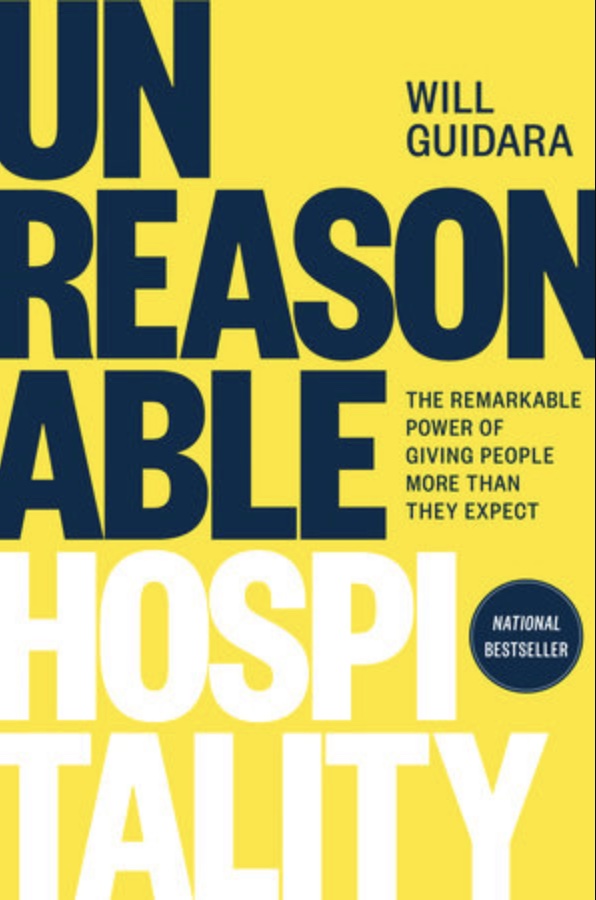
Which is why Will Guidara’s book “Unreasonable Hospitality: The Remarkable Power of Giving People More than They Expect” is so refreshing. This is part memoir of a restauranter and part business manual on blending soft and hard skills that all businesses try to do – with varied levels of success. Mr. Guidara was the general manager of a number of fantastic restaurants, including Eleven Madison Park which became the number one restaurant in the world.

For a book that talks a length about people, values, growth, and mission it is so unusual to hear the real world politick of “I’m also clear about what my job is, which is to do what’s best for the restaurant, not to do what’s best for any of you (the staff). More often than not, what’s best for the restaurant will include doing what’s best for you. But the only way I can take care of all of you as individuals is by always putting the restaurant first.” Just wow!

And that quote really sums up the problems with a lot of books on management and leadership – they are two different things people and not mutually exclusive (I can shout that louder for the hacks with the crappy memes) – we are often being asked to hold ourselves to an impossible standard. People are sometimes not the right fit, sometimes we just have to get through the shift, sometimes we are not going to be perfect. An illuminating passage deals with the idea that while it is often trotted out that employees have a language of appreciation, they may also have a language of criticism – people may need feedback in different ways depending on their personality and work history.

I love the advise to “not let things slide – those small things become personal slights.” This is often ignored because every manager today fears being labeled a micro manager. Just like I also appreciate Mr. Guidara’s works to be maniacal on cost control for 95% of your costs and then to spurge for the last 5% to make a difference to the guest experience.

There are times when this book feels like it is written by the staff from the movie “The Menu,” yet at the same time one has to appreciate what Mr. Guidara was trying to do with his business and why he was doing it. The book says, there is nothing wrong with striving for perfection, as long as perfection is not the standard – little things are always going to go wrong. That does not mean one should not try, but it means managers and leaders have to accept realities.  

It may seem extreme and over the top, and it is, but that is the whole point of being “unreasonable.” To give people more than they ever expected in a controlled manner so it can be systemized and scalable. I’ve been banging on about scalability for years, and so to read it in this book was like having to tell the author to get out of my head.

This book should be required reading for managers and leaders of any business who want to deliver a better experience for everyone – including the owner of the business. This is appreciation that businesses are businesses. They must make money and they have to be able to work when you are not there. There has to be systems in place, protocols and procedures, so that everyone knows what to do and new people can be easily trained on what to do.

Unreasonable Hospitality is what business books should be. Simon Sinek, who wrote the introduction and I have been on record for forever as having no time for, could learn a lot from this book for example.

This is where the rubber meets the road. For those who want to add to their passion, or just rekindle it, it is hard to find a better way to do so than to read this wonderful book.   

Scott Stratten, and latterly with his wife Alison, have written five other books on the intersection of customer service, social media, and marketing. I have reviewed most of them, which you can find here, routinely listen to their podcast, The Unpodcast, and I have a framed and signed “Don’t try to win over the haters. You are not the Jackass Whisperer” poster in my office. I am an unashamed fan boy.

Their books have swung from deep dives into marketing theory, to jokey and fairly superficial explorations of the absurdities that the marketing, and wider business world, is full of  – always with humor sprinkled throughout.  Although by no means an expert, I am certainly familiar with their work and their thinking on a variety of subjects.

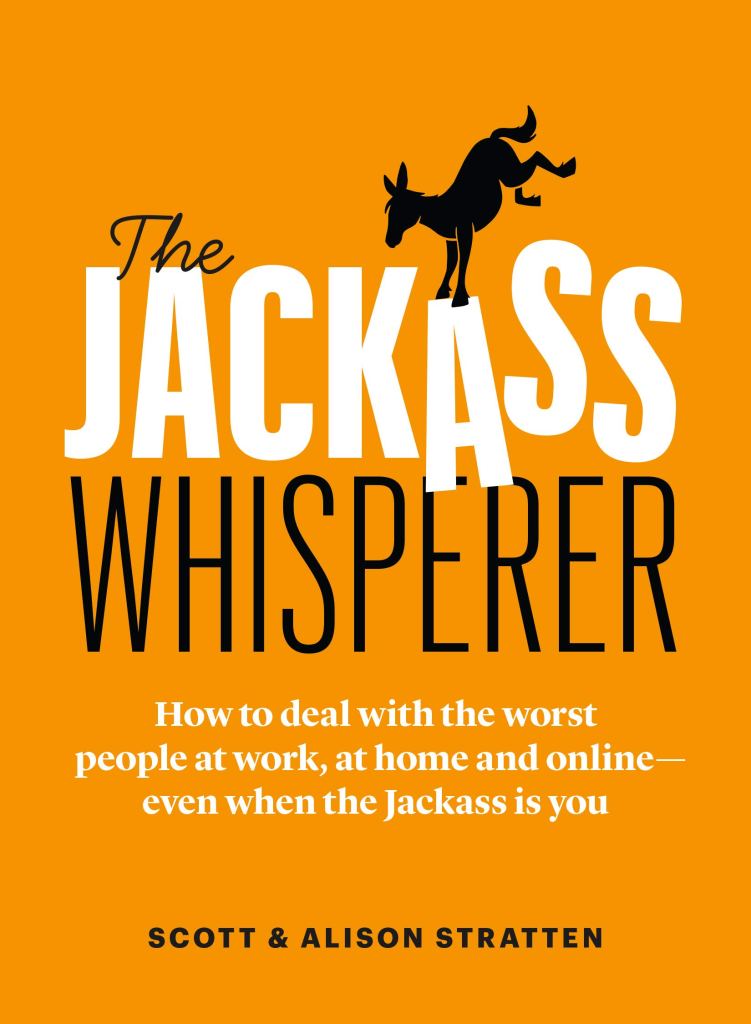
Their latest book, would seem to an addition to their collection of books with a “gimmick.” A 125 question and answer book to see whether when presented with an example of “jackassery” one responds with a “Jackass Reaction” or a “Whisperer Reaction.”

But…

That is not what if going on here at all.

By coming at the subject from an indirect angle, the Stratten’s have laid bare our worst instinctual reactions to other people’s worst behavior. It shows that, in many instances we are just as much the problem rather than the innocent victim that we too often paint ourselves as. The implicit message is that the only way to deal with bad behavior is not to react to it out of outrage, but out of understanding and an attempt to solve the real underlying issue. To be the better person.

Of course, the book, and by assumption the authors, are not suggesting that all behavior is acceptable, but that “pick you battles” is really mantra we should all live by. That we have a responsibility to make the world a better place, and that starts with our interactions with each other. I find this particularly interesting as there was an element of “shame culture” in the earlier Unpodcast episodes. Jon Roson’s excellent “So You’ve Been Publicly Shamed,” which I reviewed here, goes much deeper into the culture of naming and shaming online; and the Jackass Whisperer seems to be a repudiation of that shame culture.

The Jackass Whisper is over the top, although most of the inciting incidents seem to be based on real occurrences (we really are doomed as a species), the reactions, both as a Jackass or as a Whisperer, are so over the top that it becomes useful to use them as a gauge for how you, the reader, would deal with such a thing. If one is being honest it is easy to see where your reaction is really not helpful, although perhaps satisfying at the time in terms of revenge.

It is, or course, easy to read this book superficially – as I did initially if I’m honest. But it subtly asks questions of us that are not easily answered. Is this the person I want to be? Do I really have to react like this to perceived provocations?

I’ll leave you to guess in the comments on my Jackass scale, but really that is not what is important about the Jackass Whisperer. It is the thought, and potential internal discussion, on the nature of reaction that a thoughtful reading of the book provokes, that makes it well worth your time and the purchase price.

unbranding


I have a really bad habit when reading non-fiction books.

When I come across something I find particularly interesting I fold the edge of the page over so that when I am looking for it at some point in the future, or if I just want to remind myself of what I found particularly fascinating, I can go directly to the information. I used to actually read with a stack of post-it notes and a pen, but that becomes tiresome very quickly- and the books don’t stack well on the bookshelf any more with post-it notes sticking out of them.

I tell you all of this to give some background to my experience of reading “UnBranding, 100 Branding Lessons for the age of Disruption,” by Scott Stratten and Alison Stratten. It is no secret that I have been a fan of Scott’s for a while now and that has inevitably caused me to become a fan of Alison’s too. However, I had an issue with “UnBranding,” and it can be summed up by this picture:

unbranding corners.jpg

For reference the book is face up.

Can you guess my problem was?

For some reason, I could not connect with the concept of the book, and therefore the ideas did not resonate with me, until page 99. And while what’s on page 99 is important and worth looking up, what was really brought home to me by the story you will find is that the book is actually 100 branding lessons, and 100 examples that give them context.

Why I did not learn this from the title might say a lot about business books in general, but probably more about myself.

Most marketing and business books, and therefore by definition most marketing and business writers (including myself), use their writing to explain concepts and ideas and then throw in a couple of examples to prove themselves right. The Stratten’s turn this on its head. They fill their work with examples of the good, the bad, and the downright ugly of customer service, marketing, and business in general, and then tie these examples together with workable concepts and ideas.

Unbranding, is exactly what it says on the cover. Some of the examples are personal to Scott and Alison. Some of the examples are national media stories that feature the world’s biggest brands. But each one contains a lesson for how to market and conduct better business (or how to adjust your expectations).

In the past, Scott has been accused of retreading over the same territory again and again particularly when it comes to his books. I think this is unfair and to misunderstand the various works and what makes them unique; however, I did have this feeling when I started UnBranding – until page 99 of course.

Having now gone back and reread pages 1 – 98, I can confirm that it really was my issue. There are great things on those earlier pages and the book did exactly explain what to expect and what I should be learning, but for some reason they washed over me. It may have been because of their previous book: UnSelling, which I feel is a bit if a Rockstar – you can read my review here.

While not the Rockstar that UnSelling was, UnBranding is still a great business book with important lessons. Some of these lessons you will have heard before, particularly if have read the previous books: UnMarketing, The Book of Business Awesome / The Book of Business UnAwesome, QR Codes Kill Kittens, and Unselling, or listen to Scott and Alison’s excellent UnPodcast; however, there are still plenty that you will not have heard. Also, having this many great concepts on 21st century branding in one place is useful all on its own.

What makes this book special is not the branding lessons themselves, but the context to understand why they are important. Simple, readable, and relatable, UnBranding is a more mature than some of their other work, but is worth your time now and very much worthy of pulling off the bookshelf in the future reviewing when you think you may have forgotten its lessons.

Reviews are here to stay, and that’s a good thing. But how do businesses defend themselves from those who would abuse the review system for their own ends? In this three-part series, I offer practical advice on how to handle Yelp bombing campaigns and how to mitigate their effects. In part two, we look at how to hopefully prevent, and then handle a weaponized review campaign going viral. You can find part one, on prevention and initial responses, here and you can find part three on the other tactics undertaken by Yelp bombers, other than just posting reviews, and coming to a resolution, here.

goats-competition-dispute

(image courtesy of http://pexels.com )

Whack-A Mole

After you have responded to the initial review, you now have several reviews all referencing the same issue / incident. The good news is that most review platforms care about their review eco-space and you can report these reviews as violations of their Terms of Service. Brevity is the key. Don’t explain why the reviewer is wrong just explain that the review is essentially a duplicate and part of a campaign or a review by someone who is not a customer.

Make sure to start checking your other platforms for reviews, respond to the first one with your measured response, and then report any duplicates. Don’t forget about other opportunities to post on your social media pages and channels. Yelp Tips, which can only be viewed on mobile devices, are often forgotten. Posts to your Facebook page, or check-ins on Facebook and other location based services, are also areas that need to be monitored. Other than the initial measured response, do not engage on that platform any further. If a customer has a genuine question then of course you should answer, but it ideally should just be a version of your measured response.

Going Viral

Making something go viral, for any reason, is hard. You should take solace in this. As a marketing professional, I have only had one thing go truly viral, and that is not so unusual. An amateur trying to make something go viral will have to be very lucky indeed. However, we do live in an age of ordinary people with extraordinary social reach. If review / story has legs and starts to go viral, you need to be prepared.

Banning people from your Facebook page, and other social media channels, can be counterproductive. In the minds of those posting, it just proves that you have something to hide. Take the moral high ground and post your measured response on your social media channels and your website. This can be a little risky as you are letting your clients and followers know about something you have been trying make go away. It can also be a hard sell to those you report to. It does, however, have the advantage of letting you shape the story rather than letting others shape it and just leaving you to respond.

A great example of this working is how FedEx responded to one of their drivers caught on camera throwing a computer monitor over a fence. By responding publicly, with an apology, and what and how they were going to change, the story went from a FedEx driver throwing a package over a fence as an example of how packages are delivered, to how FedEx’s quick response was indicative of their customer service and culture. I believe one of the genius elements of FedEx’s response was to make a video statement so that their own video could be played alongside the video of their employee throwing the package. This looked a lot better than an uncomfortable interview, or a written statement.

By taking the moral high ground and being open, you may not convince your initial detractors that you are sorry / wanting the resolve the issue, but you may well persuade some that are on the fence about the issue. You will also give ammunition to those in your network, that support you, to help defend you. Your existing loyal customers will often be your biggest defenders and cheerleaders, but they need guidance. For this reason, I am not a big fan of disabling reviews on Facebook pages and the ability of users to post – but that is decision that needs to be based on the individual situation.

The Press

News organizations, and particularly local TV news, get pitched multiple times every day by people angry by how they feel they have been treated by a business. The good news for businesses is that it takes a lot for a story to be picked up, and anyone who is waging a campaign against you is unlikely to get past their screening process. The bad news is that news organizations need human interest stories, and if the customer is credible, and has a story with legs, then the media may get involved.

It is important that whomever answers the phones in your company, and your entire frontline staff for that matter, understand how to deal with the press when they come calling. “I know that the management will want to talk with you and address the situation. I am not the right person for you to talk with, but let me get you someone who is.” is an example of how to correctly respond to an enquiry. “No comment” is about the worst thing that anyone can say to press. The lack of a comment becomes the story. It makes it look like whomever has said it has something to hide because they don’t want to speak.

When talking to the press be very brief. The longer the answer you give, the more chance there is for something to be taken out of context. If you do not speak to the press; however, you will not make the story go away. Reporters have deadlines, so be cognizant and respectful of that. For the most part reporters are not looking to burn anyone, but they do want a story – try to make it yours, and not defined by someone else.

Unfortunately, once the media gets involved with viral story, it can self-perpetuate a Yelp bombing campaign with others who have read about / or seen the story leaving reviews. Again, Yelp itself is pretty good about dealing with this. If you send a link to the story in the media story when flagging the review Yelp can suspend all reviews to your account until interest burns out.

If you have stories, or additional tips on how to solve Yelp Bombing / review campaigns, please let me know in the comments. If you have an ongoing issue, please feel free to reach out to me.

Reviews are here to stay, and that’s a good thing. But how do businesses defend themselves from those who would abuse the review system for their own ends? In this three-part series, I offer practical advice on how to handle Yelp bombing campaigns and how to mitigate their effects. In part one, we look at how to prevent, and initially respond, to weaponized reviews. In part two, we look at preventing and then handling a weaponized review campaign going viral. In part three, we look at other tactics undertaken by Yelp bombers, other than just posting reviews, and coming to a resolution.

egg-hammer-threaten-violence-40721.jpg

(image courtesy of http://pexels.com )

Nobody in business likes getting bad reviews. Anyone who pours their heart and soul into an enterprise can feel dispirited, and treated unfairly, when receiving criticism; particularly when you have not been given the chance to try and resolve the issue.

Like it or not, reviews are here to stay. They are a fact of doing business today. To deal with everyday review issues, I highly recommend Jay Baer’s excellent “Hug Your Haters,” which I reviewed here.

Unfortunately, however, there are people who try to turn reviews into a weapon. This is usually achieved by posting multiple reviews, sometimes across multiple platforms, using multiple different accounts, giving the impression of a serious issue or to destroy the businesses review platform rating. This can be to extort money and / or services, or as an act of revenge. This kind of review warfare is also sometimes known by the term “Yelp bombing.” This series, hopefully, will give you some grounding, and tools, to help protect yourself, and your business, from weaponized reviews.

It is important to recognize the difference between a Yelp bombing campaign and a review going viral. If something is going viral, it is because strangers like, or are outraged by, what they see or read. When it comes to a concerted attack, there may be a hope that the attack will become viral, but it is originally perpetrated one person, or a small group, trying to exert influence. This could be a customer, a former employee, a competitor, or just a bully trying to change something about you or your business.

Prevention

It is a cliché, but an ounce of prevention is worth a pound of cure. Have a complaints procedure for your clients. Empower your staff to solve small issues before they turn into big issues. Listen, learn, and respond to your reviews. Try to divorce yourself from the idea that you are right and they are wrong. It does not matter if you win the argument in your place of business. If you turn your customer into an enemy, and they then bash you online, you have lost.

Usually, apologies cost nothing. Make them sincere and swallow your pride. If the dispute cannot be resolved with an apology ask a simple question: “how much am I willing to pay to not have this appear on Yelp or other review sites?” Whatever the answer is, there is your budget for resolving this complaint.

Obviously, you have to have claimed your business on all the major review platforms. Going through this in detail is really outside the realm of this article; however, you should receive an email, or alert, anytime someone posts a review on Yelp, Google, or Facebook. I would also strongly suggest that you have a Google Alert running for mentions of your business name, names of key personal, or anything else that someone may use to identify or describe your business. You can setup alerts here: https://www.google.com/alerts

Stay away from controversial subjects with your online presence. Businesses should standup and be counted for causes and ideas they support, but go into it with your eyes open. With any controversial subject, there is the potential for someone to become upset and try to change your stance by methods other than debate or no longer giving you their custom.

Assessment

Despite your best efforts; however, you find yourself a target of a Yelp bombing campaign. It is important to note, that while the term “Yelp bombing” has become a generic term for an online review attack, Yelp is actually the platform you want this kind of attack to take place on. Yelp tends to have the best tools and resources for a business to protect itself. I am not a big fan of Yelp, you can read my feelings about Yelp and why I dislike their business model here, but when it comes to Yelp bombing they really do have their act together.

The first signs of a campaign against your business will usually be you being alerted to, or reading, a 1-star review. Speed is of the essence. If the review is seemingly out of nowhere, then reach out to the reviewer apologizing for their experience and asking if you can help to resolve the situation. If the platform allows it, message the reviewer privately. Don’t be afraid to ask them for their name so you can look into the matter.
If, despite your speedy response, more reviews are posted, then you have genuine situation on your hands.

First, breathe.

It is easy to feel panicked and that events are completely out of your control. You need to be the one with the cool head. People undertaking a Yelp bombing campaign are not doing so from a particularly rational place. This usually shows up in the writing and the nature of the complaint.

Read the review(s). Does the client have a point from reading the review? Is it a good story? If you were not connected to the business would you want to learn more? Remember right and wrong does not enter into your assessment of the campaign. What you need to assess is whether the story has “legs.” Is what has been written true? If someone reads this who knows nothing about your business will they believe it? Get other people’s opinions – this will help bring some perspective. If you make the assessment that the reviewer has a point and that the story has legs then there is the potential for it go viral, which is what you are trying to stop.

First Responses

Do not, I repeat, do not be in too much of a hurry to tell your side of the story. However, while it is important to not to lash out immediately with why your customer is “wrong, crazy, or clueless,” it is also important that your response is prompt and the correct response.

If the reviewer is not communicating, then start to craft a public response that addresses your position in very general terms and that you are happy to engage further via a different channel. I am a big proponent for email as this new channel. Email keeps the communication out of the public eye, unless someone posts it, it takes the heat out of conversations, and it gives you a written record. I know others feel that responding by a phone call, or even meeting in person, are better solutions. I would suggest that you choose whatever you are the most comfortable with.

Your response should be read by multiple other people and you should all agree that it is reasonable, conciliatory, and addresses the reviewer’s primary complaint. If the campaign against you has legs, and starts to go viral, your response will also be featured so it is important that the response is the right one.

It should also go without saying, that you should never retaliate. You need to be the adult, and it needs to be clearly seen by any 3rd party that you are conciliatory, level headed, and just trying to resolve the issue.

If you have stories, or additional tips on how to solve Yelp bombing / review campaigns, please let me know in the comments. If you have an ongoing issue, please feel free to reach out to me.

You build a marketing strategy, craft your brand, have a good grasp of your online identity, lots of likes and followers on the various social media platforms, and even have developed great connections to your local media…and then you do something really stupid that could potentially blow it all.

Nobody is perfect, and we all makes mistakes – I’ve made some doozers. But there is a real difference between making mistakes, admitting those mistakes and then trying to fix the problem, as opposed to declaring war on your customers and ultimately your own business.

Lets take this little Twitter gem for starters courtesy of the Daily Mail. A customer in your restaurant overhears a waiter being rude about another restaurant owner who the customer happens to know personally. Your customer is not to thrilled with the service already, and finds this behavior to be rather off, so they Tweet about it. What you do not do, as a restaurant owner, is call up from home, ask to speak to the customer in question, curse at them down the phone, and then demand they leave. That, however, is exactly what happened. In the ensuing Twitter onslaught, the restaurant came off far worse and created a massive (the restaurant is in Texas, the Daily Mail is a UK newspaper as an example) amount of negative publicity over a customer service issue. An apology, and a courtesy meal or bottle of wine, could have turned this incident into a minor win instead of this major fail.

Next up, the auto-body shop that after using a photographer’s work on their Facebook page without permission, proceeded to threaten and abuse the photographer on their own Facebook page for all to see. Needless to say, the page went viral over Twitter and Facebook. With the almost universally courteous, and intelligent, posts from supporters of the photographer, and gangsta inspired vitriol from the body shop it could only be seen as a massive marketing failure right in front of the businesses own 500+ fans. I believe the page is now been taken down as I can no longer find it, but if anyone knows if it is still up please drop me a line so I can share the link.

The Airbnb saga, has been done to death but is instructive because even very smart people can do really dumb things. The basic outline is that Airbnb is a service that allows homeowners to rent out a room on a short term basis like a hotel. Unfortunately, when an owner returned to find their apartment trashed, and their identity stolen, Airbnb basically stuck their heads in the sand and appeared to try and discredit the victim to stop her blogging about her experience. After a major backlash, Airbnb added safeguards, an insurance policy, and tried to do the right thing by the victim. But it could be too little too late considering their model is very easy to copy and already has a number of competitors. Most people had never even heard of Airbnb until this story exploded.

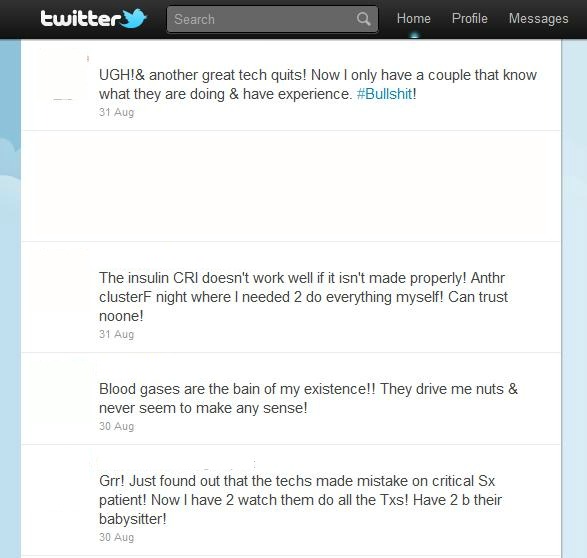
Finally, something a bit closer to home, how would you, or your staff, feel about having this tweeted from your hospital by a doctor, or about your pet?

Twitter vet image blanked out

Not only is this amazingly unprofessional, but all it will take is a single person to make the connection between hospital and Twitter account (the account does not identify the hospital, or the doctor, but I have still blanked out what is there in the interests of fairness) and this will become a huge problem. I’m sure it violates the hospital’s social media policy and I’m sure you could make an argument for it also being damaging to the profession to boot!

The bottom line is that your reputation and your brand are fragile. It is very easy for it to be damaged by just forgetting the basics of customer service. Never do anything, or say anything online, that you wouldn’t want on the front page of the paper or on a billboard. This is an age where it is easier to get your message out than ever before, but it is also just as easy for everyone else. And nothing travels, or goes viral, quite as well as scandal or bad news.

Does anyone have disastrous stories they would like to share or other examples they have seen online? Share with the rest of us in the comments!